
If you’re comparing fiberglass vs. steel entry doors, the biggest difference is simple: the exterior skin (cladding).
- Steel doors use steel sheeting (in different gauges).
- Fiberglass doors use molded fiberglass designed to mimic smooth or woodgrain textures.
Most of the real-world differences, like durability, maintenance, comfort, and price, trace back to that cladding choice.
The good news: both options are a major upgrade over wood for most homeowners.
What Steel and Fiberglass Doors Have in Common
Both steel and fiberglass entry doors typically offer:
- Lower maintenance than wood (no constant scraping, painting, or swelling issues)
- Insulated cores for better efficiency
- Many style, color, and glass options
- Better security and efficiency than many older wood doors
- Insect resistance and moisture resilience (compared to wood)
- Smooth and woodgrain looks (fiberglass tends to do woodgrain better)
So the decision usually comes down to what you value most: ROI and security (steel) vs. premium look and dent resistance (fiberglass).
Cost vs. Value: Which Door Has the Better ROI?
If you’re thinking about resale value, curb-appeal projects are still among the strongest performers.
In the 2024 Cost vs. Value Report (national averages):
- Entry Door Replacement (Steel) recouped about 188% of its cost on resale.
- A higher-end fiberglass “Grand Entrance” project recouped about 97%.
And the 2025 Cost vs. Value Report continues to rank steel entry door replacement among the top ROI projects nationally.
What that means in plain English:
If you want the strongest “cost vs. value” play, steel doors tend to win because they’re relatively affordable and create a big curb-appeal impact. Fiberglass can still be absolutely worth it, but it’s often chosen more for aesthetics and long-term durability than maximum resale ROI.
Important context: those ROI numbers compare specific project definitions (a standard steel door replacement vs. a more upscale fiberglass “grand entrance”), not every possible fiberglass door. Still, the pattern is useful: steel tends to deliver higher ROI because the upfront cost is lower.
Advantages of Fiberglass Doors
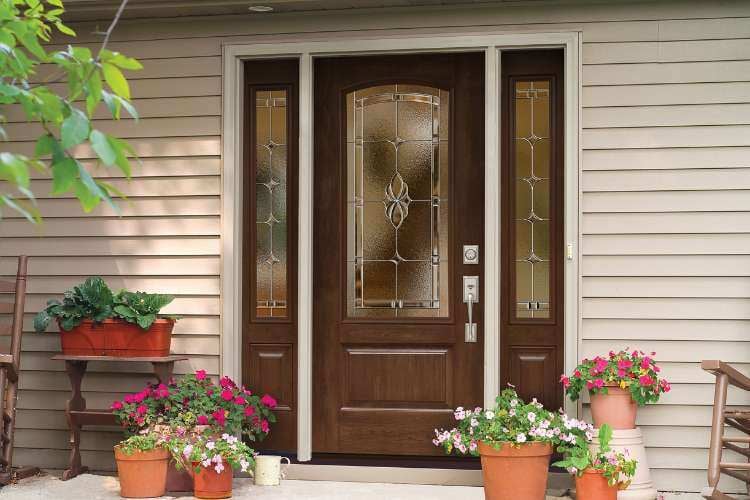
Fiberglass doors are ideal when you want the look of wood without the constant upkeep.
Fiberglass pros
- More realistic woodgrain and detail (great for traditional homes)
- Cooler to the touch in direct sun than steel (comfort factor)
- Won’t dent like steel
- Won’t rust or corrode
- Often more styles and decorative glass options
- Often comes with a longer warranty than basic steel models (varies by manufacturer)
Fiberglass tradeoffs
- Typically costs more than steel
- Can be harder to modify on site
- Can chip if impacted hard
- Some models may fade in strong direct sunlight without good finish protection
- In certain builds, fiberglass may feel slightly less “solid” than steel
Best fit for: homeowners who care about a premium look (especially woodgrain), want dent resistance, or live in areas where rust/corrosion is a concern.
Advantages of Steel Doors
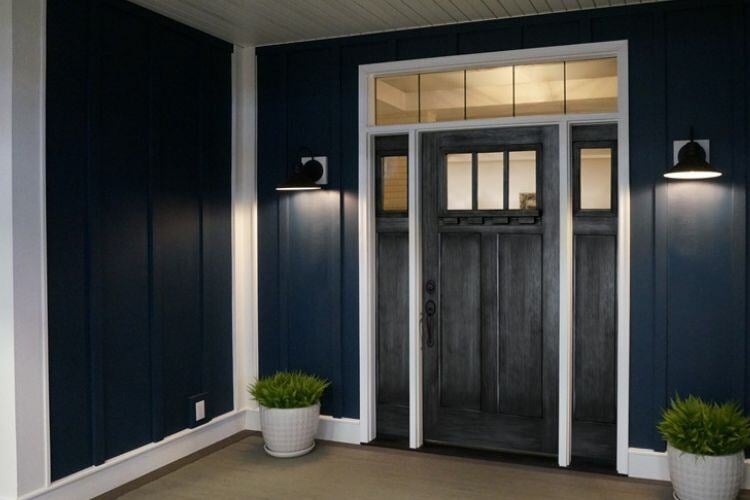
Steel doors are the value-and-security workhorse.
Steel pros
- Typically less expensive than fiberglass
- Often feels more secure and rigid
- Great painted finish options
- Doesn’t absorb moisture the way wood can
- Some assemblies can meet fire-rating requirements (where applicable)
Steel tradeoffs
- Can dent (hail, basketballs, moving furniture, etc.)
- Can scratch and expose metal, which may lead to rust if not touched up
- Can feel hot to the touch in direct sunlight
- Usually less convincing woodgrain texture (if any)
- May conduct heat/cold more than fiberglass depending on construction and sun exposure
Best fit for: homeowners who want strong security, great ROI, and a durable painted door at a lower price point.
Quick Comparison Table: Steel vs. Fiberglass Doors
|
Feature |
Steel Entry Door |
Fiberglass Entry Door |
|
Typical cost |
Lower |
Higher |
|
Cost vs. value (ROI trend) |
Often very strong (steel ranks high in Cost vs. Value) |
Often chosen for premium look/durability; ROI depends on project scope |
|
Woodgrain realism |
Limited |
Excellent |
|
Dent resistance |
Lower |
Higher |
|
Rust/corrosion risk |
Possible if scratched/finish fails |
No rust |
|
Sun exposure comfort |
Can get hot |
Generally cooler |
|
Security feel |
Often “most solid” feel |
Strong, but depends on lock/frame system |

How to Choose: The Quick View
Pick steel if you’re saying:
- “I want the best value for the money.”
- “Security is priority #1.”
- “I want a great-looking door without spending for the premium finish.”
Pick fiberglass if you’re saying:
- “I want the closest look to real wood.”
- “I want dent resistance and no rust worries.”
- “This is a design upgrade as much as a functional one.”
Door FAQs
1) Which door is better for resale: steel or fiberglass?
According to the Cost vs. Value data, steel entry door replacement has been one of the strongest ROI home projects nationally.
Fiberglass can still be a great investment, but it’s often chosen for its premium appearance and durability rather than for maximum resale percentage.
2) Which is more energy efficient?
Both can be very efficient because both typically include insulated cores. Real efficiency comes down to the full door system: the slab, weatherstripping, threshold, glass type (if any), and installation quality. (A perfectly installed “good” door often beats a poorly installed “great” door.)
3) Which is more durable long-term?
It depends on what your home throws at it. Fiberglass wins for dent resistance and rust prevention. Steel wins for cost and often has a more rigid feel, but it may need touch-up if scratched to prevent corrosion.
Get Expert Door Guidance from Joyce
Choosing between fiberglass and steel is much easier when you can see the options side by side and talk through what matters most for your home, whether that’s durability, curb appeal, security, or long-term value. Joyce has helped over 20,000 homeowners choose the right home improvement products for their projects, and our team is here to make the decision clear and stress-free.