Executive Summary
A home show can help you compare products, meet remodeling companies, gather ideas, and ask project questions in one place.
To make the visit useful:
- Choose one or two priority projects.
- Write down your goals and concerns.
- Bring basic measurements and photos.
- Prepare the same questions for every company.
- Compare products, installation, warranties, and service—not just price.
- Avoid making a rushed decision because of a show-only offer.
- Organize your notes before scheduling in-home consultations.
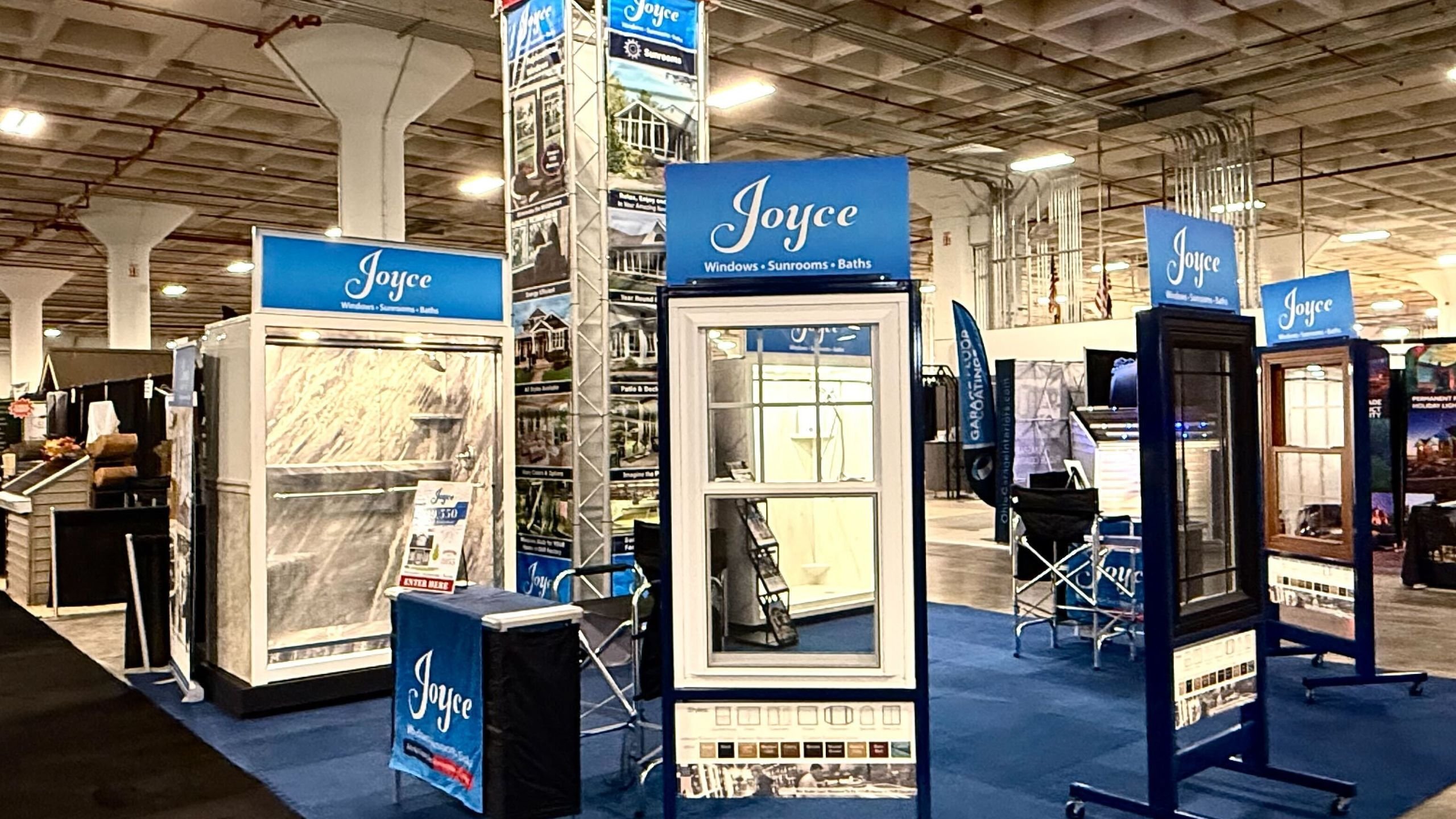
Joyce Windows, Sunrooms & Baths regularly meets homeowners at home and garden shows to discuss replacement windows, sunrooms, baths and showers, entry and patio doors, and other available services.
A home-show conversation can help you identify possible solutions, but an accurate remodeling quote generally requires an in-home evaluation, measurements, and final product selections.
Cannot attend a show? Book a Design Consultation to review options and receive a detailed project quote at your home.
Is Attending a Home Show Worth It?
A home show can be worthwhile when you want to research several projects or companies efficiently.
Instead of visiting separate showrooms, you may be able to:
- See products and materials in person
- Compare styles and features
- Meet local contractors
- Ask questions about project scope
- Learn which companies serve your area
- Collect brochures and samples
- Schedule in-home consultations
- Discover products you had not considered
A home show is best treated as the beginning of your research—not the place where every final decision must be made.
A booth may help you narrow your options, but the company has not yet inspected your home, confirmed measurements, reviewed hidden conditions, or prepared a complete installation plan.
What Should You Do Before Going to a Home Show?
Preparation can make the difference between a useful visit and several hours of collecting brochures you never review.
1. Choose Your Priority Project
Home shows can include windows, baths, sunrooms, doors, kitchens, roofing, siding, flooring, landscaping, furniture, and many other services.
Trying to research every category in one visit can quickly become exhausting.
Choose:
- One main project
- One secondary project
- A short list of optional ideas
For example:
Main project: Replace drafty windows
Secondary project: Explore a tub-to-shower conversion
Optional idea: Learn whether the patio can support a sunroom
This gives your visit a clear purpose while leaving room for inspiration.
2. Write Down the Problem You Want to Solve
Do not begin only with a product name.
Begin with the problem.
For replacement windows, that may be:
- Drafts
- Fogging between panes
- Difficult operation
- Strong afternoon heat
- Damaged frames
- Too much outside noise
- Outdated appearance
For a bath or shower, it may be:
- A difficult tub entry
- Cracked or stained surfaces
- Limited storage
- Poor lighting
- Hard-to-clean grout
- A need for seating or grab bars
For a sunroom, it may be:
- No protected outdoor seating
- A desire for seasonal living space
- An unused patio or deck
- Insects limiting outdoor use
- A need for shade or weather protection
Companies can give more useful recommendations when they understand what you are trying to improve.
3. Bring Photos and Basic Measurements
You do not need to create professional plans before attending.
Helpful information may include:
- Photos of the project area
- Approximate window sizes
- Number of windows
- Tub or shower dimensions
- Patio or deck dimensions
- Photos of the home’s exterior
- The age of the current products
- Your ZIP code
- Notes about water damage or other concerns
These details can make the booth conversation more specific.
They are not a substitute for professional measurement or an in-home inspection.
4. Set a Planning Budget
You do not need to know the exact project cost, but it helps to decide:
- What amount would feel comfortable
- Whether financing may be considered
- Whether the project will be completed at once or in phases
- Which features are essential
- Which upgrades are optional
A realistic budget discussion can help a consultant recommend an appropriate project instead of presenting options that do not fit your plans.
Do not rely on a booth display, starting price, or promotional monthly payment as the complete cost.
Ask what the quoted amount includes and what may change after the home is inspected.
5. Review the Exhibitor List
Many home shows publish an exhibitor list or floor plan before the event.
Use it to identify:
- Companies offering your priority service
- Booth locations
- Product manufacturers
- Local contractors
- Educational sessions
- Demonstrations
- Show hours
- Parking and entrance information
Mark your top choices before arriving.
This reduces unnecessary walking and makes it less likely that you will miss an important company.
What Should You Bring to a Home Show?
Bring only what will help you make useful comparisons.
A simple home-show kit may include:
- Comfortable shoes
- Water, when allowed
- Phone and portable charger
- Project photos
- Approximate measurements
- Notebook or notes app
- Pen
- Reusable bag
- Printed question list
- A separate email address for project research
- A folder for important estimates and brochures
Consider leaving large coats, heavy bags, and unnecessary items at home.
You may be walking and standing for several hours.
Should You Bring Another Person?
Bringing a spouse, partner, family member, or trusted friend can be helpful.
Another person may:
- Remember questions you forgot
- Take notes during conversations
- Notice product details
- Help compare companies
- Provide a second opinion
- Reduce pressure during sales conversations
When several homeowners are involved in the decision, attending together can also prevent information from being lost or misunderstood later.
How Should You Plan Your Route Through the Show?
A simple two-pass approach can keep the visit organized.
First Pass: Scan the Show
Walk through the main exhibit area without stopping at every booth.
During this pass:
- Identify relevant companies
- Note displays you want to revisit
- Take photos of booth numbers
- Collect the event map
- Avoid beginning a long consultation immediately
Second Pass: Visit Your Shortlist
Return to the companies most relevant to your project.
Plan longer conversations with approximately three to five serious candidates rather than trying to interview every contractor in the building.
What Questions Should You Ask at a Home Show?
Ask every company a similar set of questions. Consistency makes the answers easier to compare.
Questions About the Company
- How long have you served this area?
- What communities do you serve?
- Who owns the company?
- Are you the manufacturer, a dealer, or an installer?
- Who will be named on the contract?
- Who will perform the installation?
- Do you use employees, subcontractors, or both?
- Who handles warranty and service requests?
- Where can I verify your current licenses or registrations?
- Can you provide local project examples?
Questions About the Product
- What manufacturer and product line do you offer?
- Which styles are available?
- Is the product custom-made?
- What materials are used?
- Which options are standard?
- Which upgrades add cost?
- Can I see a full-size sample or cross-section?
- What maintenance is required?
- What performance ratings are available?
- Can I review the product warranty before signing?
Questions About Installation
- What does installation include?
- Who measures the project?
- How is the home protected?
- What materials will be removed?
- Is disposal included?
- How are hidden problems handled?
- What could create a change order?
- Are permits or inspections needed?
- How long does a typical project take?
- What happens during the final walkthrough?
Questions About Pricing
- Is this a product price or an installed project price?
- What is included?
- What is excluded?
- Is the estimate based on actual measurements?
- What can change the price?
- Are taxes and permit costs included?
- Are financing charges included?
- Is a deposit required?
- How long is the price valid?
- Is the promotion available after the show?
Questions About Warranties and Service
- Who provides the product warranty?
- Who provides the labor warranty?
- Does the warranty transfer to a future owner?
- Are service labor and travel included?
- What maintenance is required?
- What exclusions apply?
- How is a service request submitted?
- Is there a local service team?
- Who keeps the project records?
- What happens if the selling company closes?
How Do You Compare Home Improvement Companies?
Do not compare companies only by booth appearance or salesperson personality.
Use a consistent scorecard.
| Category | What to record |
|---|---|
| Company | Business name and local office |
| Product | Manufacturer, collection, style, and material |
| Pricing | Ballpark range and what it includes |
| Installation | Who performs it and what work is included |
| Warranty | Product, labor, service, and exclusions |
| Customization | Sizes, colors, glass, fixtures, or accessories |
| Timeline | Manufacturing and installation expectations |
| Service | Who handles future questions or repairs |
| Proof | Local projects, reviews, licenses, and references |
| Follow-up | Appointment, quote, sample, or requested document |
Complete the scorecard immediately after each conversation. Details can blend together later.
How Should You Compare Quotes?
A lower price may reflect a different product or smaller scope.
Before comparing totals, confirm that each estimate includes the same basic items.
For window replacement, compare:
- Window quantity
- Style and size
- Glass package
- Frame color
- Decorative grids
- Screens and hardware
- Removal and disposal
- Insulation and sealing
- Interior and exterior trim
- Installation labor
- Product warranty
- Labor warranty
For bath remodeling, compare: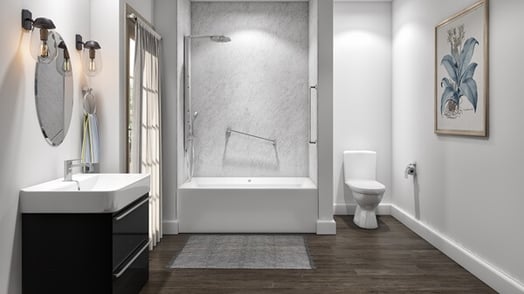
- Tub or shower base
- Wall system
- Fixtures
- Doors
- Shelving
- Seating
- Grab bars
- Plumbing work
- Removal and disposal
- Installation
- Warranty
For a sunroom, compare:_flipped.jpg?width=396&height=311&name=joyce_034-outside(c)_flipped.jpg)
- Room type
- Dimensions
- Roof style
- Glass and window package
- Foundation or deck work
- Doors
- Electrical features
- Heating and cooling allowances
- Flooring
- Engineering and permits
- Installation
- Warranty
An estimate that leaves major items unclear is not ready for a meaningful comparison.
Should You Sign a Contract at a Home Show?
You can, but you do not need to.
A home-show setting may include:
- Limited-time promotions
- Crowds
- Noise
- Long periods of standing
- Several sales conversations
- Little time to review contract details
Before signing, make sure you understand:
- The exact product
- Total price
- Deposit
- Financing terms
- Installation scope
- Expected schedule
- Cancellation rights
- Warranty
- Exclusions
- Change-order process
Do not sign because you feel tired, pressured, or afraid that a discount will disappear.
A reputable company should be willing to explain the agreement clearly and provide the written documents you need to make an informed decision.
How Should You Handle a “Show-Only” Offer?
Ask these questions:
- When exactly does the offer expire?
- Is it available after an in-home consultation?
- Does it apply to every product?
- Is there a minimum purchase?
- Does financing change the discount?
- Is the advertised savings based on a documented regular price?
- Can the offer be combined with other promotions?
- What is the final installed price?
- Which upgrades are excluded?
- Can I take the terms home in writing?
Evaluate the total project—not only the discount percentage or monthly payment.
How Can You Protect Your Contact Information?
Home shows often use drawings, QR codes, lead forms, contests, and appointment requests.
Before providing your information, check:
- Which company is collecting it
- Whether it will be shared
- Whether you are agreeing to calls or text messages
- Whether marketing consent is optional
- How to unsubscribe
- Whether the contest rules are available
Using a separate email address for remodeling research can keep estimates, brochures, appointment confirmations, and promotions organized.
Do not provide sensitive financial information merely to receive a brochure or enter a general drawing.

What Warning Signs Should You Watch For?
A booth conversation does not prove whether a company will perform good work, but it can reveal concerns.
Watch for:
Vague Product Descriptions
Terms such as “premium,” “best,” and “exclusive” should be supported by specific materials, ratings, features, or warranty documents.
Refusal to Identify the Manufacturer
You should know who makes the product being proposed.
Unclear Installation Responsibility
Ask who measures, installs, supervises, and provides the labor warranty.
Pressure to Sign Immediately
A major home project deserves time for review.
Incomplete Pricing
A low starting price may exclude installation, removal, upgrades, permits, repairs, or finishing.
Unsupported Savings Claims
No company can guarantee exact energy savings, resale value, or project payback for every home.
Verbal Warranty Promises
Request the complete written warranty.
Unclear Licensing
Verify required licenses or registrations through the appropriate official authority.
Criticizing Every Competitor
A useful consultant should explain the company’s own product and process without relying entirely on negative claims about others.
How Long Should You Spend at a Home Show?
The right amount of time depends on the size of the event and number of projects you are researching.
A simple plan may be:
- 20–30 minutes for the first scan
- 10–20 minutes with each priority company
- Time for one or two demonstrations
- A short break halfway through
- A final review before leaving
Set a stopping point.
More time does not always produce better information once you are tired and the conversations begin to blur together.
What Should You Do After the Show?
Review your material within one or two days while the conversations are still fresh.
Sort Companies Into Three Groups
Follow up: Strong fit and clear answers
Research further: Promising but missing information
No further action: Not suitable for the project
Request Missing Documents
These may include:
- Product specifications
- Warranty
- Licensing information
- Financing terms
- Sample proposal
- Project photos
- References
- Certified performance ratings
Schedule In-Home Consultations
An in-home appointment allows the company to:
- Inspect the project area
- Take measurements
- Review installation conditions
- Show relevant samples
- Confirm product options
- Prepare a detailed proposal
Compare Complete Proposals
Do not make the final decision until you can compare:
- Product
- Scope
- Installation
- Timeline
- Warranty
- Service
- Total price
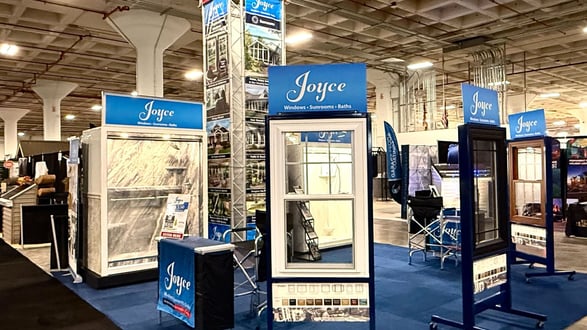
What Can You Learn at the Joyce Home-Show Booth?
At a Joyce booth, homeowners may be able to discuss:
- Replacement windows
- Window styles and glass options
- Three-season and four-season sunrooms
- Screen rooms and patio covers
- Bath and shower replacements
- Tub-to-shower conversions
- Walk-in tubs
- Entry and patio doors
- Siding where available
- Project pricing
- Financing options
- Design consultations
Availability depends on the show and service area.
Joyce is a third-generation, family-owned company founded in 1955 and headquartered in Berea, Ohio. It serves homeowners in Ohio, Pennsylvania, North Carolina, and South Carolina. For many windows, patio doors, and sunrooms, Joyce is involved from design and manufacturing through installation and service.
What Should You Ask Joyce at a Home Show?
Useful Joyce-specific questions include:
- Which products are manufactured by Joyce?
- Which services are available in my ZIP code?
- Which window or sunroom collections are on display?
- Can I see material and color samples?
- How does the factory-direct process work?
- Who measures and installs the project?
- What warranty applies to the product I am considering?
- Can I see past projects in my area?
- Is there an online cost calculator for this service?
- What happens during the in-home consultation?
Do not expect a final project price based only on a brief booth conversation. Exact pricing depends on the home, measurements, products, selected options, and installation conditions.
A Simple Home-Show Game Plan
Before You Go
- Choose your priority project
- Review the exhibitor list
- Save project photos
- Note approximate measurements
- Prepare questions
- Set a planning budget
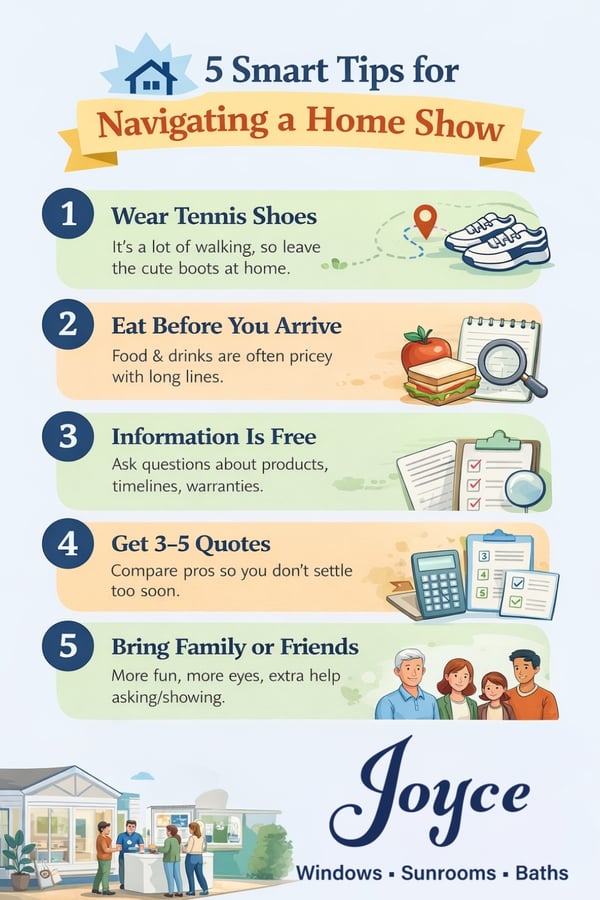
- Wear comfortable shoes
- Eat before arriving
At the Show
- Complete one quick scan
- Shortlist three to five companies
- Ask each company similar questions
- Record product and installation details
- Collect written warranty information
- Avoid rushed decisions
- Schedule consultations only with strong candidates
After the Show
- Organize brochures and notes
- Verify company information
- Request missing documents
- Review promotions and financing carefully
- Schedule in-home evaluations
- Compare complete written proposals
Attend With a Plan, Not Pressure
A home show can turn a vague remodeling idea into a practical next step.
The goal is not to make every decision in one afternoon. It is to leave with:
- Better questions
- A clearer project scope
- A shortlist of companies
- Useful product information
- A plan for receiving accurate estimates
Wear comfortable shoes, take breaks, ask direct questions, and focus on the companies that explain their products, installation, pricing, warranty, and service clearly.
Unable to attend a home show? Book a Design Consultation with Joyce Windows, Sunrooms & Baths.

Frequently Asked Questions
What should I bring to a home show?
Bring comfortable shoes, a phone and charger, project photos, approximate measurements, a written question list, a notebook, and a reusable bag for important materials.
Should I get quotes at a home show?
You can request initial pricing or schedule consultations. A reliable final quote usually requires an in-home inspection, measurements, product selections, and review of installation conditions.
How many contractors should I speak with?
Three to five serious candidates can provide a useful range for comparing products, installation, warranties, communication, and price.
Should I sign a contract at the show?
You do not need to. Review the complete product, scope, price, financing, warranty, cancellation terms, and company information before signing.
Are home-show discounts real?
Some are legitimate promotions, but terms vary. Ask for the expiration date, minimum purchase, exclusions, regular price, financing conditions, and complete installed cost in writing.
How do I compare home-show estimates?
Make sure each quote includes the same product type, options, installation, removal, finishing, warranty, and service assumptions.
What questions should I ask a remodeling contractor?
Ask who manufactures the product, who installs it, what the price includes, how hidden damage is handled, what warranties apply, and who provides future service.
Can a company give me an exact price at a home show?
Usually not without inspecting and measuring the home. Booth pricing should generally be treated as preliminary planning information.
What should I do after attending a home show?
Organize your notes, verify companies, request missing documents, schedule in-home consultations, and compare complete written proposals.
Can Joyce provide a consultation if I miss the home show?
Yes. Joyce offers free in-home design consultations that include product information, design options, and a detailed project quote.
Topics: