

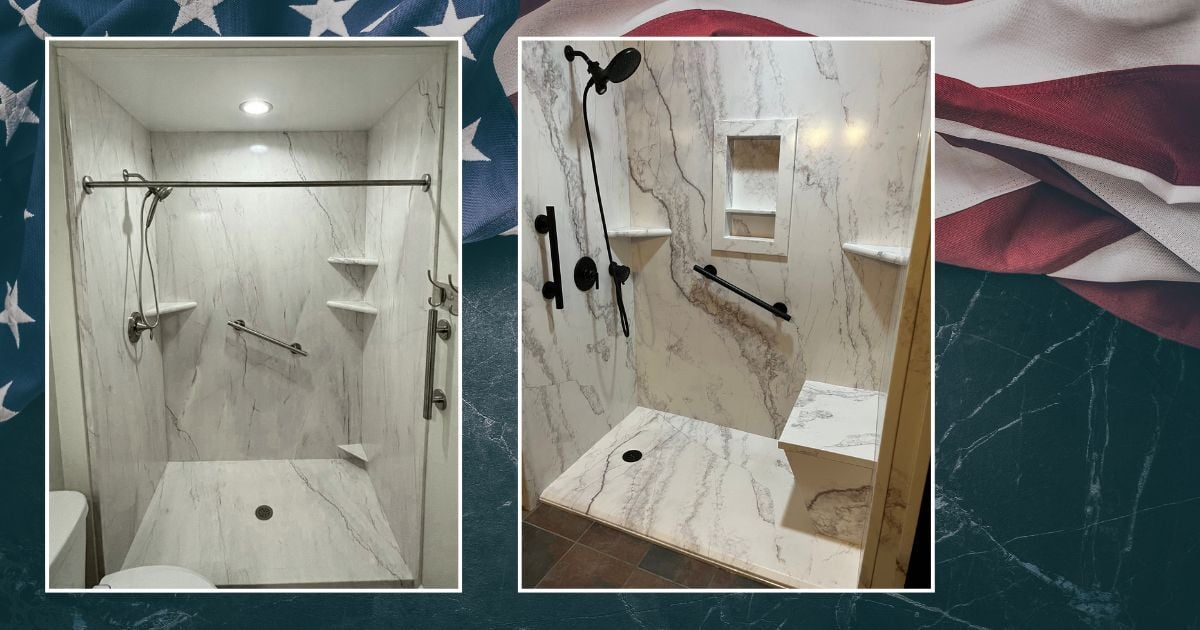
For many veterans, home is more than a place to rest. It is where independence, comfort, and everyday routines should feel safe. But when mobility changes, balance issues, service-connected injuries, or age-related limitations make bathing difficult, the bathroom can become one of the riskiest rooms in the home.
The good news: the U.S. Department of Veterans Affairs offers several grant programs that may help eligible veterans and service members pay for accessibility upgrades. These grants may be used to modify a home to better support safe, independent living, including widened doorways, ramps, and bathroom accessibility improvements.
At Joyce Windows, Sunrooms & Baths, we serve homeowners across multiple markets, including Ohio, Pennsylvania, North Carolina, and South Carolina. Because VA benefits are federal, this guide is designed to help veterans in any Joyce service area understand which programs may apply, what questions to ask, and how to take the next step toward a safer bathroom. Joyce serves families throughout Ohio, Pennsylvania, and the Carolinas, including Cleveland, Pittsburgh, Charlotte, Asheville, Columbia, and Greenville.
Important note: Joyce does not determine VA eligibility, approve grants, or provide legal or benefits advice. Always confirm your eligibility, documentation requirements, and project approval directly with the VA, your VA care team, or a qualified veterans benefits representative before starting work.
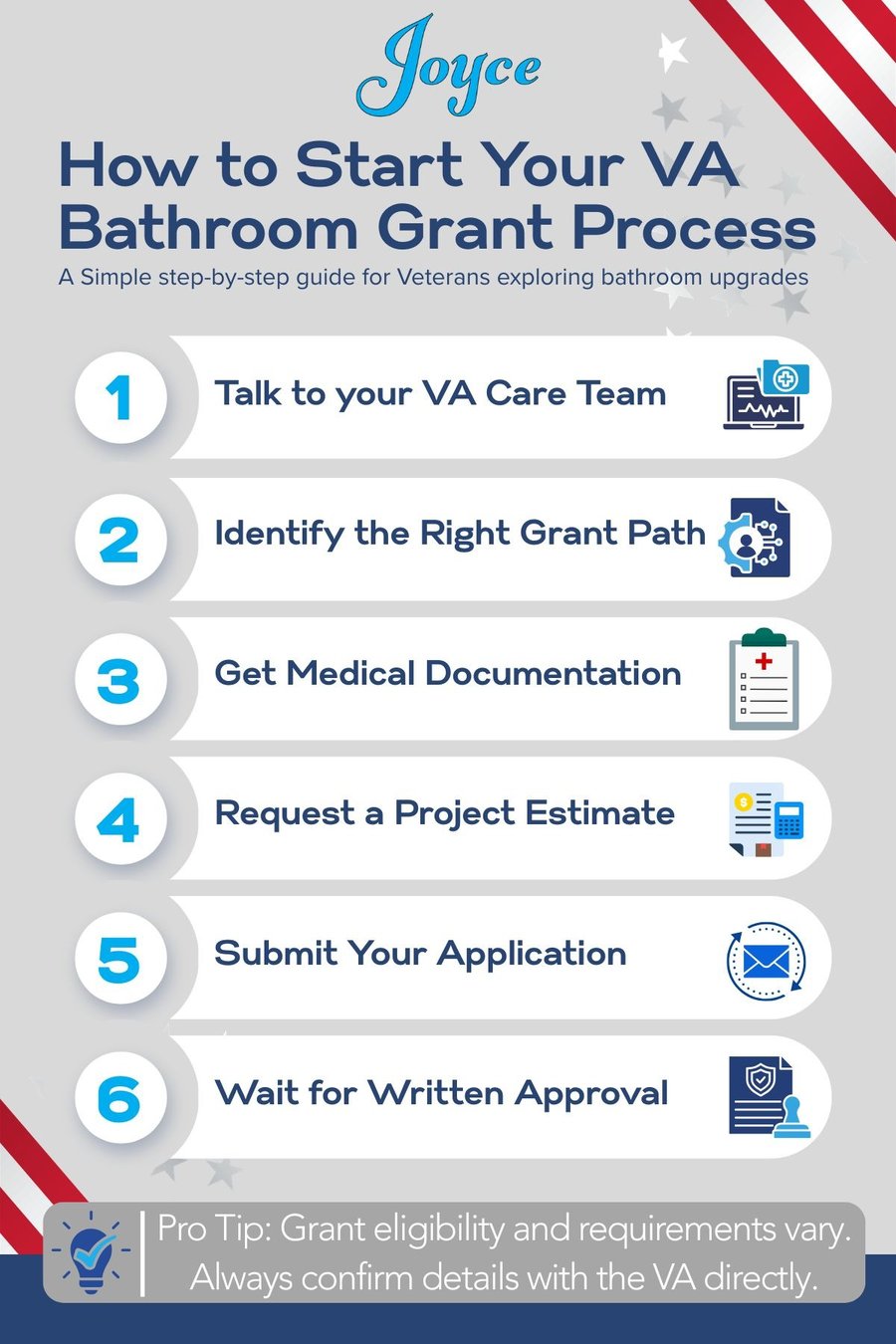
How Do You Start the VA Bathroom Remodel Grant Process?
How Does VA Bathroom Remodel Funding Work?
VA grants are not the same as loans. A grant is funding that generally does not need to be repaid when it is used for an approved purpose. For bathroom remodeling, the key question is usually whether the improvement is medically necessary and tied to the veteran’s disability, mobility, or access needs.
Depending on your circumstances, a VA-funded bathroom upgrade may help with improvements such as:
- Walk-in shower installation
- Tub-to-shower conversion
- Low-threshold or barrier-reduced shower entry
- Grab bars and safety accessories
- Handheld shower systems
- Slip-resistant surfaces
- Accessibility-focused layout changes
- Wider access to essential bathroom fixtures
The exact improvements covered depend on the grant, the veteran’s eligibility, VA approval, medical documentation, and the scope of work.
What Is the Difference Between Service-Connected and Non-Service-Connected Disabilities?
One of the biggest eligibility questions is whether the need for the bathroom modification is connected to a service-connected disability.
A service-connected disability is a condition the VA recognizes as caused or worsened by military service. Some VA housing grants are specifically for veterans and service members with certain qualifying service-connected disabilities.
A non-service-connected disability may still create a real need for bathroom safety improvements, but it may fall under different funding rules, especially for HISA grants. This is why it is important to speak with your VA physician, prosthetics department, or benefits representative before assuming you do or do not qualify.
What Does “Medically Necessary” Mean for Bathroom Remodeling?
For VA-funded bathroom modifications, “medically necessary” usually means the improvement helps the veteran safely access the home, continue treatment, or use essential lavatory and sanitary facilities.
For example, a low-threshold shower may be medically necessary for a veteran who has difficulty stepping over a bathtub wall. Grab bars may be necessary for someone with balance challenges. A handheld shower may make bathing safer for someone with limited mobility.
Luxury upgrades are different. Spa-style features, cosmetic-only changes, glass shower doors, or upgrades that are not connected to a medical or accessibility need may not qualify.
For HISA benefits, federal rules state that the application package must include a prescription written or approved by a VA physician, and that prescription must identify the prescribed improvement, the diagnosis, and the medical justification for the alteration.
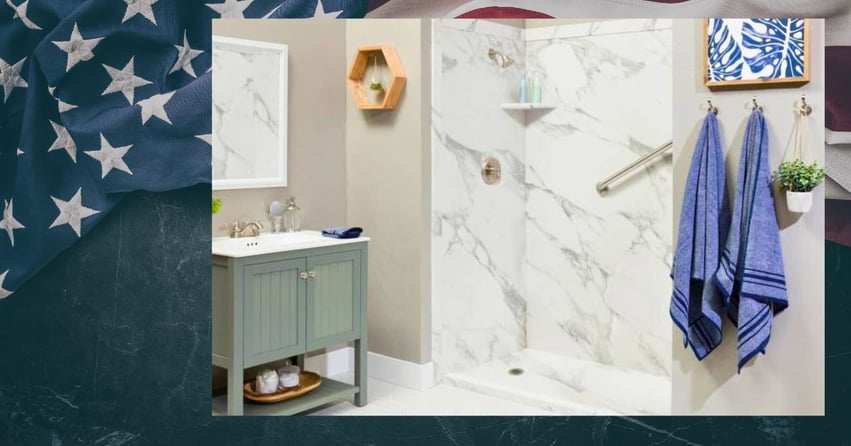
Which VA Grants May Help Pay for Bathroom Remodeling?
1. Specially Adapted Housing Grant
The Specially Adapted Housing grant, often called SAH, is intended for veterans and service members with certain qualifying service-connected disabilities who need to buy, build, or modify a permanent home to live more independently.
The VA states that SAH eligibility requires either homeownership or planned homeownership, along with a qualifying service-connected disability. Qualifying disabilities may include loss or loss of use of more than one limb, blindness in both eyes, certain severe burns, or certain mobility-related loss of use after September 11, 2001.
For FY 2026, the VA lists the maximum SAH grant amount as up to $126,526.
How this could relate to a bathroom remodel:
A veteran who uses a wheelchair or mobility aid may need a bathroom redesigned with safer shower access, a wider entry, reinforced grab bars, or a layout that supports independent bathing.
2. Special Home Adaptation Grant
The Special Home Adaptation grant, or SHA, may help veterans and service members with certain qualifying service-connected disabilities adapt a home they or a family member owns or will own.
The VA lists qualifying disabilities for SHA as including loss or loss of use of both hands, certain severe burns, and certain respiratory or breathing injuries.
For FY 2026, the VA lists the maximum SHA grant amount as up to $25,350.
How this could relate to a bathroom remodel:
A veteran with limited hand function may benefit from easier-to-use shower controls, grab bars, safer entry, or other bathroom features that reduce strain during daily routines.
3. Temporary Residence Adaptation Grant
The Temporary Residence Adaptation grant, or TRA, may apply when an eligible veteran is temporarily living in a family member’s home and needs that home to be adapted.
According to the VA, a veteran may qualify for TRA if they are living temporarily in a family member’s home that needs changes and they qualify for SAH or SHA. For FY 2026, the VA lists TRA funding as up to $50,961 for those who qualify through SAH and up to $9,100 for those who qualify through SHA.
How this could relate to a bathroom remodel:
If a veteran is recovering, transitioning, or living with family for support, changes to bathroom accessibility in that temporary home may help make daily care safer.
4. Home Improvements and Structural Alterations Grant
The Home Improvements and Structural Alterations (HISA) grant is often the program veterans hear about when researching bathroom safety upgrades. HISA may help with medically necessary home improvements and structural alterations.
For HISA, the application package must include a VA physician-approved prescription, VA Form 10-0103, property owner authorization when applicable, an itemized cost estimate for labor, materials, permits, and inspections, and a color photo of the unimproved area. The VA may also require a pre-award inspection before approving the work.
How this could relate to a bathroom remodel:
HISA may be relevant for upgrades that help a veteran access essential bathroom facilities, such as a safer shower entry, grab bars, or structural changes that improve bathroom access.
What Documents Might Veterans Need?
Documentation requirements vary by grant type, but veterans should be prepared to gather paperwork before starting the project.
For SAH and SHA grants, the VA says applicants need their Social Security number and, if they have one, their VA file or claim number. Veterans can apply online, by mail using VA Form 26-4555, or in person at a VA regional office.
For HISA, the application package includes several additional items, including:
- A prescription written or approved by a VA physician
- Diagnosis and medical justification for the improvement
- Completed VA Form 10-0103
- Written property owner authorization, if needed
- Itemized estimate for labor, materials, permits, and inspections
- Color photo of the area before work begins
A simple rule of thumb: do not begin work until you have written VA approval for the project. Starting too early can create reimbursement problems or put funding at risk.
How Veterans Can Start the Process?
Step 1: Talk to your VA care team
Start with your VA physician, occupational therapist, prosthetics department, or case manager. Explain the bathing challenges you are facing and ask whether a bathroom modification may be medically necessary.
Step 2: Identify the right grant path
Ask whether your situation may fit SAH, SHA, TRA, HISA, or another benefit. The right program depends on your disability status, homeownership situation, medical needs, and whether the home is your permanent or temporary residence.
Step 3: Request the required prescription or medical justification
For HISA, a VA physician-approved prescription is part of the application package. The prescription must describe the improvement, diagnosis, and medical reason for the alteration.
Step 4: Get an itemized project estimate
The VA may need a detailed estimate that separates labor, materials, permits, and inspections. A Joyce design consultation can help you clearly define the scope of the bathroom, so you know what you are requesting before you submit paperwork.
Step 5: Submit your VA application
Depending on the grant, you may apply online, by mail, or in person. For SAH and SHA, the VA says veterans can apply online, mail VA Form 26-4555, or bring the form to a VA regional office.
Step 6: Wait for written approval
Before construction begins, wait for the VA’s decision and confirm what is approved, how payment or reimbursement works, and whether any inspections are required.
What Bathroom Features Can Help Support Safer Bathing?
Every veteran’s home and mobility needs are different, but bathroom safety upgrades often focus on reducing steps, slips, reaching, bending, and transfers.
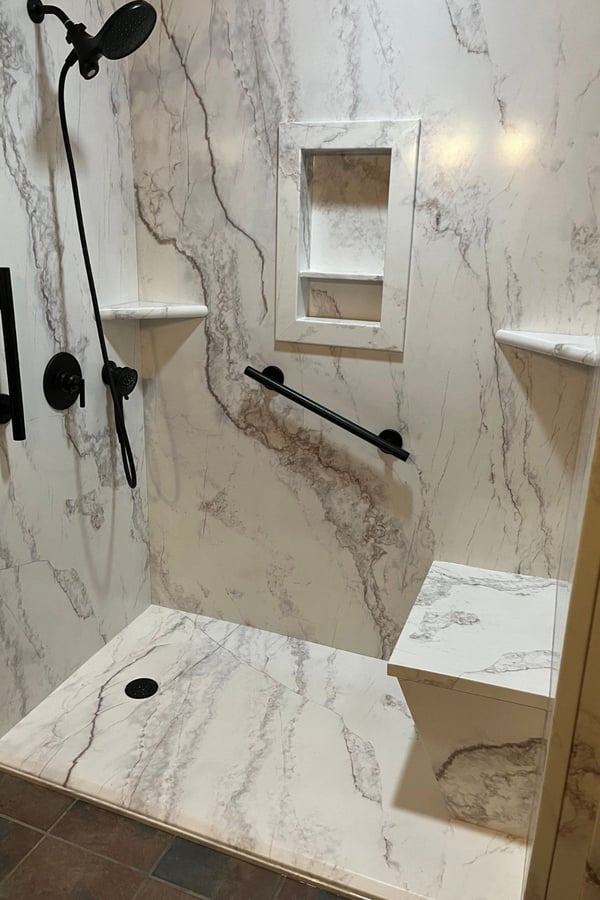
Depending on the approved scope, a safer bathroom remodel may include:
- A walk-in shower or tub-to-shower conversion
- Low-threshold shower entry
- Grab bars are placed where support is needed most
- Built-in or fold-down shower seating
- Slip-resistant shower flooring
- Easy-reach shelving
- Handheld shower heads
- Accessible controls
- Brighter lighting
- Wider or easier bathroom access
Joyce shower systems can be customized with wall styles, colors, accessories such as grab bars and shelves, and ADA-compliant features.
What If a VA Grant Does Not Cover the Full Project?
Not every veteran qualifies for every grant. And even when a grant is approved, it may not cover every desired feature or the full cost of the remodel.
If VA funding does not cover everything, veterans may want to explore:
- State veteran assistance programs
- County or city home repair programs
- Nonprofit veteran organizations
- Medicaid waiver or accessibility programs, where applicable
- Contractor financing
- Personal savings or home equity options
Because Joyce serves multiple states, the best supplemental resources may vary by market. A veteran in Ohio may have different state or county programs available than a veteran in Pennsylvania, North Carolina, or South Carolina. The VA process is the federal starting point, but local resources may help fill the gaps.
Questions Veterans Should Ask Before Starting
Before moving forward with a bathroom remodel, ask your VA contact:
- Which VA grant should I apply for?
- Do I need a VA physician's prescription?
- Which form do I need: VA Form 10-0103, VA Form 26-4555, or both?
- Do I need pre-approval before signing a contract?
- Will the VA inspect the bathroom before or after the remodel?
- What documentation should the contractor provide?
- Can I be reimbursed, or does payment go directly to the contractor?
- Are there features the VA will not cover?
- Can I combine this with state, local, or nonprofit funding?
- What happens if the final project cost is higher than the approved amount?
That last question is the paperwork goblin hiding under the sink. Catch it early.
How Joyce Can Help?
Joyce cannot approve a VA grant or determine your eligibility, but we can help you understand the bathroom remodeling side of the process.
During a design consultation, our team can:
- Look at your current bathroom layout
- Discuss safer bathing options
- Review shower and bath accessibility features
- Help define the scope of the project
- Provide a detailed quote for your planned remodel
- Explain product options, installation steps, and warranty coverage
Joyce offers bath and shower remodeling with expert installation, customizable shower options, accessories such as grab bars and shelves, and service across Ohio, Pennsylvania, and the Carolinas.
Frequently Asked Questions
Does the VA pay for bathroom remodeling?
The VA may help fund bathroom remodeling when the project is connected to an approved accessibility or medical need. Programs such as SAH, SHA, TRA, and HISA may be available depending on the veteran’s eligibility, disability status, homeownership status, and VA approval.
Can a VA grant help pay for a walk-in shower?
Possibly. A walk-in or low-threshold shower may be considered when it helps a veteran safely access essential bathroom facilities. Eligibility depends on the grant program and medical justification.
Can I start the remodel before the VA approves my grant?
No, you should not start work until you have written confirmation from the VA that your project is approved. Starting early may affect reimbursement or approval.
Which VA form do I need?
For SAH and SHA grants, the VA uses VA Form 26-4555. For HISA, the VA uses VA Form 10-0103 as part of the application package. Confirm the right form with the VA before applying.
Does Joyce decide if I qualify?
No. Joyce does not determine VA eligibility or approve funding. The VA makes those decisions. Joyce can help with the remodeling consultation and project estimate once you know what documentation you need.
Ready to Explore a Safer Bathroom?
If bathing has become difficult, stressful, or unsafe, a bathroom remodel may help restore comfort and confidence at home. For veterans, VA grants may offer a path toward funding accessibility improvements, but the process starts with the right documentation and VA guidance.
Joyce is proud to help homeowners across Ohio, Pennsylvania, North Carolina, and South Carolina create safer, more comfortable bathrooms designed for daily life.
Schedule your free Joyce bath or shower consultation today and take the first step toward a bathroom that supports your independence.

Where Can You Find Official VA Resources for Bathroom Remodel Funding?
|
Resource |
Why It’s Helpful |
|
VA Disability Housing Grants Overview |
Best starting point for SAH, SHA, and TRA grants. It explains who may qualify, what the grants are for, and current grant limits. (Veterans Affairs) |
|
How to Apply for an Adapted Housing Grant |
Walks veterans through the SAH/SHA application process, including applying online, by mail, or in person. (Veterans Affairs) |
|
VA Form 26-4555: Application for SAH or SHA Grant |
Direct form page for veterans applying for Specially Adapted Housing or Special Home Adaptation grants. (Veterans Affairs) |
|
VA Form 10-0103: HISA Application |
Direct form page for veterans applying for Home Improvements and Structural Alterations assistance. (Veterans Affairs) |
|
SAH Handbook for Design |
A deeper technical guide for veterans, builders, designers, and inspectors involved in adapted housing projects. (Benefits Home Page) |
|
VA Housing Assistance Main Page |
Broader VA housing hub that connects users to grants, home loans, and housing support resources. (Veterans Affairs) |
Optional Local Resources
Veterans may also want to check with their state Department of Veterans Services, county Veterans Service Office, or local VA medical center. These organizations can help explain benefits, forms, documentation, and any state or local programs that may be available in addition to federal VA grants.
Topics:
