
What Makes a Good Patio Cover?
The right patio cover gives you more shade, better protection from sun and light rain, and an outdoor space that feels connected to your home instead of added on as an afterthought.
Start by deciding how you want to use the space. Then compare the roof style, size, appearance, shade coverage, drainage, structural requirements, and future plans for the patio.
Joyce Windows, Sunrooms & Baths offers custom patio covers designed to fit existing patios, porches, and decks. Depending on your home and design goals, a streamlined Studio-style roof or a more dramatic Gable-style roof may be the better fit.

What Is a Patio Cover?
A patio cover is a permanent overhead structure designed to provide shade and shelter while keeping the sides of your patio, porch, or deck open.
Unlike a fully enclosed sunroom or screen room, a patio cover keeps the outdoor feel of the space.
That makes it a good option if your main goals are to:
- Create more shade
- Reduce direct sun exposure
- Add overhead protection from light rain
- Make an outdoor dining or seating area more comfortable
- Protect outdoor furniture from constant sun exposure
- Give a patio or deck a more finished architectural look
A patio cover does not turn the area into a conditioned indoor room. If you want walls, insect protection, or greater protection from changing weather, a screen room or sunroom may be a better fit.
How Can a Patio Cover Change the Way You Use Your Backyard?
An uncovered patio can be difficult to use when the sun is directly overhead or a passing rain shower interrupts your plans.
Adding a roof changes that.
Instead of treating the patio as a space you use only when the weather cooperates, you can create a more dependable place for:
Outdoor dining. Add a table and create a more comfortable place for everyday meals or gatherings.
Relaxing. Create shade for reading, conversation, or simply spending more time outside.
Entertaining. Give guests a defined outdoor gathering area with overhead protection.
Protecting furnishings. Shade helps reduce constant direct exposure of outdoor furniture to the sun.
The best patio-cover design starts with how you actually want to use the space rather than choosing a roof style based only on appearance.
Studio vs. Gable Patio Covers: What’s the Difference?
Two common patio-cover approaches create noticeably different looks.
| Feature | Studio-Style Roof | Gable-Style Roof |
|---|---|---|
| Roof shape | Single slope | Two slopes meeting at a peak |
| Overall look | Clean and streamlined | Taller and more architectural |
| Ceiling feel | Lower, simpler profile | Open, vaulted appearance |
| Often works well with | Simple rooflines and lower profiles | Homes where added height complements the architecture |
| Design effect | Blends quietly with the home | Can become an exterior focal point |
| Best choice when | Simplicity and efficient coverage are priorities | Volume, height and visual impact are priorities |
What Is a Studio-Style Patio Cover?
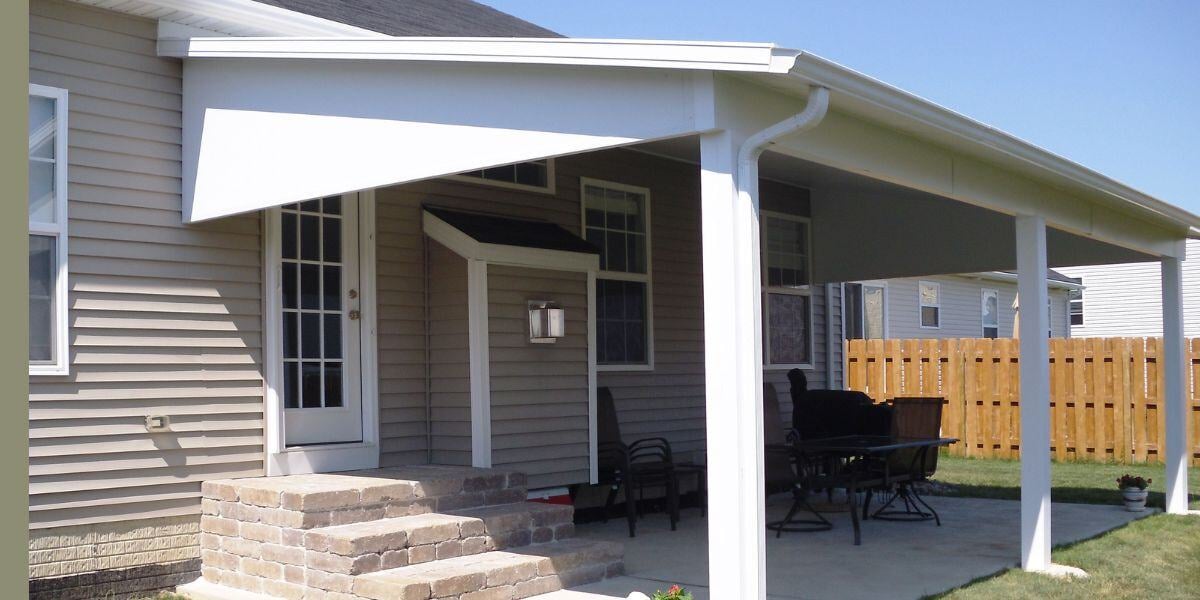
A Studio-style patio cover uses a simple single-slope roof.
Its straightforward profile can create a clean, understated appearance and may work especially well when you want the new cover to blend naturally with the existing home.
A Studio design can be a good choice when:
- You prefer a simple roofline
- The existing house has a lower exterior profile
- You want efficient shade over a patio or deck
- You do not need a dramatic vaulted ceiling effect
Because every home is different, the attachment point, roof pitch, span, drainage, and proportions should be evaluated as part of the design.
The goal is not simply to attach a roof over a patio. The completed structure should look like it belongs with the house.
What Is a Gable-Style Patio Cover?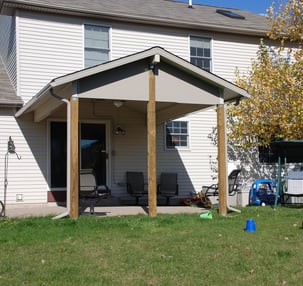
A Gable-style patio cover slopes upward from two sides to create a peak.
That additional height can give the space a more open feeling and make the patio cover a stronger architectural feature.
A Gable design may appeal to you if:
- You want a taller or more spacious feeling overhead
- The patio is a major entertaining area
- You want the roof to become part of the home's exterior design
- A peaked roof better complements the architecture of your house
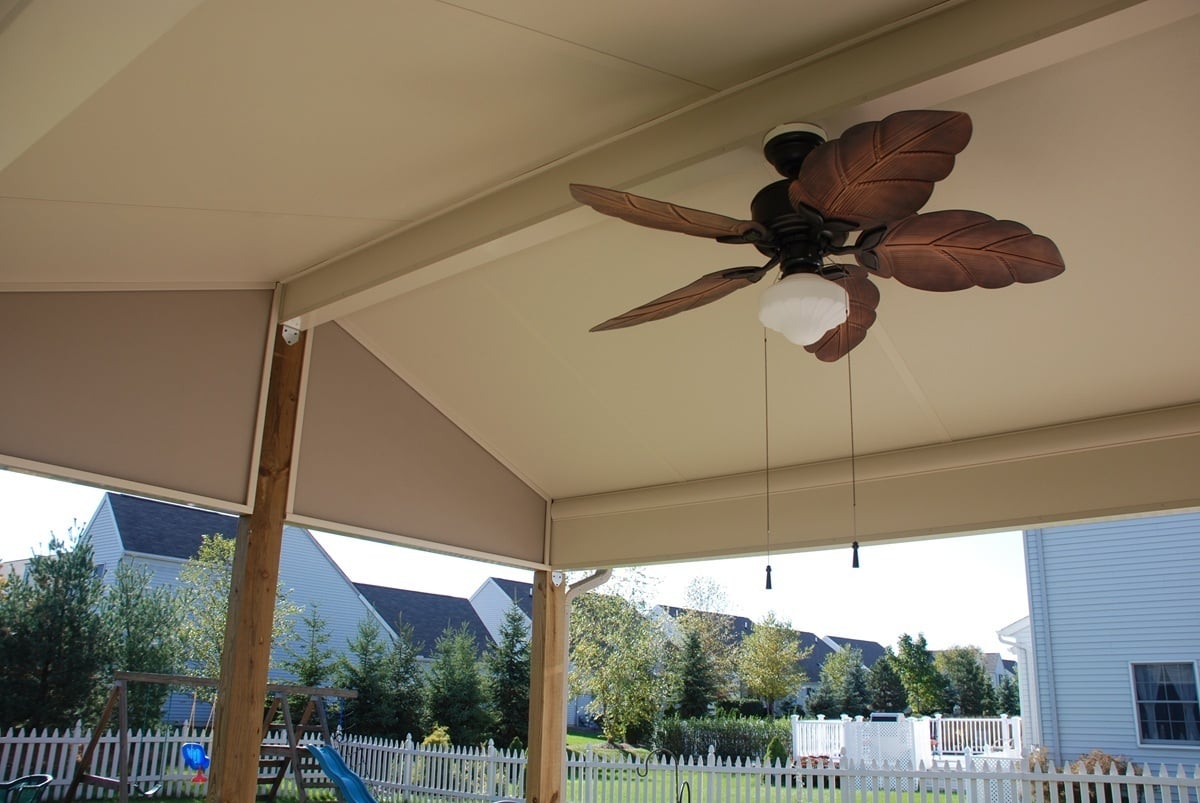
Depending on the project, lighting or ceiling-fan planning may also be considered during the design stage.
The important point is to decide on those features before construction rather than trying to work them into the roof later.
What Should You Look for in a Patio Cover Roof?
The shape of the roof gets most of the attention, but its construction matters just as much.
Joyce patio covers use the ClimateMaster® roof system, an insulated panel system designed to provide durable overhead protection while helping reduce heat transfer through the roof.
When comparing patio covers, consider the complete structure:
Roof Strength
The roof needs to be designed for the size of the structure and the weather conditions it will face.
That is particularly important in regions where snow and ice loads are part of the design requirements.
Shade Coverage
Think about where the sun actually hits your patio.
A cover that looks large enough on paper may not provide the shade you expect at different times of day.
The orientation of the house, roof projection, and location of the seating area all matter.
Water Management
A patio cover should be designed to move rainwater away from the outdoor living area and the home.
Drainage should be considered along with roof pitch and placement rather than treated as an afterthought.
Low-Maintenance Materials
Outdoor structures are constantly exposed to weather.
Choosing materials designed for exterior use can reduce the amount of scraping, painting, or other routine upkeep the structure requires.
Integration With Your Home
A patio cover should complement your home's proportions, roofline, exterior colors, and architecture.
That is one reason custom sizing matters.
Joyce patio covers are designed around the existing structure rather than forcing every home into one standard configuration.
Does an Insulated Patio Cover Make a Difference?
An insulated roof can help reduce heat transfer through the roof panel compared with an uninsulated structure.
Joyce uses its ClimateMaster® insulated roof system for patio covers.
But it is important to set realistic expectations.
A patio cover is still an open outdoor structure. Its comfort will also depend on outside temperature, humidity, wind, sun angle, orientation, and the amount of shade the roof creates.
That is why I would remove the current article's statement suggesting a patio roof may lower temperatures by “10°F or more.” Without Joyce-specific testing under controlled conditions, a precise temperature claim is difficult to support.
The clearer homeowner benefit is simple:
A roof creates shade and reduces direct exposure to overhead sun, which can make a patio more comfortable to use.
Will a Patio Cover Protect You From Rain?
A patio cover provides overhead protection that can help you continue using the space during light rain.
However, the sides remain open.
Wind-driven rain can still enter the area, and a patio cover does not provide the same weather protection as an enclosed sunroom.
If your main goal is enjoying fresh air with more protection from insects and debris, consider a screen room.
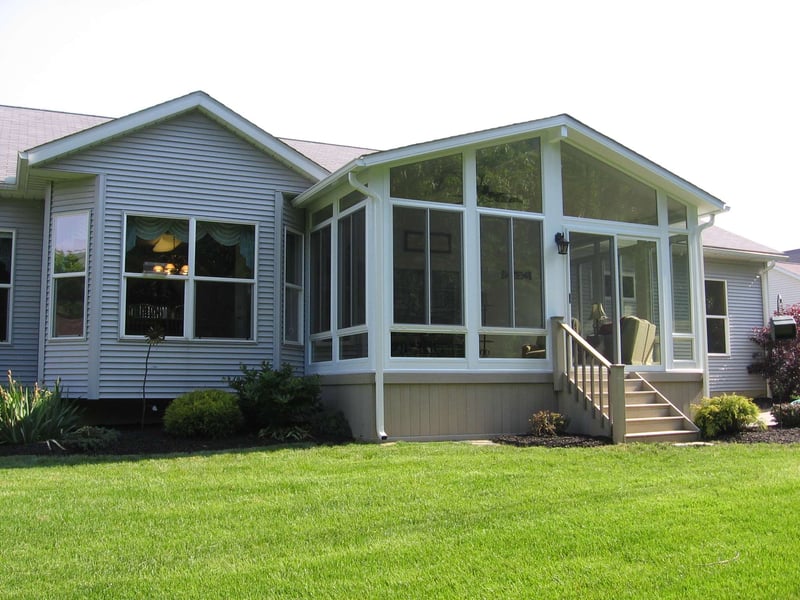
If you want a more fully enclosed space designed for extended seasonal or year-round use, compare three-season and four-season sunrooms.
Compare Patio Covers, Screen Rooms and Sunrooms
Patio Cover vs. Screen Room vs. Sunroom: Which Do You Need?
Choosing the right outdoor-living project becomes easier when you start with the problem you want to solve.
| If You Want… | Consider… |
|---|---|
| Shade with open sides | Patio cover |
| Shade plus insect protection | Screen room |
| An existing patio or deck enclosed with walls | Patio or deck enclosure |
| A more complete enclosed living space | Three- or four-season sunroom |
Joyce designs and installs all of these outdoor-living options, so homeowners can compare them based on the home, climate, budget, and desired level of enclosure.
Can You Add a Patio Cover to an Existing Patio or Deck?
In many situations, a patio cover can be designed around an existing patio, porch, or deck.
But the existing structure has to be evaluated first.
Important considerations can include:
- Patio or deck size
- Structural condition
- Attachment points
- Existing roofline
- Roof height
- Drainage
- Local building requirements
- Desired roof span
- How you plan to use the area
Do not assume that because a patio or deck already exists, it is automatically ready for a new roof structure.
A design consultation allows the project to be evaluated before the final cover is specified.
Related Article: Enclosing Your Deck
Should Your Patio Cover Match Your House?
It should complement it.
That does not necessarily mean every material or color has to be identical.
Instead, look for visual connections between the patio cover and the existing home, such as:
- Roof shape
- Roof pitch
- Exterior colors
- Trim
- Columns
- Existing architectural details
- Proportions
A Studio roof may work well when you want a simple addition that stays visually quiet.
A Gable roof may be better when you want the outdoor area to become a more noticeable architectural feature.
Neither approach is automatically better.
The right design is the one that looks intentional on your home.
Should You Plan for a Future Screen Room or Sunroom?
Yes, if there is a realistic chance you may want to enclose the space later.
A patio cover can sometimes become the starting point for a future outdoor-living project, but future expansion should be discussed before the initial design is finalized.
Tell your designer if you think you may eventually want:
- Screen walls
- Windows
- Doors
- A patio enclosure
- A three-season room
- A four-season room
Planning ahead can help determine whether the initial roof and overall design are appropriate for what you eventually want to build.
Do not assume every existing patio cover can automatically be converted into a sunroom later.
Related Article: Why a Joyce Sunroom?
How Much Does a Patio Cover Cost?
Patio-cover pricing varies because these structures are custom-designed for the home.
Joyce currently gives a general patio-cover range of approximately $8,000 to $30,000, depending on the size and application.
Your actual project price can be affected by factors such as:
- Size
- Roof style
- Span
- Existing structure
- Attachment conditions
- Site requirements
- Design options
- Installation needs
Use the range as an early planning guide rather than a project quote.
A design consultation is needed to evaluate your home and determine precise pricing.
Related Article: Explore Patio Cover Pricing
What Questions Should You Ask Before Adding a Patio Cover?
Before choosing a design, ask yourself:
How will we use this patio most often?
When does the patio get the most direct sun?
Do we want the space completely open, screened, or potentially enclosed later?
Would a simple Studio roof or a taller Gable design fit our home better?
Do we want lighting or a ceiling fan included in the plan?
How will the roof handle drainage?
Does the existing patio or deck support the project we want?
What will the structure look like from the backyard and from inside the house?
Those decisions are more important than choosing a patio cover simply because you liked one in a photograph.

Frequently Asked Questions About Patio Covers
What is the difference between a patio cover and a patio enclosure?
A patio cover provides a roof while leaving the sides primarily open. A patio enclosure adds walls around an existing patio or deck for greater protection and a more enclosed experience.
Are patio covers good for rain?
A patio cover provides useful overhead protection during light rain, but the sides remain open, so wind-driven rain can still enter the space.
Is a Studio or Gable patio cover better?
Neither style is universally better. A Studio roof creates a simpler, lower-profile look, while a Gable roof creates more overhead height and architectural presence. The right option depends on your home and design priorities.
Does a patio cover make a patio cooler?
Creating shade reduces direct exposure to the sun and can make the area more comfortable. The exact temperature underneath a patio cover varies with weather, orientation, ventilation, roof design, and other conditions.
Can a patio cover be added to an existing deck?
It may be possible, but the deck and home need to be evaluated for structural suitability, attachment conditions, dimensions, and applicable building requirements before a roof is added.
Can I turn my covered patio into a sunroom later?
Possibly, depending on how the existing structure was designed and constructed. If future enclosure is part of your plans, discuss it during the original patio-cover design process.
Create an Outdoor Space You Will Actually Use
The best patio cover is not simply the one with the most dramatic roofline.
It is the one that solves the problems keeping you from using your patio.
Maybe you need afternoon shade. Maybe you want a covered place for family dinners. Maybe a Gable roof would give your backyard the architectural feature it is missing. Or maybe you are beginning with a patio cover now and considering a screen room or sunroom in the future.
Joyce Windows, Sunrooms & Baths designs custom patio covers around the home and the way homeowners want to use their outdoor spaces. Joyce's factory-direct outdoor-living options include patio covers, screen rooms, patio and deck enclosures, and custom three- and four-season sunrooms.
Start by deciding how you want the space to feel and function. Then choose the roof, size, and design that make that vision practical.

Topics: