
Executive Summary
Walk-in tubs are commonly associated with older adults, but age alone does not determine whether one is useful.
A walk-in tub may be worth considering for someone who:
- Has difficulty stepping over a standard bathtub wall
- Prefers to bathe while seated
- Wants built-in support features
- Is planning for changing mobility needs
- Provides bathing assistance to another household member
- Enjoys deep soaking or available water-jet features
A walk-in tub is not automatically the safest or most practical choice for every household. Users generally must enter before filling the tub and remain seated while it drains. The tub may also cost more than a standard replacement bath or tub-to-shower conversion.
Before choosing one, compare the entry height, seat, door direction, grab-bar placement, fill and drain time, water-heater capacity, shower options, bathroom dimensions, warranty, and total installed price.
What Is a Walk-In Tub?
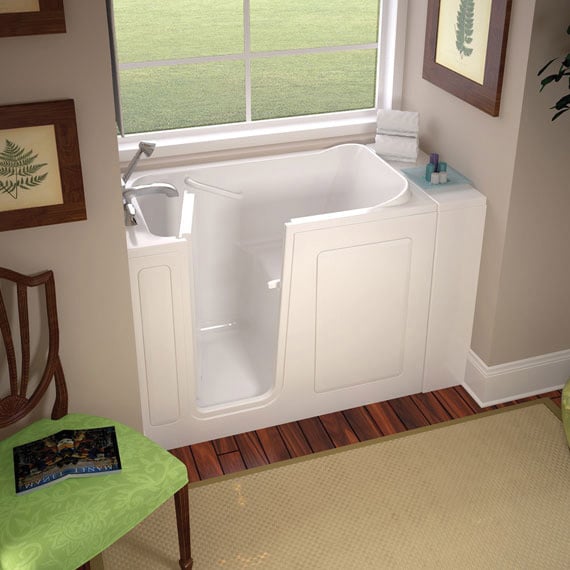
A walk-in tub is a bathtub with a watertight side door and built-in seat.
Instead of stepping over a high tub wall, the user opens the door, steps across a lower threshold, sits down, closes the door, and fills the tub.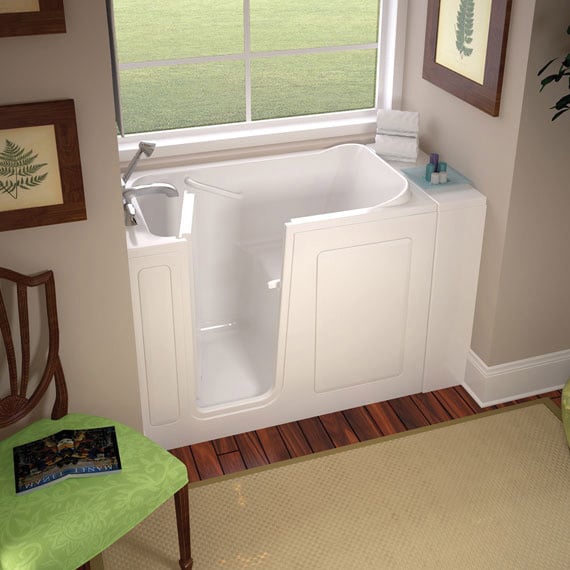
Depending on the selected model, features may include:
- Low-entry access
- Built-in seating
- Grab bars
- Slip-resistant surfaces
- Handheld shower wand
- Easy-reach controls
- Water jets
- Heated surfaces
- Fast-fill or quick-drain options
- Inward- or outward-swinging doors
Features vary by product. The exact model and written specifications should be reviewed before ordering.
Related Article: Walk-In Tub vs Walk-In Shower
Are Walk-In Tubs Only for Older Adults?
No.
Older adults are a major audience because stepping into and out of a conventional bathtub can become more difficult as balance, strength, flexibility, or joint movement changes.
However, the more useful question is not a person’s age. It is whether the tub fits that person’s mobility, bathing routine, bathroom, and long-term plans.
A walk-in tub may suit an adult in their 40s or 50s with limited joint movement better than a physically active person in their 80s who strongly prefers a quick shower.
Who May Benefit From a Walk-In Tub?
People who have difficulty stepping over a tub wall
A standard bathtub requires the user to lift one leg over the side while balancing on the other.
A lower entry may be useful for someone who has difficulty with:
- Balance
- Knee or hip movement
- Leg strength
- Stiffness
- Coordination
- Raising one foot high enough to clear the tub
A lower threshold reduces the height of the step, but it does not remove every risk. The floor can still become wet, and the user must still enter, sit, stand, and exit safely.
The National Institute on Aging recommends properly installed grab bars and nonslip surfaces in bathing areas as part of a broader fall-prevention plan.
People who prefer seated bathing
A built-in seat may be more comfortable for someone who finds prolonged standing tiring or unsteady.
Seated bathing may also make it easier to:
- Wash the lower body
- Use a handheld shower wand
- Rest during bathing
- Keep needed controls within reach
- Avoid lowering to the floor of a standard tub
Seat dimensions and height matter. The user should confirm that the seat is wide enough, comfortable, and positioned at a manageable height.
People planning for future mobility changes
A homeowner does not need to wait for a fall or sudden mobility problem before improving the bathroom.
Someone planning to remain in the home may choose a walk-in tub as part of a broader bathroom plan that includes:
- Better lighting
- Secure grab bars
- Nonslip flooring
- Clear walking paths
- Easy-to-reach storage
- A comfortable-height toilet
- Lever-style controls
- Wider access where necessary
A walk-in tub is one possible feature within that plan—not a complete aging-in-place solution by itself.
Caregivers and multigenerational households
A walk-in tub may make assisted bathing more manageable in some households.
The door, seat, controls, handheld shower, and grab bars may help a caregiver support someone without reaching over a tall tub wall.
However, the bathroom must still provide enough space for the caregiver to move safely. An outward-swinging door, nearby toilet, narrow floor area, or poorly placed vanity can make assistance more difficult.
Caregivers should evaluate the complete room layout, not only the bathtub.
Adults who enjoy deep soaking
Walk-in tubs commonly provide deeper water than many standard bathtubs.
That may appeal to someone who enjoys:
- Long baths
- Quiet relaxation
- Warm-water soaking
- Reading or listening to music
- A more spa-like routine
- Optional air or water jets
Warm water may temporarily help some people relax stiff joints and tired muscles, but a walk-in tub should not be marketed as treating arthritis, improving circulation, healing injuries, or replacing medical care. People with health conditions should ask a qualified clinician whether heat or hydrotherapy is appropriate for them. Warm-water guidance also emphasizes avoiding excessive heat.
People with temporary or changing mobility limitations
A person recovering from surgery or injury may find a high tub wall difficult to cross.
That does not mean a walk-in tub is always the right response to a temporary limitation.
Before making a major permanent purchase, consider:
- Expected recovery time
- Current medical restrictions
- Whether seated bathing is permitted
- Whether a temporary shower chair would be sufficient
- Whether a low-threshold shower would be more useful long term
- Whether the person can safely wait while the tub fills and drains
The treating medical professional or physical therapist should guide activity and bathing restrictions after an injury or procedure.
Are Walk-In Tubs Good for Children?
A walk-in tub should not be promoted as a children’s safety product.
The low doorway and built-in seat may be convenient in some households, but young children still require close adult supervision around water.
A walk-in tub may also introduce considerations such as:
- A door children may try to operate
- Deep water
- Water-temperature controls
- Jets
- A longer fill and drain cycle
- A seat that may encourage climbing
- The need to keep the door properly sealed
No bathtub eliminates drowning, slipping, scalding, or climbing risks.
Parents should choose a bathing setup based on the child’s age, ability, supervision needs, and the product manufacturer’s instructions.
Are Walk-In Tubs Appropriate During Pregnancy?
A lower entry may feel easier for some pregnant people than stepping over a high tub wall.
However, the article should not claim that a walk-in tub prevents falls, protects stitches, or makes pregnancy and postpartum recovery safer.
Pregnancy, delivery, surgical recovery, water temperature, wound care, balance, and mobility are medical matters. A pregnant or postpartum person should follow guidance from their healthcare professional before using a deep tub, hot water, jets, or a particular bathing position.
What Are the Main Advantages of a Walk-In Tub?
Lower entry than a standard bathtub
A low threshold may reduce the amount of leg lift required to enter.
Built-in seat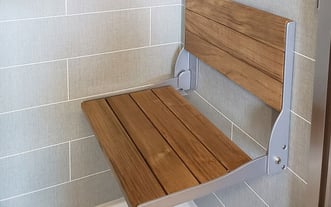
The user can remain seated rather than lowering to the bottom of a conventional tub.
Accessible controls
Controls are generally positioned so they can be reached from the seat.
Grab-bar options
Strategically placed bars may provide support when entering, sitting, standing, and exiting.
Deep soaking
The deeper tub design may provide water coverage around more of the body.
Optional comfort features
Depending on the model, options may include water jets, air jets, heated surfaces, and handheld shower equipment.
Bathing and rinsing options
Many walk-in tubs can include a handheld shower wand. Some configurations may also support an overhead shower option. Joyce advises confirming the exact arrangement for the selected model.
What Are the Disadvantages of a Walk-In Tub?
You usually enter before filling it
Because the door cannot normally be opened while the tub contains water, the user generally sits inside while it fills.
You usually wait for it to drain
The door normally remains closed until the water falls below its opening.
Joyce currently says many walk-in tubs take approximately five to ten minutes to fill and a similar time to drain, although fast-fill and quick-drain features may reduce the wait. The exact timing depends on the tub, plumbing, water pressure, drain, and water heater.
The water may cool during the wait
The user may remain seated while the final water drains. Heated-seat or heated-surface options may improve comfort, but availability varies.
A larger water heater may be needed
A deep walk-in tub may require more hot water than the household’s existing bathtub.
Before purchase, ask:
- What is the tub’s usable water capacity?
- How large is the existing water heater?
- Is the heater gas, electric, tankless, or heat-pump based?
- Can it provide the desired water temperature?
- Will plumbing or water-heater upgrades be needed?
The price is higher than some alternatives
Joyce currently publishes a planning range of approximately $18,000 to $22,000 for a walk-in-tub project, including removal, new plumbing fixtures, accessories, and professional installation. Final pricing depends on the product, bathroom, plumbing, options, and site conditions.
It may not fit a small bathroom
The tub dimensions, door swing, nearby toilet, vanity, walls, and access path must all be measured.
It may not suit someone who prefers quick showers
A walk-in tub is usually best for a person who values seated bathing or soaking. Someone who rarely bathes may be happier with a low-threshold shower.
It does not eliminate fall risk
Bathroom injuries can occur among adults of all ages, particularly while getting into or out of tubs and showers. Grab bars, nonslip surfaces, lighting, clear pathways, and appropriate assistance remain important.
Walk-In Tub vs. Low-Threshold Shower
| Consideration | Walk-in tub | Low-threshold shower |
|---|---|---|
| Bathing position | Primarily seated | Seated or standing |
| Deep soaking | Yes | No |
| Entry | Low step through a door | Low curb or threshold |
| Fill and drain wait | Yes | No |
| Quick showering | Possible, but may be less convenient | Usually more convenient |
| Built-in seat | Common | Optional |
| Grab bars | Common | Optional |
| Water use | Often higher for a deep bath | Usually lower for a short shower |
| Caregiver access | Depends on door and layout | Often more open |
| Best suited for | People who want seated soaking | People who mainly want easier shower access |
Neither option is universally safer.
The right design depends on the user’s:
- Balance
- Strength
- mobility
- ability to sit and stand
- bathing preference
- caregiver needs
- bathroom dimensions
- long-term plans
Questions to Ask Before Buying a Walk-In Tub
About entry and seating
- What is the entry-threshold height?
- How wide is the doorway?
- Does the door swing inward or outward?
- What are the seat width, depth, and height?
- Can the intended user sit and stand comfortably?
- Where are the grab bars located?
- Is the floor slip-resistant?
About water and comfort
- How many gallons does the tub hold?
- How long should it take to fill?
- How long should it take to drain?
- Does the existing water heater have enough capacity?
- Are fast-fill or quick-drain options available?
- Are heated-seat or heated-surface options available?
- Which jet systems are included?
- Can jets be operated independently?
About showering
- Is a handheld shower included?
- Is an overhead shower available?
- Can the tub be used comfortably for a quick rinse?
- Will water spray outside the tub?
- Is a curtain or enclosure included?
About installation
- Will the existing tub be removed?
- Will the walk-in tub fit through the bathroom door?
- Are plumbing or electrical upgrades required?
- Is floor reinforcement needed?
- What wall work is included?
- How will hidden damage be handled?
- What permits or inspections are required?
- How long will the bathroom be unavailable?
About warranty and service
- Who manufactures the tub?
- What is covered by the manufacturer?
- What does the Joyce labor warranty cover?
- Are the door seal, jets, pump, heater, controls, and finish covered separately?
- Is service labor included after the Joyce labor period?
- Who should the homeowner call for service?
How Much Does a Joyce Walk-In Tub Cost?
Joyce currently publishes a general installed planning range of approximately $18,000–$22,000.
The final cost may depend on: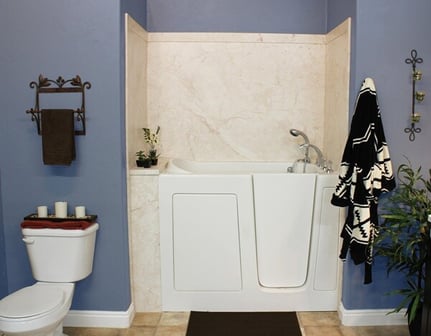
- Tub model and size
- Door design
- Jet package
- Heated features
- Fixtures
- Grab bars
- Wall system
- Handheld or overhead shower options
- Plumbing modifications
- Electrical requirements
- Water-heater needs
- Existing bathroom condition
- Removal and disposal
- Installation complexity
The published range is a starting point, not a final quote.
See What Your Bath Project Could Cost
What Does Joyce Offer?
Joyce currently offers professionally installed walk-in tubs with features that may include:
- Low-entry thresholds
- Built-in seating
- Grab bars
- Easy-reach controls
- Handheld shower equipment
- Water-jet options
- Heated comfort options
- Custom selections based on the bathroom and user
Joyce also handles removal and installation as part of the contracted project. Warranty coverage depends on the selected tub, fixtures, accessories, and written documents. Qualifying Joyce projects currently include a two-year limited labor warranty.
Joyce also offers alternatives such as:
- Standard bathtub replacement
- Shower replacement
- Tub-to-shower conversion
- Low-threshold shower options
- Grab bars and seating
- Selected bathroom facelift projects
A design consultation should compare these choices rather than assuming a walk-in tub is the correct solution.
Walk-In Tub Planning Worksheet
| Planning question | Your answer |
|---|---|
| Who will use the tub most often? | |
| Is stepping over the current tub difficult? | |
| Does the user prefer baths or showers? | |
| Is seated bathing important? | |
| Is a caregiver involved? | |
| Is deep soaking a priority? | |
| Are jets or heated features wanted? | |
| Can the user wait while the tub fills and drains? | |
| Is the existing water heater large enough? | |
| Is an overhead shower needed? | |
| How much bathroom floor space is available? | |
| What is the comfortable project budget? |

Frequently Asked Questions
Are walk-in tubs only for seniors?
No. They may be useful for adults of different ages who have difficulty crossing a standard tub wall, prefer seated bathing, provide care to someone else, or want deep soaking and comfort features.
Are walk-in tubs safer than standard bathtubs?
They may reduce the height a user must step over and can include seating and grab bars. They do not eliminate slipping, scalding, balance, or transfer risks.
Can a walk-in tub be used as a shower?
Many models include a handheld shower wand, and some may support an overhead shower. Confirm which options are included with the selected tub.
Do you have to wait inside while it fills?
Generally, yes. The watertight door must be closed before filling.
Do you have to wait for it to drain?
Generally, yes. The water must drain below the door before it can be opened.
How long does a walk-in tub take to fill and drain?
Joyce says many models take approximately five to ten minutes to fill and a similar time to drain. Timing varies by tub, plumbing, pressure, and drain system.
Does a walk-in tub use more water?
A deep soaking tub may use more water than a short shower or shallower bath. Compare the selected tub’s usable capacity with the household’s water-heater capacity.
Can children use a walk-in tub?
Children still require close adult supervision. A walk-in tub should not be treated as childproof or as eliminating drowning, slipping, climbing, or scalding hazards.
How much does a Joyce walk-in tub cost?
Joyce currently publishes a planning range of approximately $18,000–$22,000, including removal, fixtures, accessories, and professional installation. Exact pricing requires an in-home evaluation.
Does Joyce provide a warranty?
Walk-in-tub product coverage depends on the selected manufacturer and components. Joyce currently provides a two-year limited labor warranty on qualifying projects. Review the complete written documents before purchase.
The Bottom Line
Walk-in tubs are not defined by the age of the person using them.
They may be a practical choice for someone who wants:
- A lower entry
- Built-in seating
- Grab-bar support
- Seated bathing
- Deep soaking
- Optional comfort features
- A bathroom planned for changing mobility needs
They may be a poor fit for someone who:
- Prefers fast standing showers
- Does not want to wait during filling and draining
- Has limited bathroom space
- Has an undersized water heater
- Needs open caregiver access
- Would be better served by a low-threshold shower
The right decision should be based on the user’s actual movement, comfort, bathing habits, bathroom, budget, and long-term plans—not age alone.
Book a Bath Design Consultation to compare a Joyce walk-in tub, low-threshold shower, tub-to-shower conversion, or replacement bathtub for your home.

Topics: