
Is It Better to Reglaze or Replace a Bathtub?
Reglazing and bathtub replacement solve different problems.
Reglazing may make sense when your bathtub is structurally sound and you mainly want to improve stains, discoloration, surface wear, or an outdated color.
Replacement may make more sense when the tub is cracked, leaking, badly damaged, uncomfortable, difficult to enter, or when you want to update the tub, surrounding walls, fixtures, storage, or overall function at the same time.
The simplest way to decide is to ask:
Is the problem only the surface—or is the bathtub itself no longer working for you?
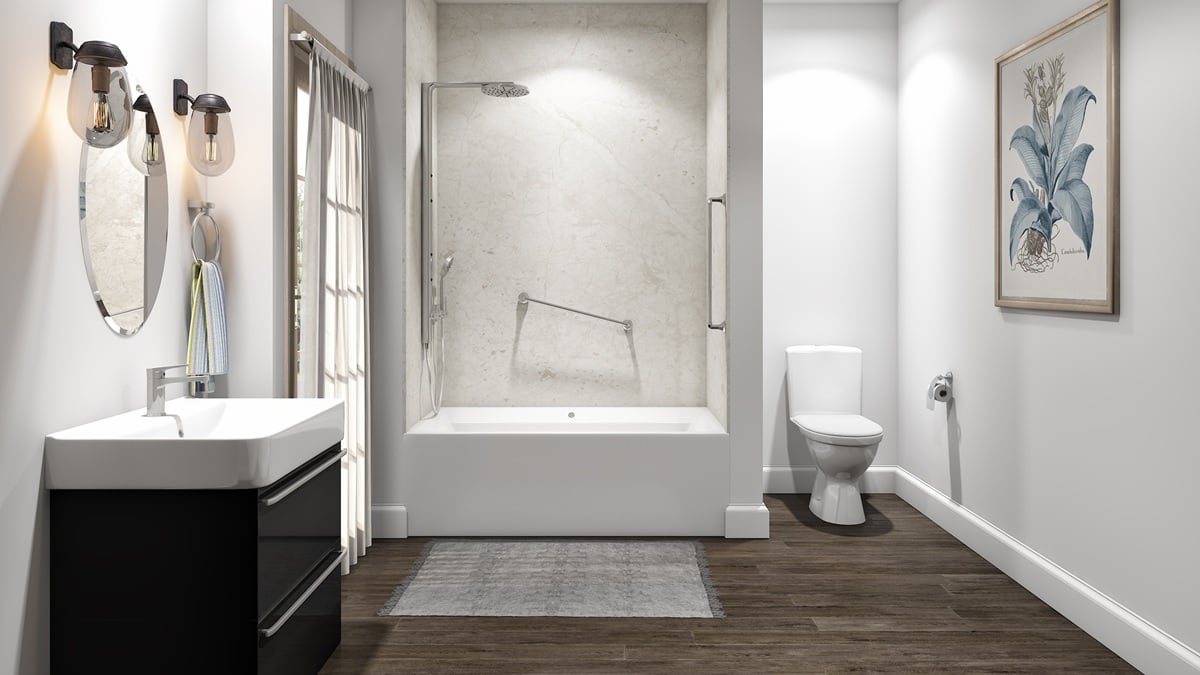
Joyce Windows, Sunrooms & Baths focuses on bathtub replacement rather than reglazing. A Joyce bathtub replacement can include removal of the old tub, a new tub, SignatureStone wall surrounds, updated fixtures, accessories, and professional installation. Joyce currently lists a typical bathtub-replacement planning range of about $9,000–$12,000, depending on the project.
What Is Bathtub Reglazing?
Bathtub reglazing—also called refinishing or resurfacing—is a process that applies a new finish over an existing bathtub.
The exact process varies by contractor and product, but it generally involves:
- Cleaning and preparing the existing surface
- Repairing small chips or surface imperfections where appropriate
- Preparing the surface so the new coating can bond
- Applying primer and refinishing coatings
- Allowing the finish to cure before the bathtub is used
The original tub stays in place.
That is the biggest difference between reglazing and replacement.
What Does Reglazing Actually Fix?
Reglazing is primarily a surface update.
It may improve problems such as:
- Staining
- Faded color
- An outdated finish
- Minor surface wear
- Small cosmetic imperfections
It does not turn an old bathtub into a completely new tub.
If the underlying bathtub, plumbing, surround, or structure has a bigger problem, putting a new finish on the surface may not address it.
What Is Bathtub Replacement?
Bathtub replacement means removing the existing bathtub and installing a new one.
Depending on the project, replacement can also involve updates to:
- Plumbing fixtures
- Wall surrounds
- Shelving
- Curtain rods or glass options
- Grab bars
- Other bath accessories
Joyce bathtub projects focus on the tub or wet area rather than requiring a complete gut renovation of the entire bathroom. Joyce currently offers bathtub replacement with SignatureStone wall surrounds, new fixtures, accessories, and professional installation.
Related Article: Explore Joyce Bathtub Replacement
Reglazing vs. Bathtub Replacement at a Glance
| Factor | Reglazing | Replacement |
|---|---|---|
| What changes | Surface finish | Entire bathtub |
| Existing tub remains | Yes | No |
| Best for | Cosmetic surface issues | Functional, structural, design, or accessibility changes |
| Demolition | Minimal | Existing tub must be removed |
| Plumbing changes | Usually limited | Possible depending on project |
| Wall surround update | Usually separate | Can be included |
| Design flexibility | Limited by existing tub | New tub, walls, fixtures, accessories |
| Upfront cost | Usually lower | Higher |
| Project scope | Surface-focused | More complete wet-area update |
When Does Reglazing Make Sense?
Reglazing deserves a fair comparison.
It can be a practical option when the existing bathtub still works well and the main problem is appearance.
Consider Reglazing If:
Your bathtub is structurally sound.
You like its size and shape.
It does not leak.
There is no major rust-through, cracking, or movement.
You are satisfied with the current walls and fixtures.
You mainly dislike the color, staining, or worn finish.
Keeping the initial project cost lower is one of your main priorities.
You are looking for a cosmetic refresh rather than a broader bathroom upgrade.
In that situation, removing a functional bathtub may be unnecessary.
When Should You Consider Replacing the Bathtub?
Replacement becomes more useful when the problems go beyond the finish.
Consider Replacement If:
- The bathtub is cracked
- There are recurring leaks
- The tub has serious rust or deterioration
- The bathtub feels unstable
- Previous surface repairs keep failing
- You dislike the tub's shape, depth, or size
- Stepping over the tub is becoming difficult
- The wall surround also needs replacement
- You want new fixtures or storage
- You want a more complete, coordinated bathroom update
A fresh coating cannot solve every one of those problems.
Replacement gives you the opportunity to address the wet area as a system rather than treating only the visible surface.

Question #1: Is the Problem Cosmetic or Structural?
Start here.
Look at the bathtub carefully.
Cosmetic Problems May Include:
- Surface staining
- Faded color
- Discoloration
- Minor surface wear
- An outdated finish
Those conditions may make reglazing worth exploring.
Bigger Problems May Include:
- Significant cracks
- Flexing or movement
- Leaks
- Serious deterioration
- Damage around the drain
- Water damage around the tub
- Problems with the wall surround
Those conditions deserve a more complete evaluation.
Do not cover up a moisture or structural problem with a new surface finish.
Question #2: Are You Happy With the Current Tub?
Even if the bathtub can be refinished, ask whether you actually want to keep it.
Maybe your tub is technically functional but:
- Too shallow
- Difficult to enter
- Hard to clean
- Uncomfortable
- The wrong color
- Surrounded by outdated walls
- Missing useful storage
- Paired with old fixtures
Reglazing preserves the existing bathtub.
That is an advantage only if you like the bathtub you already have.
Replacement creates more opportunities to change how the space looks and functions.
Question #3: What Condition Are the Walls In?
The tub may not be the only outdated part of the wet area.
Look at the walls around it.
Are you dealing with:
- Cracked tile
- Discolored grout
- Loose materials
- Difficult-to-clean surfaces
- Outdated colors
- Limited shelving
- Signs of moisture damage
If the walls also need attention, refinishing only the tub may leave you with half an updated bathroom.
Joyce bathtub replacement projects can include SignatureStone wall surrounds, which provide a stone-inspired, low-maintenance alternative to traditional tile and grout.
Related Article: Explore SignatureStone Designs
Question #4: Do You Want to Improve Accessibility?
Reglazing does not change the height or shape of the existing tub.
If stepping over the tub wall is becoming difficult, a surface update will not solve that problem.
Depending on your goals, you may want to compare:
- A new bathtub
- A low-threshold shower
- A tub-to-shower conversion
- A walk-in tub
- Grab bars
- Seating
- Handheld shower fixtures
Joyce currently offers bathtub replacement, tub-to-shower conversions, low-threshold shower options, grab bars, seating, and walk-in tubs as part of its bath remodeling options.
The right solution depends on how you want to use the bathroom now and in the future.
Question #5: How Long Do You Want the Update to Solve the Problem?
One of the biggest weaknesses in the current article is presenting a universal reglazing lifespan.
There is not one reliable number that applies to every refinished bathtub.
Durability can vary based on:
- Condition of the original tub
- Surface preparation
- Refinishing system
- Installer workmanship
- Cleaning products
- Bath mats
- Impact or scratching
- Frequency of use
- Moisture conditions
Instead of asking only:
“How many years does reglazing last?”
Ask the contractor:
What warranty do you provide?
What causes the finish to fail?
Which cleaners are allowed?
Are bath mats or suction products restricted?
What happens if the finish chips or peels?
That gives you information about the actual system you are buying rather than relying on a generic lifespan claim.
Does a Reglazed Bathtub Require Special Care?
Possibly.
Care requirements depend on the coating used.
A refinishing contractor should tell you exactly:
- Which cleaners are approved
- Which cleaners should be avoided
- Whether abrasive pads are allowed
- Whether suction-cup bath mats are recommended
- How long the finish must cure
- What the warranty excludes
Replacement tubs also need appropriate care.
So I would remove the current article's claim that a replacement means “no special care required.”
Every bath product has manufacturer cleaning and maintenance instructions.
The real difference is that reglazing adds a coating over an existing bathtub, while replacement gives you a new factory-manufactured tub.
What Are the Safety Concerns With Bathtub Reglazing?
This section needs an important 2026 update.
Historically, some bathtub refinishing work used methylene chloride as a stripping chemical. EPA documented serious and fatal exposure risks associated with methylene chloride, including deaths involving bathtub refinishing workers.
EPA's current rule prohibits most commercial uses of methylene chloride as of April 28, 2026, with only limited exceptions for specified uses.
That means an updated article should not imply that every modern reglazing contractor is using methylene chloride.
Instead, ask any refinishing contractor:
What products will you use in my home?
How will the room be ventilated?
What safety precautions are required?
How long should people and pets remain out of the bathroom?
When is the bathtub safe to use again?
Is Reglazing Cheaper Than Replacement?
In general, a surface refinishing project will usually have a lower initial cost than removing and professionally replacing a bathtub.
But price should be compared against scope.
Reglazing generally gives you:
- A refinished existing tub
A replacement project may give you:
- Removal of the old bathtub
- New bathtub
- New wall system
- Plumbing fixtures
- Accessories
- Professional installation
- Cleanup
- Applicable warranty protection
Those are not the same project.
Joyce currently lists a straightforward bathtub replacement at approximately $9,000–$12,000, depending on materials, installation complexity, plumbing requirements, accessories, and existing bathroom conditions.

What Is Included in a Joyce Bathtub Replacement?
Joyce's current bathtub-replacement pricing typically includes:
- Removal of the existing bathtub
- Replacement tub
- SignatureStone wall surrounds
- New plumbing fixtures
- Accessories
- Professional installation
The exact scope and final price depend on the home and selections.
During the consultation, Joyce reviews the existing bathroom, takes measurements, discusses goals such as style, cleaning, comfort, safety, and accessibility, explains available bath options, and provides a project-specific estimate.
When Might a Tub-to-Shower Conversion Be Better Than Either Option?
Sometimes the real choice is not reglaze versus replace.
It is:
“Do I still want a bathtub?”
If you rarely take baths and mainly use the tub as a shower, a tub-to-shower conversion may better match your routine.
Joyce currently offers tub-to-shower conversions designed around easier entry, more usable shower space, custom wall designs, fixtures, storage, seating, and safety accessories. Joyce lists a typical planning range of about $9,000–$14,000 for these projects on its bath pricing page.

Consider a Tub-to-Shower Conversion If:
You rarely take baths.
Stepping over the tub is difficult.
You want more standing space.
You want a lower entry.
You want seating or grab bars.
You prefer a shower-focused bathroom.
Related Article: Explore Tub-to-Shower Conversions
Reglaze, Replace, or Convert to a Shower?
| Your Situation | Option Worth Considering |
|---|---|
| Tub works well but looks worn | Reglazing |
| Tub color is outdated but everything else works | Reglazing |
| Tub is damaged or deteriorating | Replacement |
| Walls and fixtures are also outdated | Replacement |
| You want a new tub style | Replacement |
| You want new walls and accessories | Replacement |
| You rarely use the bathtub | Tub-to-shower conversion |
| Stepping over the tub is difficult | Low-threshold shower or tub-to-shower conversion |
| You still prefer seated bathing with easier entry | Walk-in tub |
What Questions Should You Ask a Bathtub Reglazing Contractor?
If reglazing looks like the better fit, ask:
What refinishing system do you use?
How is the existing surface prepared?
What types of damage can you repair?
What types of damage cannot be refinished?
What chemicals are used?
How is ventilation handled?
How long is the curing period?
What cleaners can I use?
What voids the warranty?
What written warranty do you provide?
The answers should be specific.
What Questions Should You Ask a Bathtub Replacement Contractor?
Ask:
What exactly is included in the price?
Is removal included?
What tub am I getting?
What wall system is included?
What fixtures are included?
What storage or accessories are included?
Will plumbing need to move?
What happens if hidden damage is found?
How long will installation take?
What warranty applies?
Again, the goal is to compare complete projects rather than headlines.

Frequently Asked Questions About Reglazing vs. Replacing a Bathtub
Is bathtub reglazing worth it?
It can be if the bathtub is structurally sound and the main problem is cosmetic. Reglazing allows you to keep the existing tub while refreshing its surface.
When should you not reglaze a bathtub?
Replacement may deserve stronger consideration when the tub has significant cracks, leaks, serious deterioration, recurring finish failures, structural problems, or no longer fits your bathing needs.
How long does bathtub reglazing last?
There is no universal lifespan. Results vary based on surface preparation, coating system, installer quality, condition of the tub, cleaning products, care, and use. Ask the refinishing contractor for written warranty and maintenance information.
Is bathtub reglazing safe?
Professional surface refinishing can involve chemical products that require appropriate ventilation and safety procedures. EPA has prohibited most commercial uses of methylene chloride as of April 28, 2026, so homeowners should ask contractors what products they currently use and how they manage ventilation and exposure.
Is bathtub replacement more expensive than reglazing?
Usually, because replacement involves a larger project scope. Joyce currently lists a typical bathtub-replacement planning range of approximately $9,000–$12,000 including removal, fixtures, accessories, and professional installation.
Can I replace just the tub without remodeling the whole bathroom?
Yes. A bathtub replacement can focus on the wet area while leaving much of the rest of the bathroom unchanged. Joyce offers wet-area bath remodeling as well as broader bathroom-refresh options.
Should I replace my bathtub with a shower?
It may make sense if you rarely use the tub, want easier entry, or prefer more shower space. Consider how everyone in the household uses the bathroom before removing a bathtub.
How much does Joyce charge to replace a bathtub?
Joyce currently lists a general bathtub-replacement range of approximately $9,000–$12,000. Final cost depends on your bathroom, materials, accessories, plumbing needs, and installation conditions.
The Right Choice Depends on What Is Actually Wrong With Your Tub
Reglazing and replacement are not interchangeable.
If the bathtub works well and the finish simply looks tired, reglazing may be a practical, lower-scope way to refresh it.
If the bathtub itself is damaged, outdated, difficult to use, or surrounded by walls and fixtures that also need replacement, investing in a new bath system may make more sense.
And if you no longer use the tub at all, a tub-to-shower conversion may be worth comparing before you spend money restoring something you do not really want.
Joyce Windows, Sunrooms & Baths offers custom bathtub replacements, shower replacements, tub-to-shower conversions, walk-in tubs, SignatureStone wall systems, and select bathroom-refresh options.
Start with the problem you need to solve.
Then choose the project that actually solves it.