

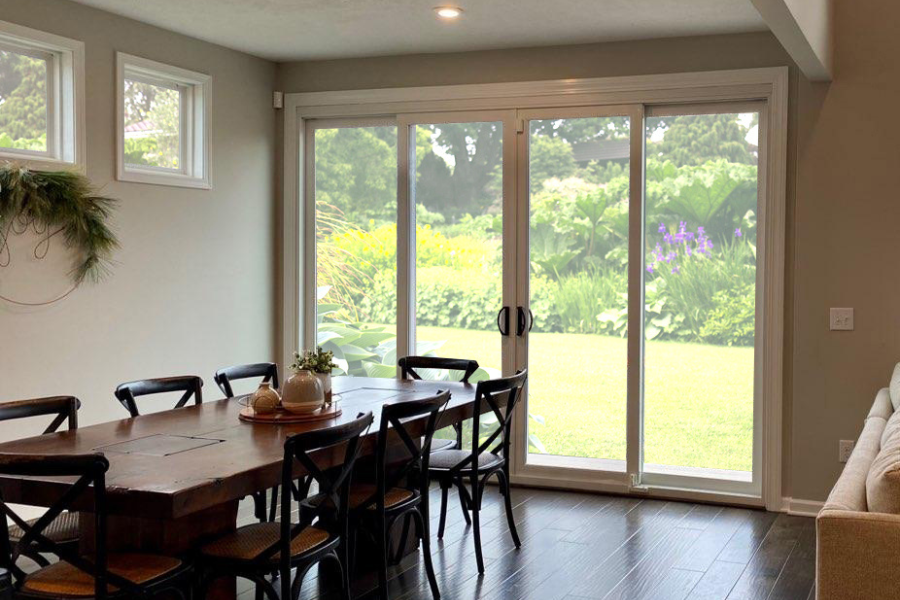
A new patio door can bring more natural light into your home, improve access to your backyard, and make a frequently used doorway easier to operate.
The right replacement is not determined by appearance alone. You also need to consider the available wall space, furniture placement, opening size, energy performance, security, maintenance, and how often your family uses the door.
The most common options are sliding patio doors and hinged French-style patio doors. Sliding doors can also be built in two-, three-, or four-panel configurations, giving homeowners several ways to balance views, ventilation, and access.
Which Replacement Patio Door Should You Choose?
Choose a:
- Two-panel sliding patio door for a familiar, space-saving design with one fixed panel and one operating panel.
- Three-panel sliding patio door when you want a wider glass area and a more expansive view.
- Four-panel sliding patio door for a large opening, broad outdoor views, and a more dramatic connection to the patio.
- Hinged French-style patio door when you prefer a traditional appearance and have enough floor space for the doors to swing.
- Custom sliding configuration when a standard opening size or panel arrangement does not fit your home.
Joyce patio doors are custom-built in two-, three-, and four-panel configurations. Available options include custom dimensions, colors, finishes, glass styles, decorative grids, hardware finishes, internal blinds, and upgraded locking choices.
Ready to compare patio-door options for your home?

What Is a Replacement Patio Door?
A replacement patio door is installed in an existing exterior opening that connects the home to a patio, deck, porch, sunroom, or backyard.
Homeowners commonly replace patio doors because the existing door:
- Is difficult to open or close
- Allows noticeable drafts
- Has damaged glass or frames
- Does not lock securely
- Has worn rollers or tracks
- Collects water around the opening
- No longer matches the home
- Provides less usable access than the household needs
A replacement project should address the complete opening—not just the movable panel. The frame, sill, glass, weather seals, rollers or hinges, locking system, screen, drainage, and installation all affect how the finished door performs.
What Are the Main Types of Replacement Patio Doors?
Sliding Patio Doors
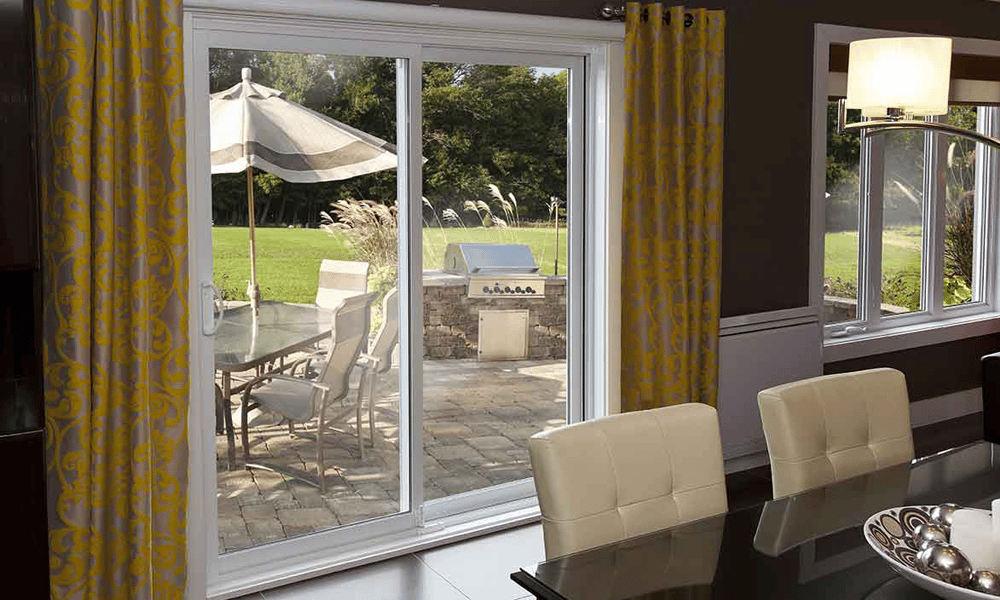
A sliding patio door moves horizontally along a track rather than swinging into or out of the room.
A typical two-panel design has one fixed panel and one operating panel. Larger configurations may use three or four panels, with the exact operating arrangement determined by the product and design.
Sliding doors work well when:
- Interior floor space is limited
- Furniture sits near the opening
- You want a broad glass area
- You prefer a clean, contemporary appearance
- The opening is used frequently
- You want a screen that slides along the exterior track
Joyce manufactures custom sliding patio doors with fusion-welded vinyl frames and sashes, reinforced components, tandem steel rollers, tempered glass, and available multi-point locking systems.
Hinged French-Style Patio Doors
French-style patio doors operate on hinges and usually include two side-by-side door panels. Depending on the configuration, one or both panels may operate.
They are often chosen for:
- Traditional or transitional architecture
- A more formal appearance
- Wider access when both panels can open
- Rooms with adequate swing clearance
- Homeowners who prefer the feel of a hinged door
A hinged door requires clear floor space. Furniture, rugs, steps, curtains, and traffic paths must not interfere with the swing.
Joyce’s current website includes French-style doors among its door options, but the detailed patio-door product page primarily documents Joyce-manufactured sliding patio doors. Confirm the currently available hinged patio-door collections, materials, and configurations before adding Joyce-specific French-door claims.

Sliding Patio Doors vs. French-Style Doors
| Feature | Sliding patio door | Hinged French-style door |
|---|---|---|
| Operation | Moves horizontally on a track | Swings on hinges |
| Floor-space needs | Minimal | Requires swing clearance |
| Glass area | Usually broad and uninterrupted | Varies by frame and panel design |
| Screen | Commonly uses a sliding screen | Screen options depend on configuration |
| Best fit | Modern layouts and tight spaces | Traditional designs and open floor plans |
| Opening width | Depends on operating-panel arrangement | May provide broad access when both panels open |
| Everyday use | Convenient in high-traffic areas | Familiar hinged-door operation |
| Maintenance | Tracks and rollers require care | Hinges, thresholds, and alignment require care |
Neither style is automatically better. The right choice depends on your available space, preferred appearance, opening size, and how the door will be used.
What Is a Two-Panel Sliding Patio Door?
A two-panel patio door is the most familiar sliding configuration. It normally includes one fixed glass panel and one panel that slides.
It may be the right fit when:
- You are replacing a standard-size patio door
- You want a simple operating design
- Wall space is limited
- One active panel provides enough access
- You want to preserve indoor floor space
A two-panel door can provide substantial natural light without requiring the width of a larger configuration.
What Is a Three-Panel Sliding Patio Door?
A three-panel patio door uses three large glass panels across a wider opening.
The operating arrangement can vary, so homeowners should ask which panel or panels move and how much clear access the final design provides.
A three-panel door may work well when:
- You want a wider view of the yard
- The existing opening is larger than a standard two-panel door
- You want the door to become a stronger visual feature
- The room is used for entertaining
- You need more design flexibility than a basic configuration provides
The additional glass can make the room feel more open, but the panel layout, frame dimensions, sun exposure, and energy ratings should all be reviewed.
What Is a Four-Panel Sliding Patio Door?
A four-panel patio door spans a large opening and creates a wide area of glass.
Depending on its design, the central or outer panels may operate. Confirm the exact arrangement and clear opening before approving the project.
Four-panel doors may be suited to:
- Large family rooms
- Great rooms
- Finished basements with outdoor access
- Sunrooms
- Wide patios or decks
- Homes with a strong indoor-outdoor design
A large glass opening requires careful measurement, structural planning, installation, and water management. The wall opening must be evaluated rather than assuming that a larger door can simply replace a smaller one.
How Do Panel Configurations Affect the Door?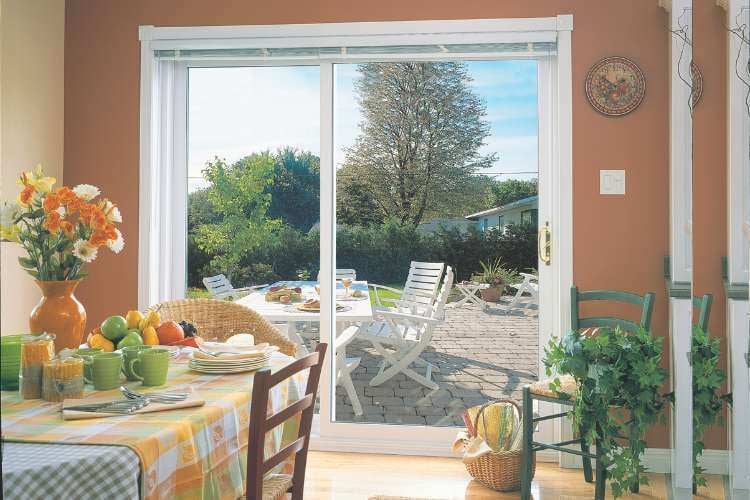
The number of panels affects more than appearance.
Compare:
The Clear Opening
A wider door does not always create a proportionally wider usable opening. Ask how many panels operate and request the actual clear-opening measurement.
The View
More panels can create a broader outdoor view, but vertical frame members will still divide the glass.
Ventilation
The amount of ventilation depends on which panels open and how far they travel.
Furniture Placement
A sliding door saves swing space, but the opening still needs a clear approach. Avoid blocking the active panel with tables, chairs, or large planters.
Structural Requirements
Expanding an existing doorway may require framing, exterior finishing, permits, or engineering. This is a different scope from replacing a door within the same opening.
Cost
Larger custom doors generally require more glass, framing, hardware, labor, and site preparation. Request a project-specific quote after the opening is inspected.
What Glass Options Should You Compare?
Glass affects comfort, safety, natural light, privacy, and energy performance.
Important options may include:
- Tempered safety glass
- Low-emissivity, or low-E, coatings
- Insulating gas fills
- Warm-edge spacer systems
- Decorative grids
- Obscure or privacy glass
- Internal blinds
- Glass coatings intended to reduce cleaning
Joyce currently uses tempered SmartShield glass packages with low-E coatings and Super Spacer® technology in its patio doors. An optional Neat+ coating and internal blinds are also listed among available choices. Exact availability should be confirmed for the selected configuration.
What Does Low-E Glass Do?
Low-E coatings are designed to manage heat transfer through the glass. They can help reduce heat loss during colder weather and limit unwanted solar heat during warmer weather.
The complete door’s energy performance depends on more than the glass coating. Frame construction, spacers, seals, panel size, orientation, installation, and climate also matter.
Compare the performance information for the exact door configuration rather than relying only on general phrases such as “energy efficient.”
Are Blinds Between the Glass Worth Considering?
Internal blinds are installed between panes of glass and adjusted with an exterior control.
They may appeal to homeowners who want:
- Less blind dusting
- No loose cords
- A clean appearance
- Privacy without a separate window treatment
- Blinds protected from pets and everyday handling
Possible limitations include:
- Fewer style and color choices
- Specialized repair requirements
- Separate warranty terms
- A higher initial product cost
- Less flexibility when decorating preferences change
Ask how the blinds operate, how they are serviced, and what coverage applies to the glass, controls, and blind components.
What Makes a Patio Door Energy Efficient?
An energy-efficient patio door combines several components:
- Insulating glass
- Low-E coatings
- Effective spacers
- Tight weather seals
- A well-built frame and sash
- Correct panel alignment
- Professional installation
- Proper insulation around the opening
- Effective sill and drainage design
A patio door can contain far more glass than a standard window, making product selection and installation especially important.
Joyce patio doors use multi-chambered vinyl frames, reinforced components, SmartShield low-E glass packages, and Super Spacer technology.
Related Article: Energy Efficient Information
Which Patio-Door Security Features Matter?
A patio door should be easy for household members to operate while resisting unintended entry.
Compare:
- Keyed locks
- Multi-point locks
- Reinforced lock areas
- Tempered safety glass
- Frame and sash reinforcement
- Door alignment
- Screen construction
- Optional secondary security devices
- Exterior access requirements
Joyce’s documented patio-door features include tempered safety glass, reinforced structural components, keyed locking options, available multi-point locks, and heavy-duty extruded aluminum screens.
No single feature makes a door completely secure. Proper installation, correct adjustment, functioning locks, exterior lighting, and sensible household security habits all contribute.
What Makes a Sliding Patio Door Easy to Operate?
A well-installed sliding door should move smoothly without requiring excessive force.
Operation depends on:
- Roller quality
- Track condition
- Panel alignment
- Door size and weight
- Frame installation
- Debris in the track
- Ongoing adjustment and maintenance
Joyce uses concealed tandem steel rollers designed for smooth and quiet operation.
During a consultation, operate the display door several times. Ask how the rollers are adjusted, how the track should be cleaned, and who provides service if the door becomes difficult to move.
Which Patio-Door Material Is Best?
Replacement patio doors may be made with vinyl, fiberglass, wood, aluminum, or combinations of materials.
Each material has tradeoffs involving maintenance, appearance, strength, insulation, weather resistance, and price.
Joyce manufactures its sliding patio doors with fusion-welded vinyl frames and sashes. The multi-chambered construction and reinforced components are designed to provide strength while keeping maintenance relatively simple.
A vinyl patio door may be a good fit when you want:
- Low routine maintenance
- No regular painting or staining
- Insulating frame construction
- Custom colors or finishes
- A door designed for smooth sliding operation
How Do You Know It Is Time to Replace a Patio Door?
Consider a professional evaluation when your current door:
- Sticks or requires excessive force
- Frequently comes off its track
- Has damaged or fogged glass
- Allows noticeable drafts
- Leaks water
- Has rotted, cracked, or warped components
- Does not latch or lock reliably
- Has a damaged screen
- Has worn rollers that cannot be adjusted
- No longer fits the household’s access needs
Not every problem requires full replacement. Cleaning, adjustment, new weather seals, roller service, or hardware repair may resolve some concerns.
Replacement becomes more reasonable when problems are extensive, repeated, or connected to the condition of the complete door system.
What Should You Ask Before Replacing a Patio Door?
Ask your design consultant:
- Which door styles are available for my opening?
- Can the current opening be reused?
- What are the final frame and clear-opening dimensions?
- Which panels will operate?
- Will the door open from the preferred side?
- Which glass package is included?
- What energy-performance information is available?
- Which locking system is standard?
- Are multi-point locks available?
- Which screen is included?
- Are internal blinds available?
- What colors, grids, and handle finishes can I choose?
- How will the sill and surrounding opening be protected from water?
- What product and labor warranties apply?
- Who handles future service?
These questions make it easier to compare complete door systems instead of focusing on one feature.
How Much Does a Replacement Patio Door Cost?
The cost of a replacement patio door depends on:
- Door type
- Number of panels
- Width and height
- Glass package
- Color and finish
- Decorative grids
- Internal blinds
- Hardware and locking system
- Screen
- Condition of the existing opening
- Structural changes
- Exterior and interior finishing
- Installation complexity
- Permit requirements
Replacing a standard two-panel door within an existing opening is different from creating a wider opening for a three- or four-panel system.
Joyce provides custom patio-door pricing after reviewing the home, measurements, configuration, and selected options. The Joyce pricing hub also directs homeowners to product-specific planning information and consultation-based quotes.
Why Choose a Joyce Sliding Patio Door?
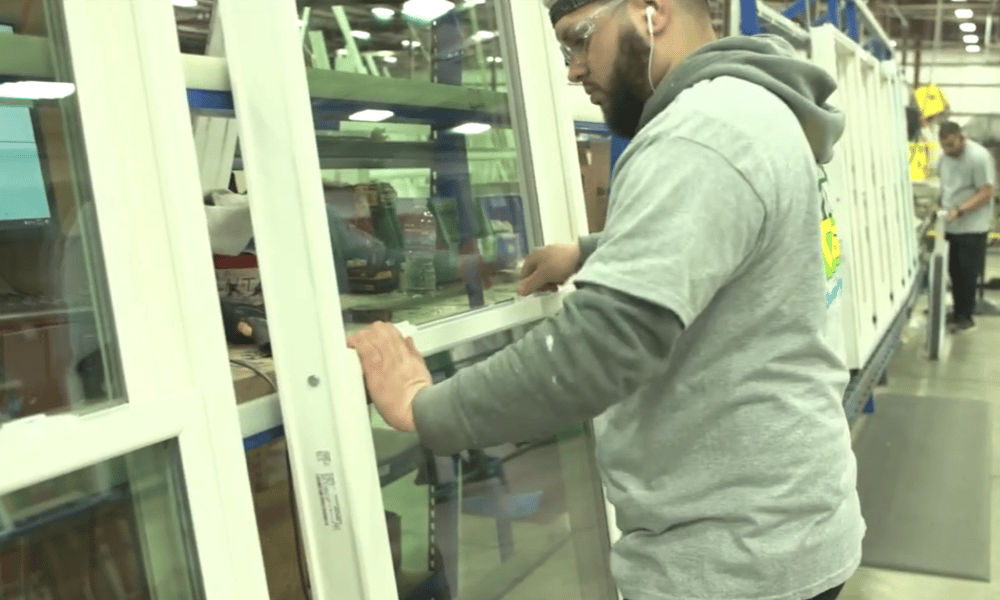
Joyce manufactures many of its factory-direct products, including patio doors, at its Berea, Ohio, facility. The company is involved in the process from design and manufacturing through installation and service, giving homeowners one point of accountability.
Joyce sliding patio doors offer:
- Two-, three-, and four-panel configurations
- Custom widths and heights
- Fusion-welded vinyl construction
- Reinforced structural components
- Tempered safety glass
- SmartShield low-E glass packages
- Super Spacer technology
- Concealed tandem steel rollers
- Keyed and multi-point locking options
- Heavy-duty aluminum screens
- Internal-blind options
- Decorative grids
- Multiple colors, finishes, and handle choices
- Professional installation
Available features and warranty coverage depend on the final product, options, agreement, and current written documentation.
Joyce has served homeowners since 1955 and remains a third-generation, family-owned home improvement company serving communities in Ohio, Pennsylvania, North Carolina, and South Carolina.
Frequently Asked Questions About Replacement Patio Doors
What is the most common type of replacement patio door?
A two-panel sliding patio door is one of the most common choices. It usually has one fixed glass panel and one operating panel that moves horizontally.
Which is better: a sliding patio door or French-style doors?
Neither is best for every home. Sliding doors save floor space and generally provide a broad glass area. French-style doors offer a traditional hinged appearance but need room to swing.
How many panels should a sliding patio door have?
Choose the panel count based on the existing opening, desired view, usable access, ventilation, wall size, and budget. Two-panel doors suit many standard openings, while three- and four-panel doors can span larger areas.
Do all panels open on a three- or four-panel patio door?
No. Operating arrangements vary. Ask which panels move and request the actual clear-opening dimensions before ordering.
Are sliding patio doors energy efficient?
They can be. Performance depends on the glass package, frame, spacers, seals, size, installation, and climate. Compare information for the exact door rather than judging it only by style.
Are patio doors secure?
A properly installed patio door can include tempered glass, reinforced frames, keyed locks, and multi-point locking. Security also depends on adjustment, maintenance, exterior conditions, and correct use.
Are blinds between the glass available in patio doors?
Yes, some patio-door configurations offer internal blinds. Joyce lists internal blinds among its available design options. Confirm availability for the selected size and panel configuration.
Can I replace a two-panel door with a three-panel door?
Possibly, but the opening may need to be widened and structurally modified. A professional must evaluate the wall, framing, exterior finish, permits, and installation requirements.
How long should a patio-door replacement take?
The on-site installation schedule depends on the opening, door size, structural work, interior and exterior finishing, weather, and unexpected damage. Request a project-specific schedule after the opening has been inspected.
Does Joyce manufacture its patio doors?
Yes. Joyce identifies patio doors among the factory-direct products it manufactures and supports from design through installation and service.
Find the Right Patio Door for Your Home
The best replacement patio door should fit the opening, move smoothly, provide useful access, complement the home, and meet your expectations for comfort and security.
Start by choosing between a sliding and hinged design. Then compare the panel layout, clear opening, glass package, frame, locks, screen, finishes, warranty, and installation plan.
Joyce Windows, Sunrooms & Baths can help you design a custom sliding patio door in a two-, three-, or four-panel configuration and explain which options make sense for your home.
Topics:
