
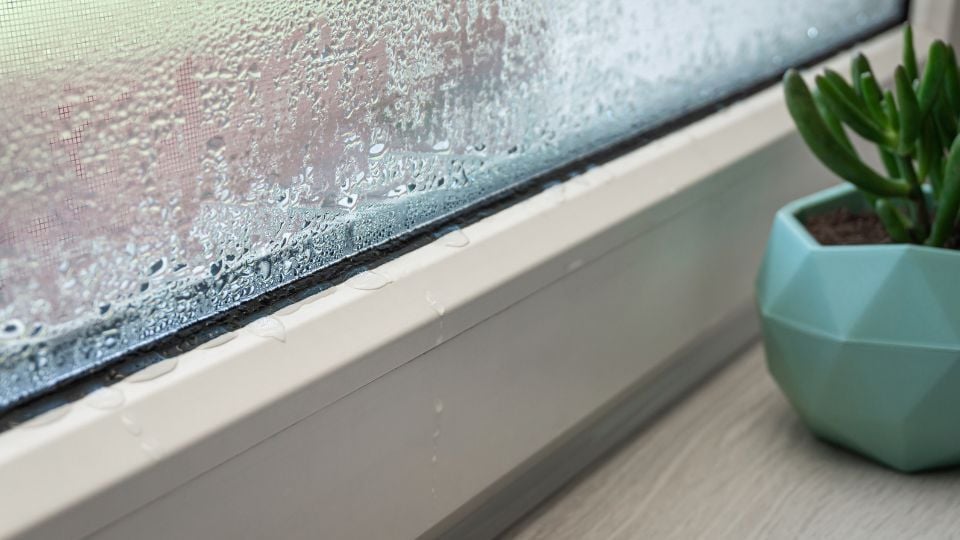
If you are seeing fog, water droplets, or even frost on your windows, the first question is not just why. It is where the condensation is forming.
That detail matters because condensation on the outside of the glass usually means something very different from condensation on the inside of your home or between the panes. In some cases, it is normal. In others, it is a warning sign that your indoor humidity is too high or that your window seal has failed.
For homeowners, the goal is not just to get rid of the moisture for today. It is to understand what the moisture is telling you about your windows and your home.
Quick Overview
Window condensation happens when warm, moisture-filled air hits a cooler glass surface and drops below the dew point. Condensation on the outside of the window is usually harmless and can actually be a sign that the window is insulating well. Condensation on the inside of the window usually points to excess indoor humidity, poor ventilation, or cold glass surfaces. Condensation between panes usually means the seal in an insulated glass unit has failed. EPA says indoor condensation can be a sign of high humidity and recommends keeping indoor humidity ideally between 30% and 50%. If moisture is trapped between panes or you have older drafty windows, replacement may be the best long-term fix.

What Causes Window Condensation?
Condensation forms when humid air touches a cooler surface and the air can no longer hold all its moisture. That moisture turns into visible water on the glass.
The basic science is simple, even if the causes inside a home can vary. Once air reaches its dew point, moisture condenses on the first cold surface it encounters. Windows are often that surface because glass can be much cooler than the surrounding room air, especially in cold weather.
That is why condensation is more common during temperature swings, cold mornings, winter weather, showers, cooking, and other times when your home has more indoor moisture.
Is Condensation on Windows Normal?
Sometimes, yes.
Not every window condensation issue means you need new windows. In many homes, at least some seasonal condensation is normal. The real question is whether it is happening:
- On the outside of the glass
- On the inside of the glass
- Between the panes
Each one points to a different cause and a different solution.
What Does Exterior Window Condensation Mean?
Exterior condensation usually happens when warm, humid outdoor air meets cooler exterior glass. This often shows up in the morning after a cool night.
Joyce’s current article explains that exterior condensation is especially common during spring and fall and is usually temporary and harmless. It can also be a sign that your windows are doing a good job of preventing indoor heat transfer.
In most cases, exterior condensation is not a repair issue. It tends to burn off as outdoor temperatures rise.
What Does Interior Window Condensation Mean?
Interior condensation is the one homeowners should pay closer attention to.
If moisture is collecting on the room side of the glass, the problem is usually excess indoor humidity meeting a cold window surface. Joyce’s current article ties interior condensation to high indoor humidity and notes that it can lead to mold or mildew growth, damage to frames and sills, and less comfortable indoor conditions.
EPA says if you see condensation on windows, walls, or pipes, you should act quickly to dry the wet surface and reduce the moisture source. EPA also recommends keeping indoor humidity below 60%, ideally between 30% and 50%, to help control mold and moisture problems.
What Causes High Indoor Humidity Around Windows?
A lot of everyday activities add moisture to the air inside your home.
Common sources include:
- Showers and baths
- Cooking
- Running the dishwasher
- Clothes drying
- Humidifiers
- Poor bathroom or kitchen ventilation
- Air leaks and inadequate insulation
- Basement or crawl space moisture problems
EPA specifically recommends venting moisture-producing appliances outside where possible, using bathroom fans, opening windows when practical, and using air conditioners or dehumidifiers when needed.
Is Condensation Between Window Panes a Bad Sign?
Usually, yes.
If you see fog or moisture trapped between panes of glass, that often means the insulated glass seal has failed. Joyce’s current article says this is a common issue in older or poorly constructed windows and that it reduces visibility and energy efficiency.
This type of problem is different from normal indoor or outdoor condensation because the moisture is no longer on an exposed surface you can wipe away. It is trapped inside the glass unit. In many cases, that means repair or replacement is needed.
Do Old Windows Make Condensation Worse?
They can.
Older windows often have colder interior glass surfaces, weaker seals, and less effective insulating performance than modern replacement windows. That means they may be more likely to collect interior condensation during cold weather, especially if your home already has high humidity.
Joyce’s replacement window page emphasizes energy-efficient windows and offers factory-direct replacement options along with an instant cost calculator and design consultation path.
That does not mean every condensation issue requires full replacement. But if your home has recurring condensation, drafts, failed seals, or aging windows that are already due for an upgrade, new windows may solve more than one problem at once.
How Do You Reduce Condensation on Windows?

The right fix depends on where the moisture is showing up.
If the condensation is on the outside:
Usually, no action is needed. It is often temporary and harmless.
If the condensation is on the inside:
Focus on lowering humidity and improving airflow.
Steps that often help include:
- Running bathroom exhaust fans during and after showers
- Using kitchen ventilation when cooking
- Using a dehumidifier if the home feels damp
- Keeping blinds and curtains open enough for airflow near the glass
- Checking for leaks or moisture issues elsewhere in the home
- Maintaining indoor humidity in a healthier range
EPA recommends keeping indoor humidity ideally between 30% and 50% and acting quickly when you see moisture collecting on windows or other surfaces.
If the condensation is between panes:
You are usually dealing with a failed seal, not a humidity-management problem. At that point, a professional evaluation is the best next step.
When Should You Worry About Window Condensation?
Window condensation deserves more attention when:
- It happens often on the inside of the glass
- Water is collecting on sills or frames
- You are seeing mold, mildew, or staining nearby
- The condensation is trapped between panes
- The windows feel drafty or noticeably cold
- The problem keeps returning every winter
These are the situations where condensation becomes more than a temporary annoyance. It becomes a comfort, maintenance, or window-performance issue.
Are Replacement Windows The Best Solution?
Sometimes, yes.
If the issue is mainly high indoor humidity, replacement windows alone will not fix the underlying moisture problem. You still need to improve ventilation and moisture control. EPA is clear that moisture control is the key to mold control.
But if your windows have failed seals, poor insulating performance, drafts, or age-related wear, replacement windows may be the most effective long-term solution. Joyce says its modern vinyl replacement windows use advanced insulating glass and are designed to improve comfort, visibility, and energy performance. Joyce also offers a window cost calculator and design consultations so homeowners can compare options before making a decision.
Related Article: Benefits of Replacement Windows
How Do You Know Whether to Manage Humidity or Replace the Windows?
A simple way to think about it:
It is probably a humidity issue if:
- The condensation is on the room side of the glass
- It gets worse after showers, cooking, or humid weather
- You can wipe the moisture away
- Multiple windows show the same issue at the same time
It may be a window failure issue if:
- The moisture is trapped between panes
- Only certain older windows are affected
- The glass stays foggy no matter what the indoor humidity is
- You also notice drafts, sticking, or visible window wear
The Bottom Line on Condensation
Condensation on windows is not one problem. It is a symptom, and the location of the moisture tells you what kind of symptom it is.
Exterior condensation is usually normal. Interior condensation usually points to too much indoor humidity or cold glass surfaces. Condensation between panes usually means the window seal has failed.
If you are seeing trapped moisture, recurring drafts, or older windows that no longer perform the way they should, a professional evaluation can help you figure out whether the next step is humidity control, repair, or full replacement.
Joyce Windows, Sunrooms & Baths offers replacement windows, design consultations, and an instant pricing tool for homeowners who want to compare options before committing to a project.

Frequently Asked Questions
Why do my windows have condensation in the morning?
Morning condensation often happens because temperatures drop overnight and the glass cools enough for moisture to form. If it is on the outside, it is usually harmless and temporary.
Is condensation on the inside of windows bad?
It can be. Interior condensation is often a sign of high indoor humidity, and EPA warns that moisture collecting on windows can contribute to mold and other moisture-related problems if not addressed.
Can new windows stop condensation?
They can help when the problem is caused by failed seals, poor insulating performance, or very cold interior glass surfaces. They will not fully solve a whole-home humidity problem by themselves.
What does condensation between panes mean?
It usually means the seal in the insulated glass unit has failed, allowing moisture to get trapped between the panes.
What indoor humidity should I aim for?
EPA recommends keeping indoor humidity below 60%, ideally between 30% and 50%.