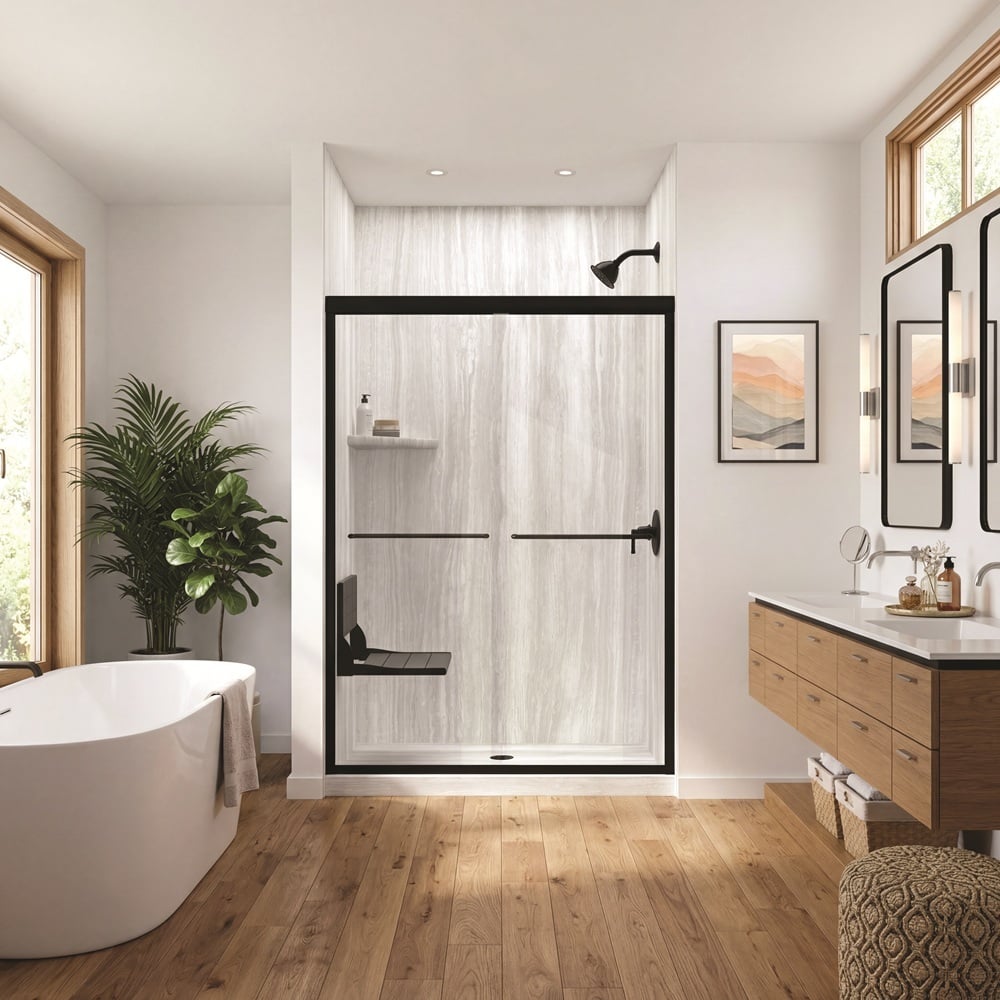
Bathroom trend articles often rely on designer forecasts, Pinterest boards, or manufacturer predictions.
This one is different.
We analyzed 1,645 sold Joyce bath projects from March 2025 through August 2026 to see what homeowners actually purchased, not what they said they liked and not what a trend report predicted they might choose. The data comes directly from completed sales and includes wall colors, fixture finishes, shower-door glass, safety features, project types, and more.
The result is a practical look at the bathroom styles and features real homeowners are choosing right now.

What bathroom color is most popular?
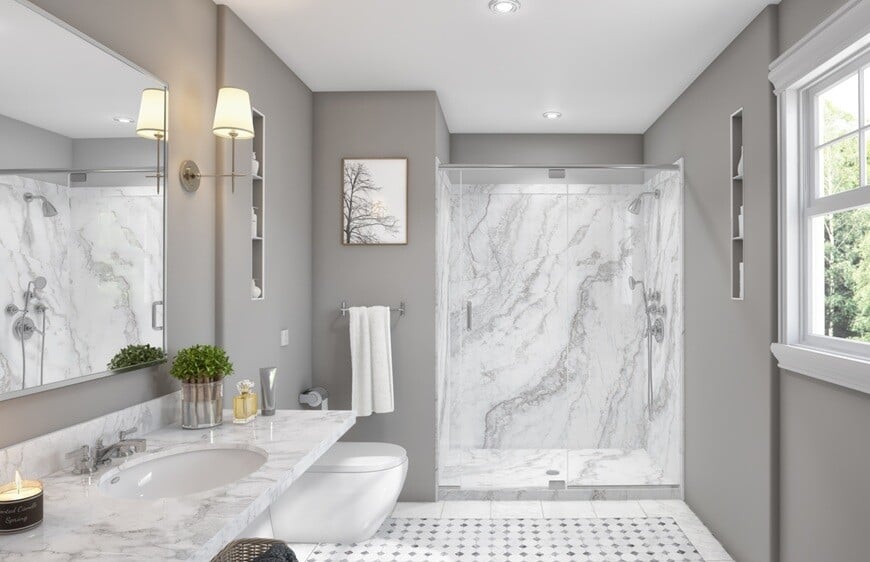
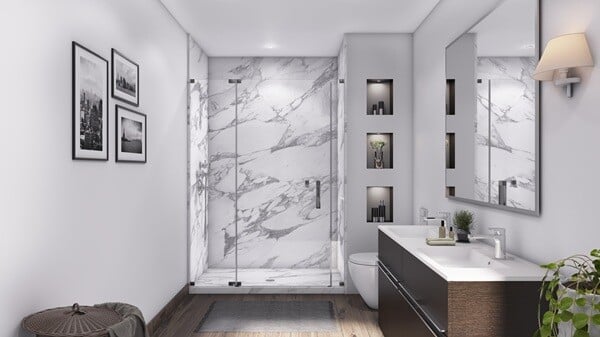
White still leads overall, but the story is more interesting than “everyone wants white.”
Among 1,685 sold wall systems:
- White: 26.4%
- Azzurra Bay: 17.0%
- White Pearl: 12.9%
- Botticino Cream: 6.6%
- Triton: 5.9%
- Everest: 4.9%
- Calacatta White: 4.5%
- Frost: 3.7%
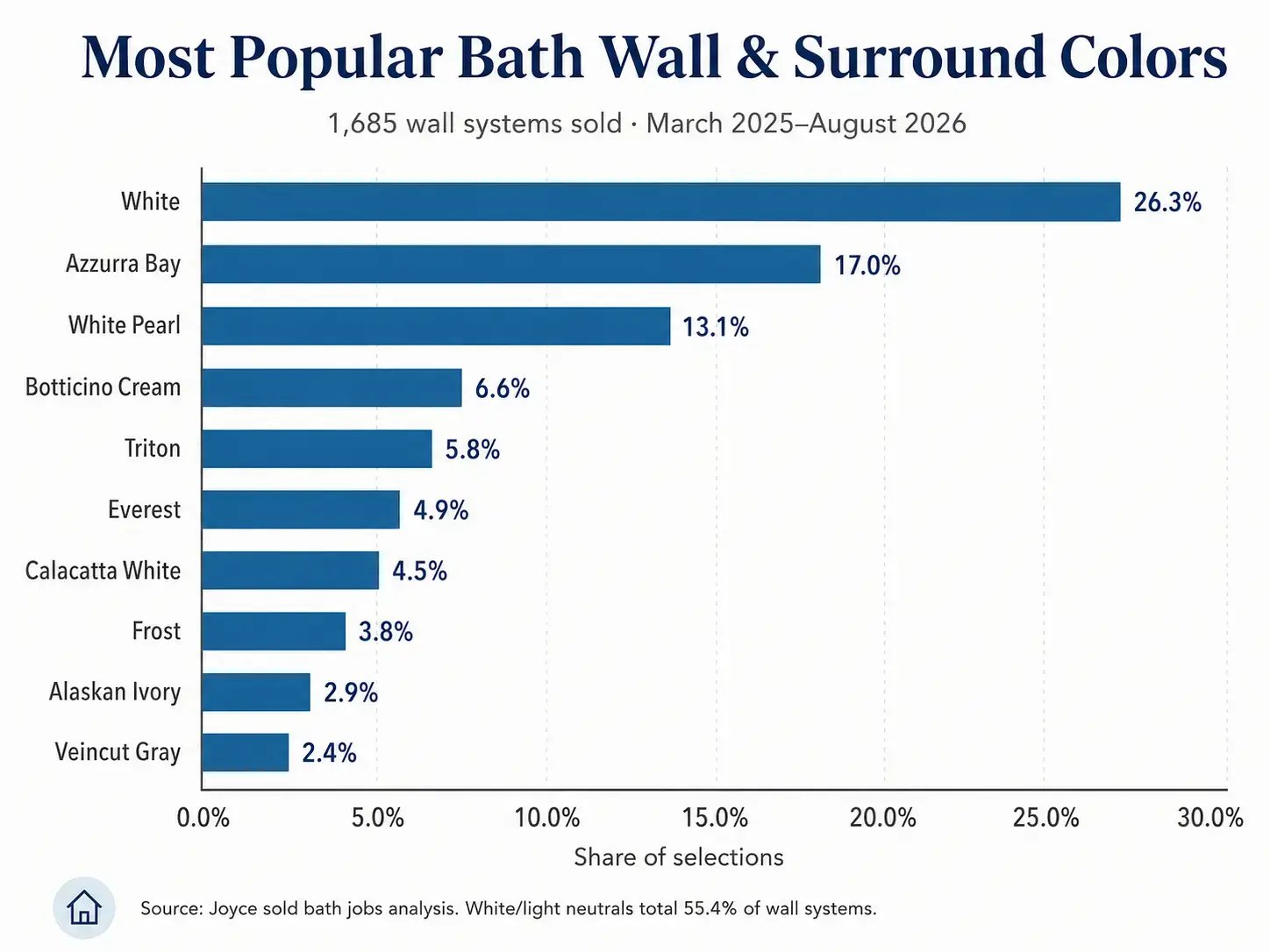
When white and other light-neutral selections are grouped together, they account for 55.4% of wall systems, while color and stone-tone selections account for 44.6%.
So the broader takeaway is clear:
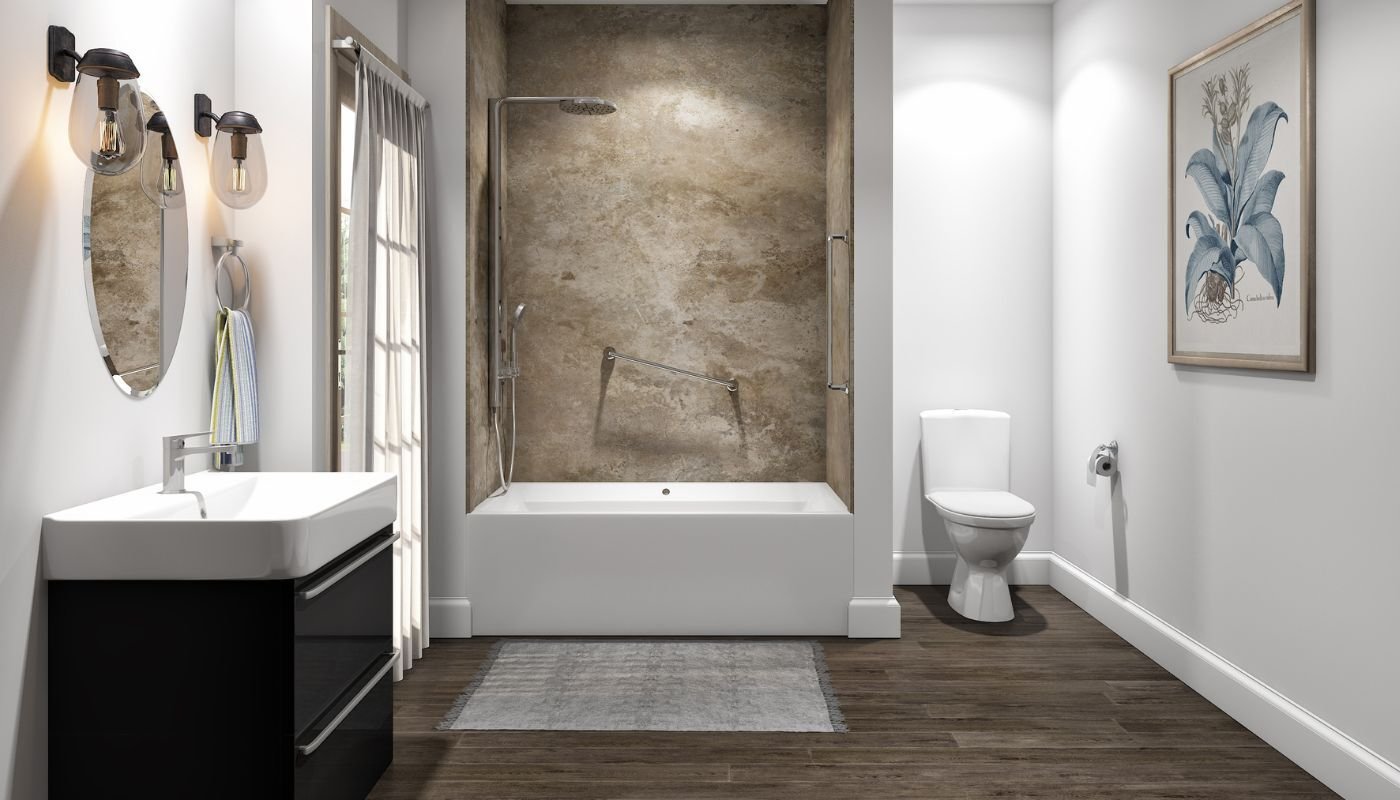
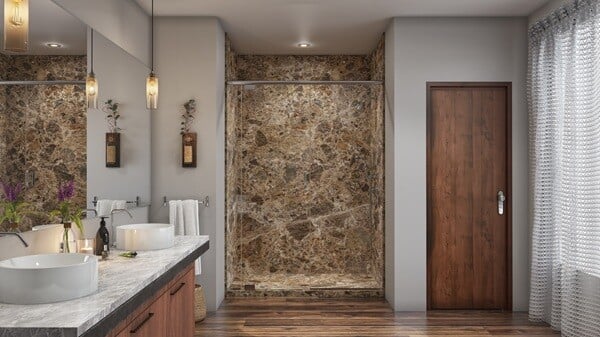
Light and neutral bathrooms still dominate, but homeowners are showing a stronger appetite for stone-inspired color and movement.
Azzurra Bay is the color to watch
Azzurra Bay is the leading non-white wall choice at 17.0%, and it is also growing.
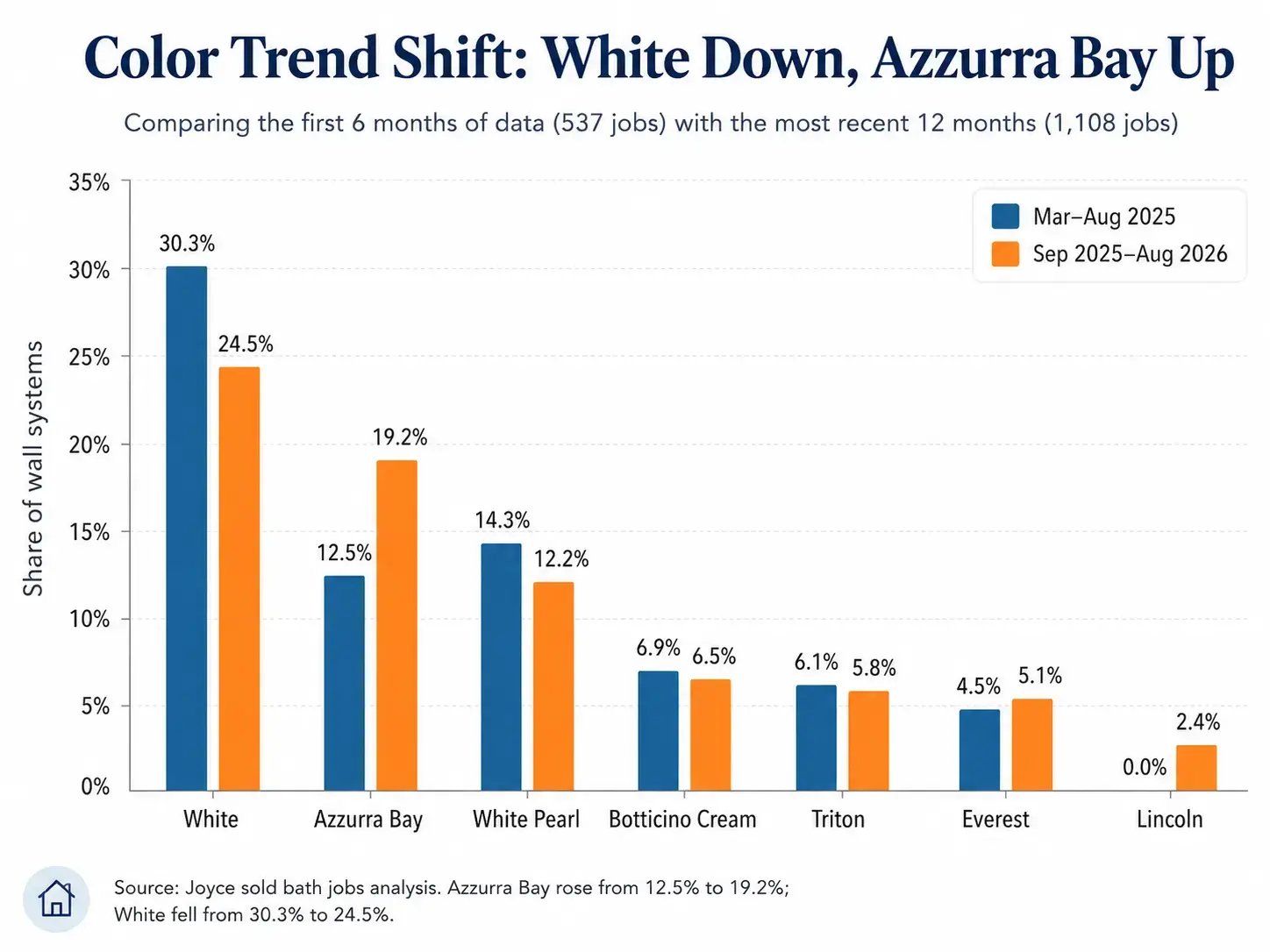
Compared with the first six months of the data, Azzurra Bay increased from 12.5% to 19.2% in the most recent 12-month period. White, meanwhile, declined from 30.3% to 24.5%.
That suggests homeowners are becoming more comfortable moving beyond plain white while still staying within a calm, natural palette.
Design takeaway: If you want a bathroom that feels current without looking overly trendy, soft stone-inspired tones are becoming a very safe middle ground.
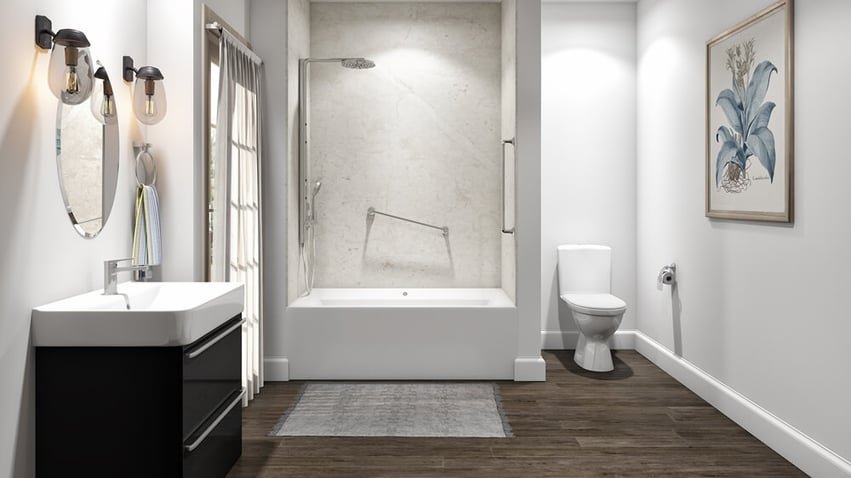
Are homeowners matching the shower base to the walls?
Not always.
Half of all sold shower bases and tubs were plain white, even though only about one-quarter of wall systems were white.
That tells us homeowners are often using the wall surround as the main design statement while keeping the base visually simple.
The most common base and tub colors were:
- White: 50.0%
- Azzurra Bay: 10.9%
- White Pearl: 8.4%
- Botticino Cream: 4.5%
- Triton: 3.2%
- Everest: 3.2%
This is a useful design lesson: your bath does not need every surface to match perfectly.
A neutral base can help a more patterned wall surround stand out without making the room feel busy.
Do homeowners match shelves to the wall?
Usually, yes.
Among 1,599 shelves and shave stands, 67.6% were ordered to match the wall color.
That reinforces a broader pattern in the purchase data: homeowners seem to prefer a coordinated look rather than mixing a lot of competing finishes or colors inside the wet area.
If you are trying to create a calm, polished shower design, matching shelves to the surround is the most common approach.
Which fixture finishes are most popular?
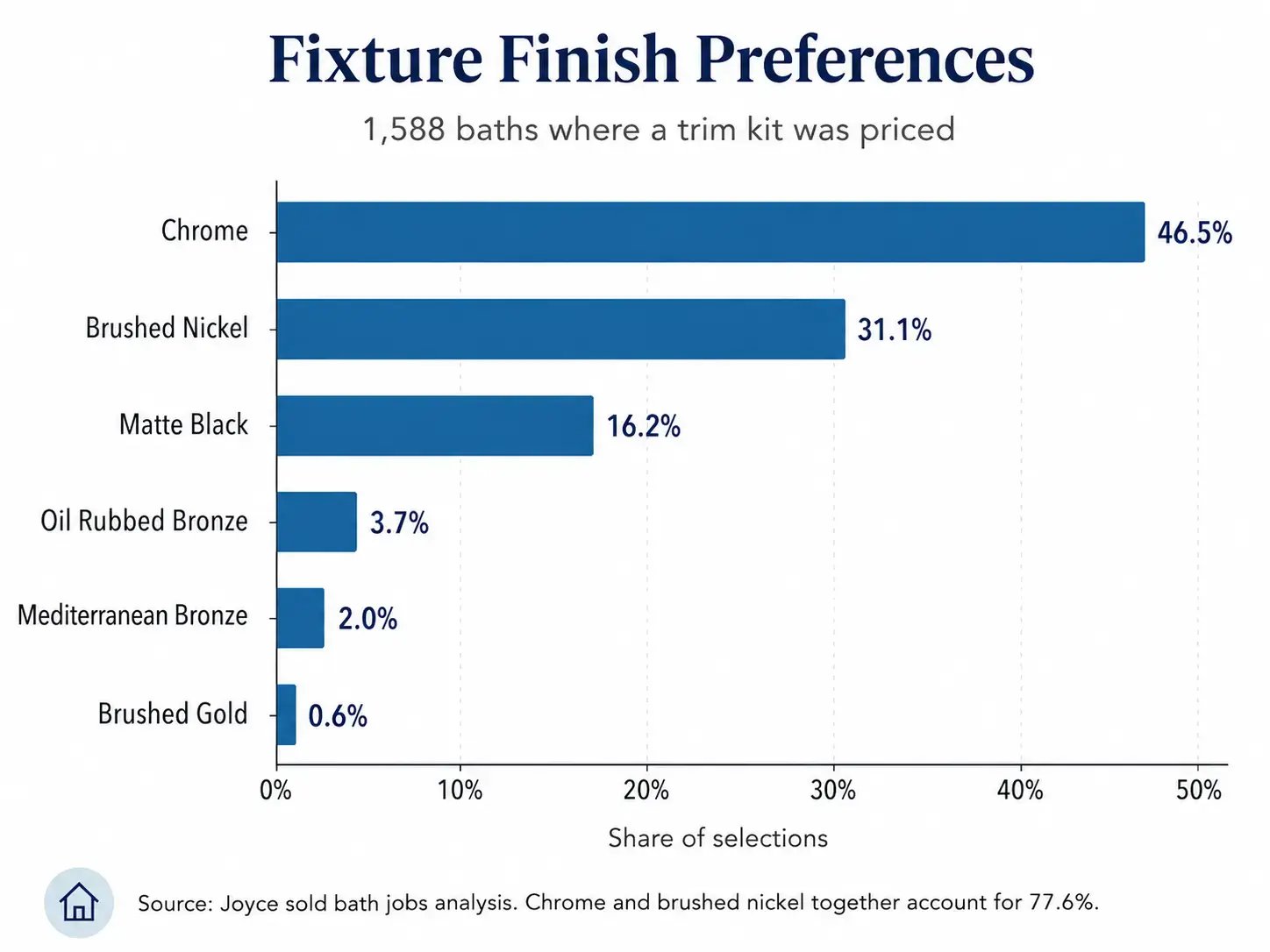
Chrome is still number one.
Among baths where a trim kit was priced:
- Chrome: 46.5%
- Brushed nickel: 31.1%
- Matte black: 16.2%
- Oil-rubbed bronze: 3.7%
- Mediterranean bronze: 2.0%
- Brushed gold: 0.6%
Chrome and brushed nickel together make up more than three-quarters of all fixture finishes selected.
That makes them the safest choices for homeowners who want a finish that feels familiar, versatile, and easy to coordinate.
Matte black is meaningful, but not dominant
Matte black has a strong presence at 16.2%.
That is enough to show it is not a niche finish anymore, but it is still clearly behind chrome and brushed nickel.
Design takeaway: Matte black works well when you want stronger contrast and a more modern feel, but most homeowners are still choosing lighter, more traditional metal finishes.
What fixture styles are customers actually choosing?
Every fixture in this purchase data is Moen, and the most common lines were:
- Eva: 42.6%
- Brantford: 42.6%
- Chateau: 34.3%
- Verso: 16.4%
- Gibson: 13.1%
Some jobs include more than one fixture line, so the percentages total more than 100%.
The most interesting takeaway here is that homeowners are not clustering around one ultra-modern or one ultra-traditional style.
They are mixing among several established looks, which suggests that finish and overall coordination may matter more than the specific fixture collection name.
What shower-door glass do homeowners choose?
This one is not close.
Among 782 shower doors:
- Clear glass: 88.5%
- Rain glass: 7.3%
- Obscure glass: 4.2%
Clear glass is overwhelmingly the most common choice.
That lines up with the broader design direction toward brighter, more open-looking bathrooms.
Clear glass allows the wall surround to stay visible and helps smaller bathrooms feel less boxed in.
If the shower surround is one of the most attractive parts of the remodel, homeowners generally do not want to hide it behind heavily textured glass.
Which shower-door finishes are most popular?
For shower doors, brushed nickel narrowly edges out chrome:
- Brushed nickel: 36.8%
- Chrome: 35.9%
- Matte black: 21.3%
- Oil-rubbed bronze: 5.6%
- Brushed gold: 0.4%
Brushed nickel and chrome are essentially neck-and-neck.
This is another sign that homeowners are prioritizing consistency across the room.
The purchase data notes that door finishes, grab bars, and curtain rods usually track closely with the fixture finish.
In other words, homeowners are generally creating one metal story instead of a hardware sampler platter.
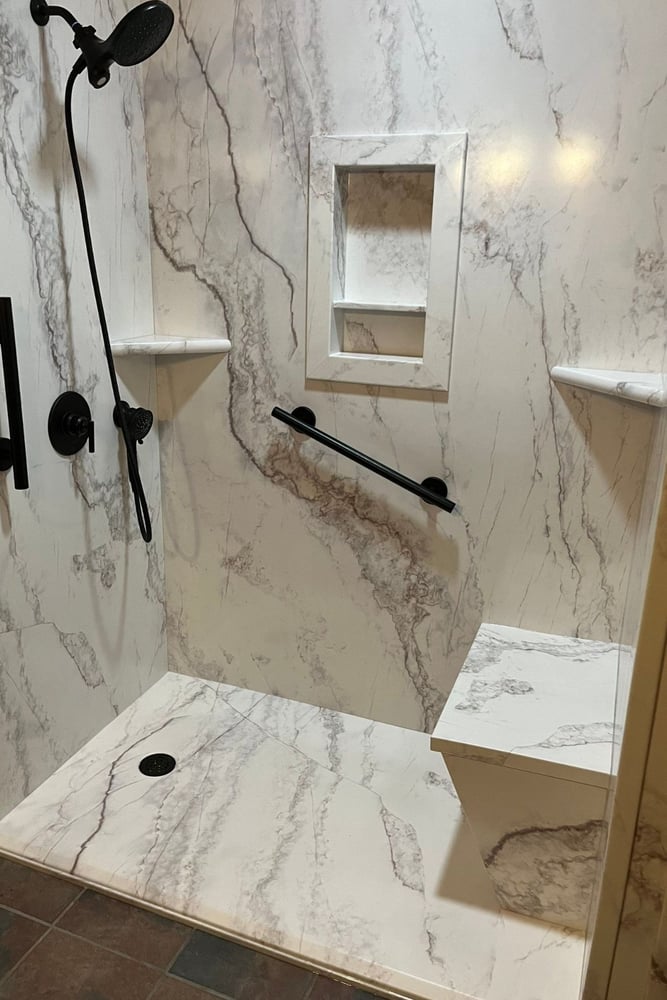
Are safety features becoming part of normal bath design?
Very much so.
This may be the most important trend in the entire dataset.
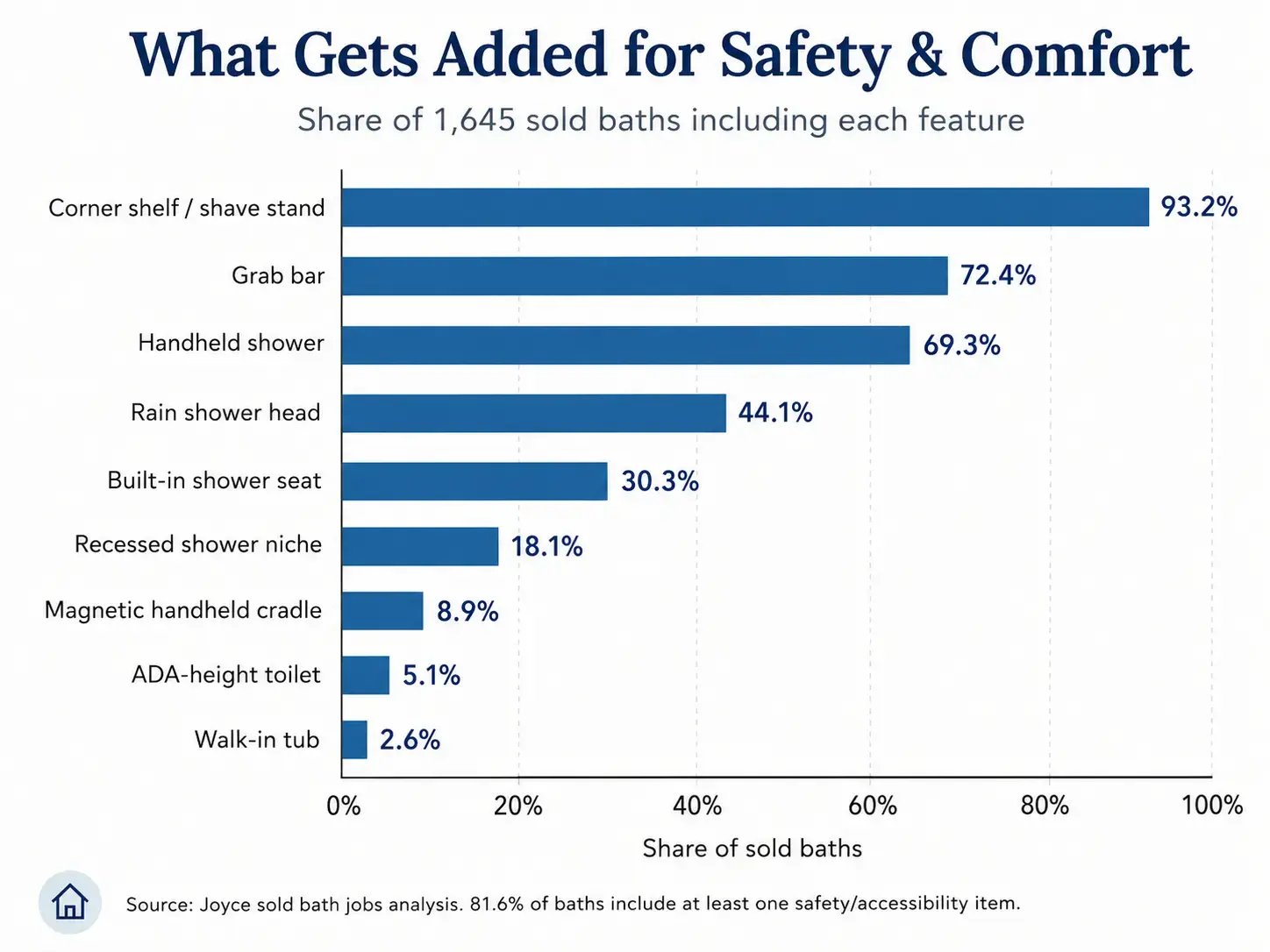
Among the 1,645 sold bath projects:
- Corner shelf or shave stand: 93.2%
- Grab bar: 72.4%
- Handheld shower: 69.3%
- Rain shower head: 44.1%
- Built-in shower seat: 30.3%
- Recessed shower niche: 18.1%
- ADA-height toilet: 5.1%
- Walk-in tub: 2.6%
Overall, 81.6% of sold baths included at least one safety or accessibility feature when grab bars, seats, niches, ADA toilets, and walk-in tubs are counted together.
That is a major design shift.
Accessibility is no longer something that has to make a bathroom look clinical.
Homeowners are blending safety into the design.
Grab bars are almost standard
Grab bars appear in 72.4% of sold bath projects.
Among the 2,117 grab bars sold:
- 18-inch: 57.9%
- 24-inch: 36.2%
Chrome and brushed nickel dominate the finishes, closely matching the rest of the bath hardware.
That coordination matters.
A grab bar that matches the faucet and shower hardware reads as part of the design rather than something added later out of necessity.
Are built-in shower seats popular?
Yes, but they are not yet universal.
Built-in shower seats appeared in 30.3% of sold baths.
Among the 505 seats sold:
- Bench seat: 41.8%
- Composite seat with silver frame: 27.3%
- Composite seat with matte black/white frame: 12.1%
- Teak seat with silver accents: 9.3%
- 28-inch corner seat: 6.1%
The built-in bench is the leading choice.
That suggests homeowners value seating that feels integrated into the shower instead of looking like an afterthought.
What type of bath remodel is most common?
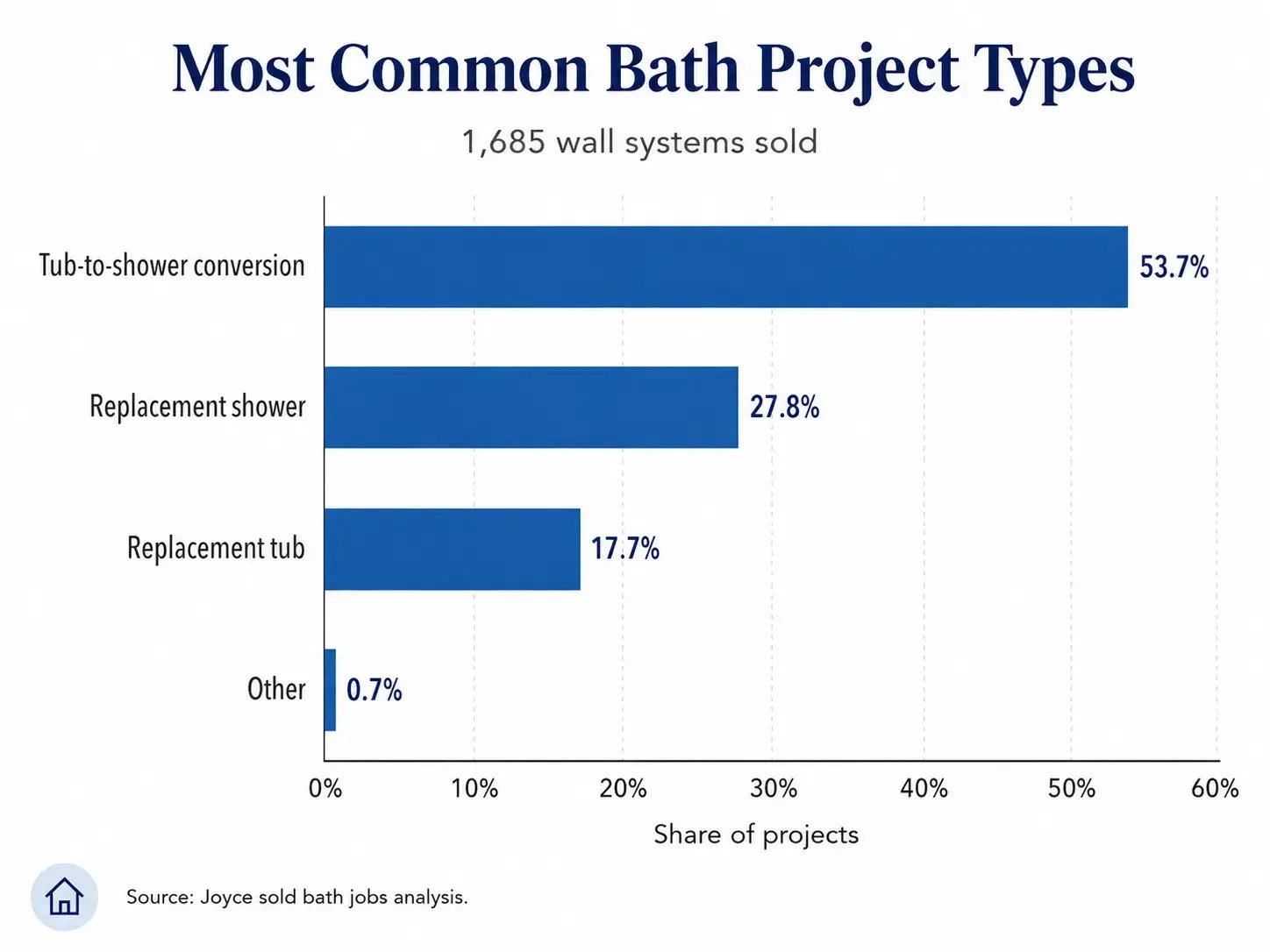
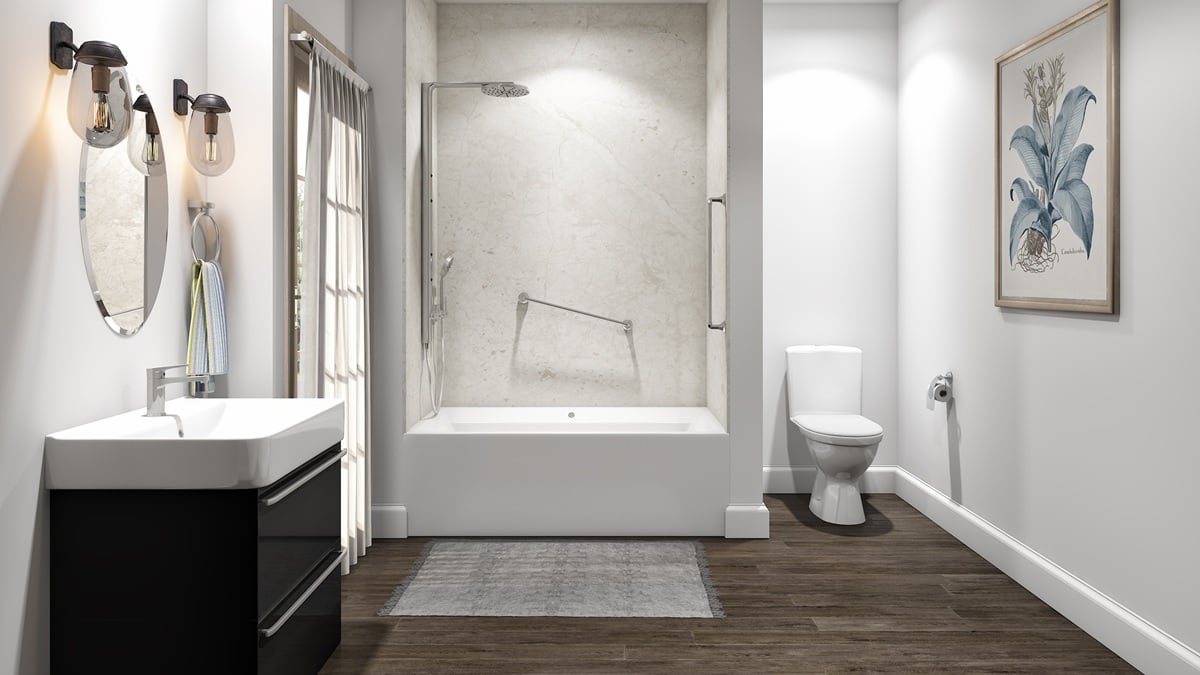
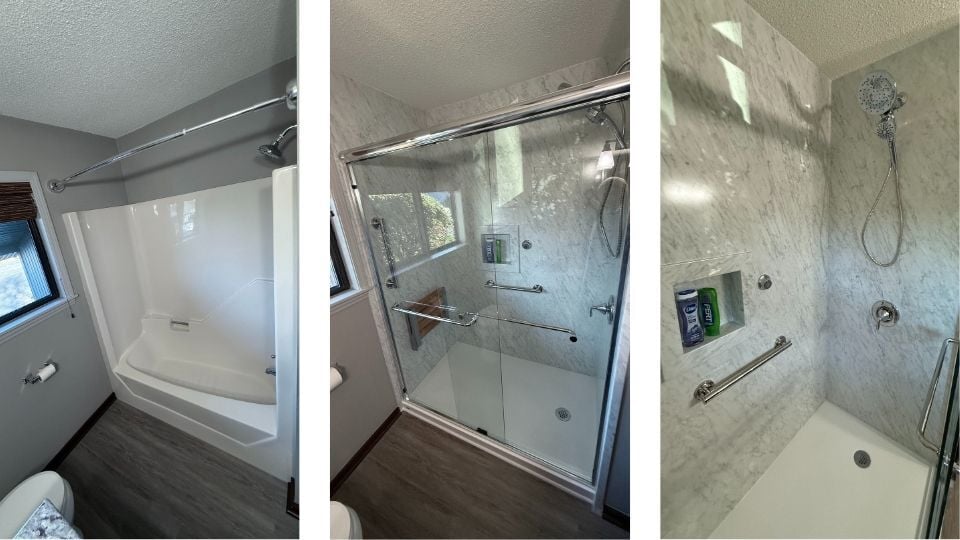
More than half of sold Joyce bath projects are tub-to-shower conversions.
Among 1,685 wall systems:
- Tub-to-shower conversion: 53.7%
- Replacement shower: 27.8%
- Replacement tub: 17.7%
- Other: 0.7%
Tub-to-shower conversion is the single most common bath project Joyce sells.
That trend connects directly to many of the other design choices in the data.
A tub-to-shower conversion creates more opportunity for:
- low-threshold access
- clear glass
- handheld showers
- grab bars
- built-in seating
- niches and shelves
- coordinated fixtures
So the popularity of conversions helps explain why safety and convenience features show up so often.

What do these choices say about 2026 bathroom design?
The strongest themes are not flashy ones.
They are light, coordinated, practical, and safer.
The sold-order data points toward a bathroom style that looks something like this:
- light or stone-inspired wall surround
- white or neutral shower base
- chrome or brushed nickel hardware
- clear shower glass
- coordinated shelves and accessories
- handheld shower
- one or more grab bars
- possible built-in seating
- tub converted to a shower
That is a very different picture from a trend article built around dramatic colors or novelty finishes.
Real homeowners appear to be choosing bathrooms that are easier to clean, easier to use, easier to coordinate, and more comfortable long-term.
Are homeowners choosing style or function?
The answer appears to be both.
The color data shows homeowners care about how the room looks.
The safety and accessory data shows they care just as much about how the room works.
That combination is probably the clearest 2026 bath trend of all:
Homeowners are no longer treating accessibility, comfort, and design as separate decisions.
They are building them into the same project.
What should you consider when designing your own bath?
You do not have to choose the most popular option.
But seeing what other homeowners actually purchase can make the design process less intimidating.
A few questions can help:
- Do you want the room to feel bright and neutral or more stone-inspired?
- Do you prefer chrome, brushed nickel, or stronger contrast from matte black?
- Would clear glass help the room feel larger?
- Would a handheld shower make everyday use easier?
- Would grab bars be useful now or in the future?
- Would converting the tub to a shower better fit how you actually use the bathroom?
- Do you want seating built into the shower?
- Would matching shelves and hardware create a cleaner overall look?
The goal is not to copy someone else’s bath.
It is to use real homeowner choices as a starting point for your own.
The Joyce bath customers' favorites at a glance
Based on sold bath projects from March 2025 through August 2026:
- Most popular wall color: White
- Most popular non-white wall color: Azzurra Bay
- Most popular fixture finish: Chrome
- Most popular shower-door glass: Clear
- Most popular safety feature: Grab bar
- Most common bath project: Tub-to-shower conversion
- Most popular grab-bar size: 18-inch
- Most popular seat style: Built-in bench
- Most common design direction: Light neutrals with coordinated hardware

About the data
This analysis is based on 1,645 sold Joyce bath projects from March 2025 through August 2026 across Cleveland, Asheville, Charlotte, Pittsburgh, and Columbia. It includes 18,726 sold line items and options taken directly from completed sales records. Quoted-but-not-sold selections were excluded.
Counts vary by category because not every project includes every item, and some jobs may include more than one wall system or accessory. The percentages shown in each section use the relevant sold-item base for that category.
Topics: