Executive Summary
You do not always need to gut an entire bathroom to make it feel new.
Most bathroom projects fall into one of three levels:
- Wet-area remodel — replace the bathtub or shower, surrounding walls, fixtures, and selected accessories.
- Bathroom refresh — update the wet area plus selected items such as flooring, vanity, or toilet.
- Full bathroom renovation — rebuild most or all of the room, potentially changing the layout, plumbing, electrical, cabinetry, and finishes.
The right option depends on what is actually wrong with your bathroom.
Choose a wet-area remodel when the tub or shower is the main problem.
Choose a refresh when the layout works but several visible features feel outdated or worn.
Choose a full renovation when you need major layout changes, extensive plumbing or electrical work, structural repairs, or a complete redesign.
Joyce Windows, Sunrooms & Baths specializes in professionally installed bath and shower remodeling and offers select bathroom-refresh options. Joyce’s Bath Cost Calculator can provide a ballpark estimate before you schedule an in-home consultation.
How Much of Your Bathroom Really Needs to Be Remodeled?
It is easy to assume that an outdated bathroom needs to be completely torn apart.
Often, it does not.
Start by separating your problems from your preferences.
Ask:
- Does the current layout work?
- Is the tub or shower difficult to use?
- Are the shower walls stained, cracked, or hard to maintain?
- Do you need safer entry?
- Is storage inadequate?
- Is the vanity still functional?
- Is the flooring damaged or simply dated?
- Do plumbing fixtures need to move?
- Are there electrical or lighting problems?
- Is there hidden water damage?
- Do you want a different room layout?
Those answers usually point toward the appropriate project scope.
Bathroom Upgrade Options at a Glance
| Project Type | Typical Scope | Best When | Relative Disruption |
|---|---|---|---|
| Wet-area remodel | Tub or shower, wall system, fixtures, doors, accessories | The bathing area is the main problem | Lower |
| Bathroom refresh | Wet area plus selected flooring, vanity, toilet, or finishing updates | Layout works but more of the room looks dated | Moderate |
| Full renovation | Most or all bathroom components, possibly including layout and plumbing changes | The room needs major functional or structural changes | Highest |
Option 1: Wet-Area Bath or Shower Remodel
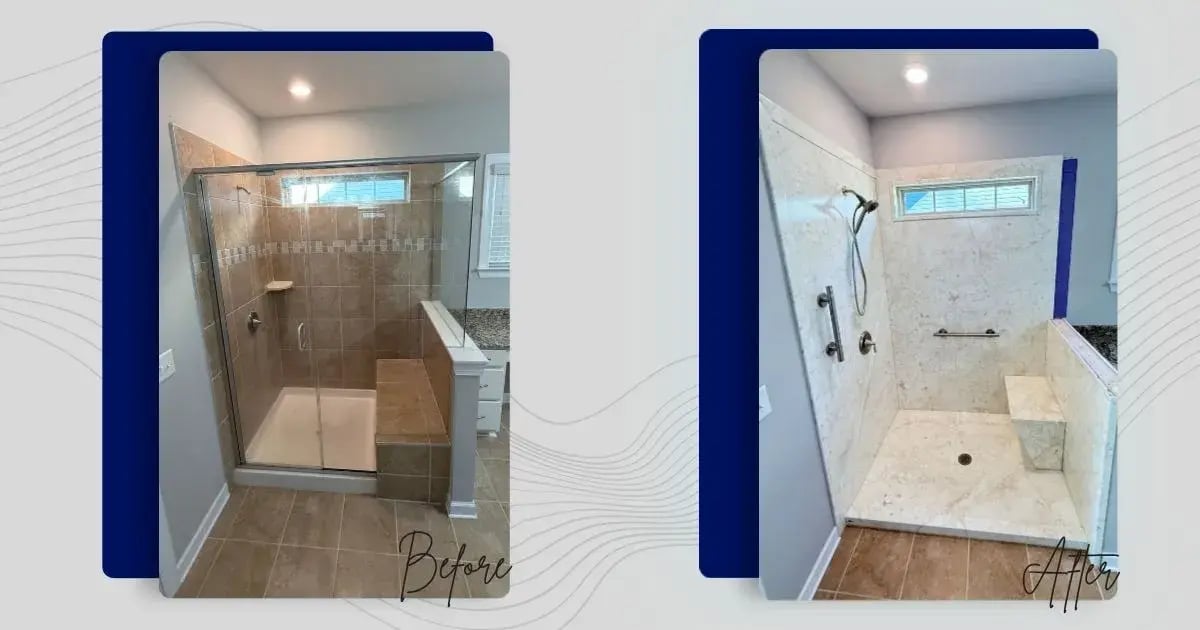
A wet-area remodel focuses on the part of the bathroom exposed most directly to water: the bathtub or shower.
For many homeowners, this is where the biggest problems occur.
Common concerns include:
- An old or stained tub
- Cracked or difficult-to-clean walls
- Grout maintenance
- A high tub wall that is difficult to step over
- Outdated fixtures
- Poor shower storage
- A cramped shower
- Limited safety features
- An old shower door
- A bathing space that no longer fits daily needs
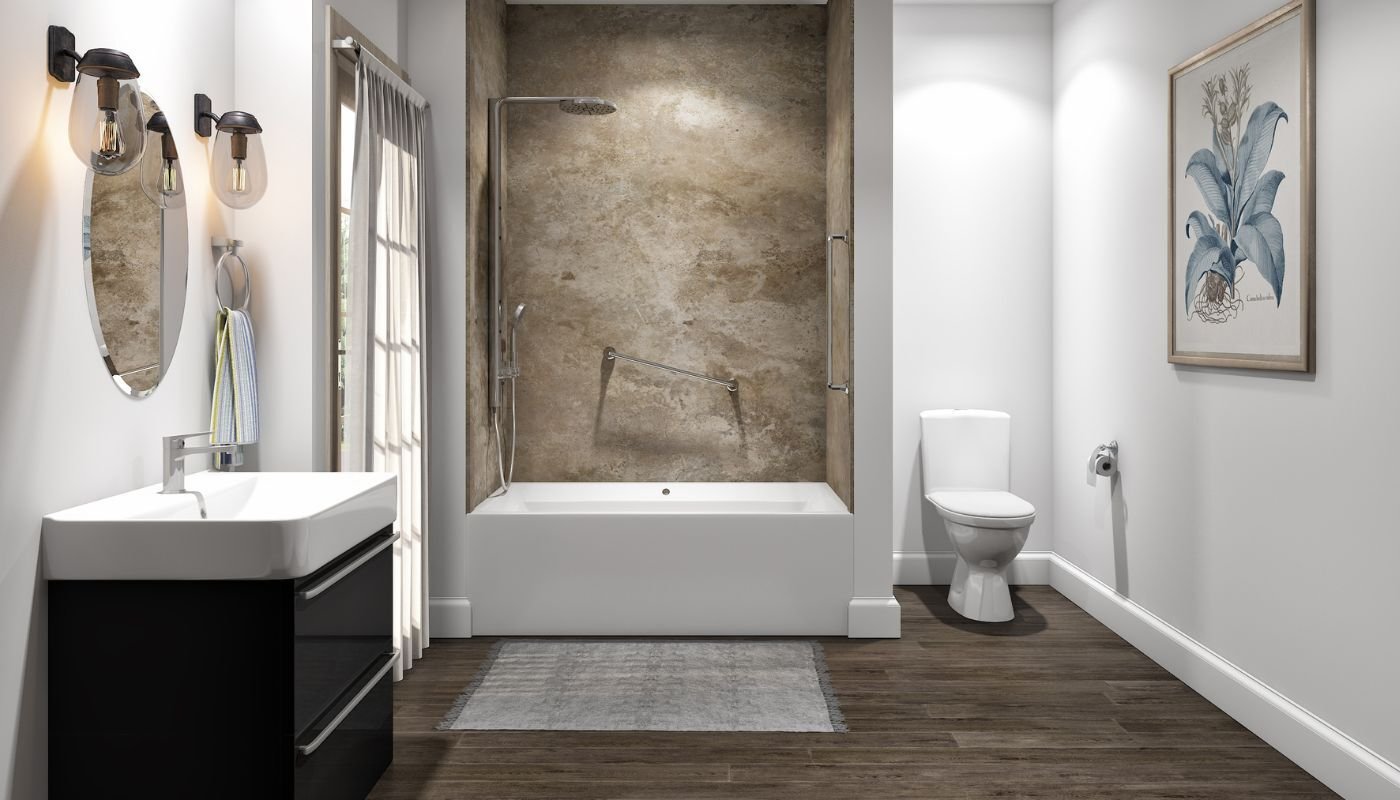
Joyce specializes in this type of project. Current options include bathtub replacement, shower replacement, tub-to-shower conversion, walk-in tubs, SignatureStone wall systems, glass doors, shelving, seating, grab bars, and fixture upgrades.
A wet-area remodel may include:
- New bathtub or shower base
- New bath or shower walls
- New valve and fixtures
- New showerhead or handheld shower
- New shower door
- Shelving or storage
- Grab bars
- Shower seating
- Updated trim and finishes
When is a wet-area remodel the best choice?
Consider this level when:
- The existing bathroom layout already works.
- The vanity and flooring are still in acceptable condition.
- Your biggest concern is the tub or shower.
- You want to improve safety or ease of use.
- You want less disruption than a full renovation.
- You want to avoid rebuilding parts of the room that are still functional.
For example, if your vanity is only five years old but the old tile shower is stained, difficult to clean, and uncomfortable to enter, replacing the entire bathroom may be unnecessary.
The shower is the problem.
Solve the shower.
What Is a Tub-to-Shower Conversion?
A tub-to-shower conversion removes the existing bathtub and replaces it with a shower.
This can be useful when:
- No one regularly uses the bathtub.
- Stepping over the tub wall has become difficult.
- You want a more open shower area.
- You want seating or grab bars.
- You prefer a handheld showerhead.
- The current tub feels cramped or outdated.
Joyce currently offers custom tub-to-shower conversions with wall, fixture, storage, seating, grab bar, and enclosure options.
Before removing the only bathtub in a home, consider your household needs and future plans. Families with young children or homeowners thinking about resale may still prefer to retain at least one tub, although there is no universal rule that every home must have one.
What Is SignatureStone?
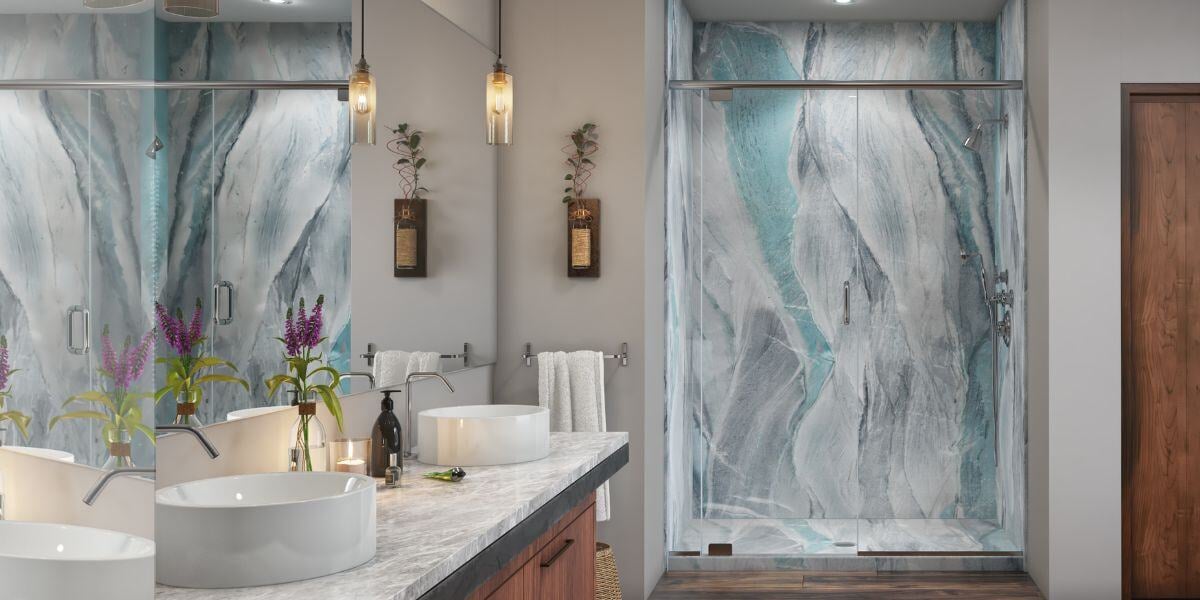
SignatureStone is Joyce’s bath and shower wall system.
Joyce describes it as a stone-inspired, low-maintenance surface that provides the look of natural stone without traditional rows of grout. Homeowners can choose from multiple colors, patterns, fixtures, doors, and accessories.
A grout-free wall system can be particularly appealing when one of the main goals is reducing routine cleaning.
The exact color, pattern, thickness, installation method, and warranty should be confirmed for the selected project.
Related Article: Joyce Signature Stone
How Long Does a Wet-Area Remodel Take?
Many Joyce wet-area projects are designed around a relatively short installation period compared with a full bathroom renovation.
However, the schedule depends on the actual bathroom.
Factors that can extend the project include:
- Older plumbing
- Cast-iron tubs
- Thick tile or plaster
- Hidden moisture damage
- Rot
- Drain relocation
- Concrete slab work
- Structural repair
- Custom glass
- Additional bathroom updates
The project-specific installation schedule should be confirmed before work begins.
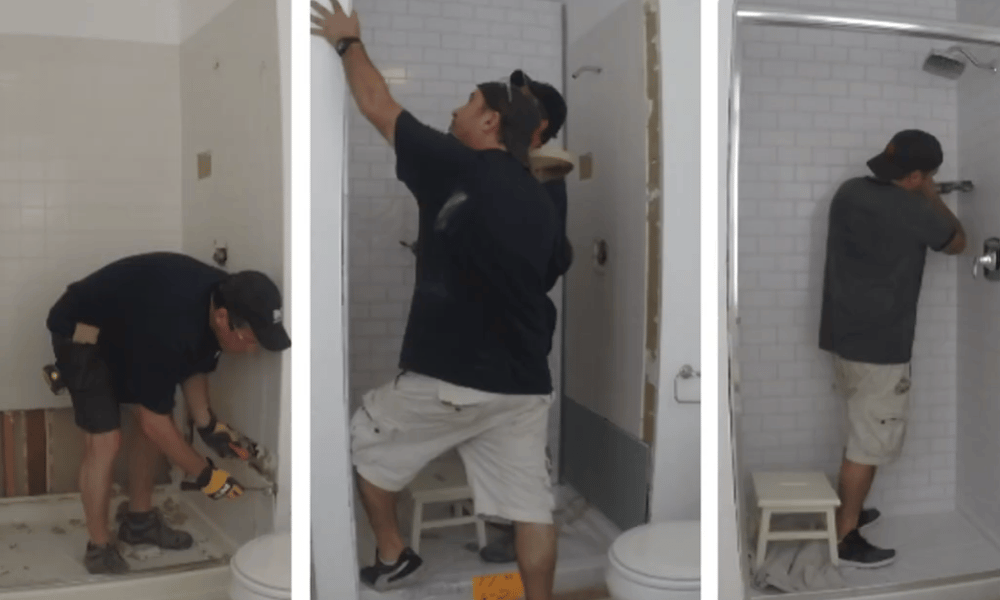
A shorter remodel should never mean skipping necessary preparation behind the finished walls.
Option 2: Bathroom Refresh or Facelift
Sometimes the tub or shower is not the only thing making the room feel old.
The layout may still work perfectly well, but the bathroom could benefit from several coordinated updates.
That is where a bathroom refresh makes sense.
Joyce currently describes select bath-refresh options that may include updates beyond the wet area, such as flooring, vanity, or toilet replacement.
A bathroom refresh may include:
- Tub or shower replacement
- New wall system
- New fixtures
- New shower enclosure
- New vanity
- New countertop or sink
- New toilet
- New flooring
- Updated hardware
- Coordinated finishes
Availability can vary by project and market, so confirm which refresh items Joyce currently offers for your home.
When Does a Bathroom Refresh Make Sense?
A refresh may be the right choice when:
- The room layout already works.
- Plumbing fixtures can stay in roughly the same locations.
- The tub or shower needs replacement.
- The vanity looks dated or worn.
- Flooring needs to be updated.
- You want a more coordinated finished look.
- You do not need major structural or layout work.
For example:
Your shower may need replacement, but the old vanity, flooring, and toilet also make the room feel dated.
Instead of rebuilding the room from scratch, you may be able to replace several visible components while keeping the overall layout.
That can create a much more complete transformation without turning the project into a full gut renovation.
Is a Bathroom Refresh the Same as a Full Remodel?
No.
A refresh generally works within the existing room arrangement.
The goal is to update the important surfaces and fixtures without substantially rebuilding the room.
A full renovation may involve:
- Moving plumbing
- Moving walls
- Changing the room footprint
- Major electrical work
- Custom cabinetry
- New drywall throughout
- Structural changes
- New lighting layouts
- Extensive tile work
- Rebuilding most of the room
Those are different types of projects.
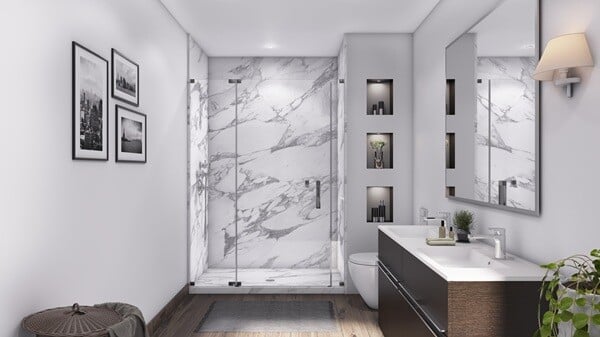
Option 3: Full Bathroom Renovation
A full bathroom renovation is the most extensive option.
It may be appropriate when the existing room simply cannot meet your needs without significant changes.
A full renovation may involve:
- Removing most bathroom finishes
- Moving the bathtub or shower
- Moving the toilet
- Relocating plumbing
- Reconfiguring walls
- Changing door locations
- New electrical circuits
- New lighting
- New cabinetry
- New flooring
- Drywall
- Painting
- Structural repair
- Ventilation changes
This type of project can make sense when the problem is the room itself, not just the surfaces inside it.
When Is a Full Bathroom Renovation Worth It?
Consider a full renovation when:
- The layout is fundamentally poor.
- Plumbing fixtures need to move.
- The room is too cramped for your needs.
- You want to combine or divide spaces.
- There is substantial water or structural damage.
- Electrical or ventilation systems need major work.
- You want extensive custom cabinetry or tile.
- You are redesigning a primary bathroom from the ground up.
A full renovation is also more likely to require several trades, longer permitting timelines, and more weeks of construction.
For homeowners who simply dislike an old shower or vanity, that level of disruption may be unnecessary.
Does Joyce Do Full Gut Bathroom Renovations?
Joyce primarily focuses on professional bath and shower remodeling and select bathroom-refresh projects.
That includes current options such as:
- Bathtub replacement
- Shower replacement
- Tub-to-shower conversion
- Walk-in tubs
- SignatureStone walls
- Shower doors
- Grab bars
- Seating
- Fixtures
- Storage
- Select flooring, vanity, and toilet updates
If your project requires significant wall relocation, major plumbing changes, custom cabinetry, extensive electrical work, or whole-room reconstruction, ask during the consultation whether that work falls within Joyce’s current scope.
If it does not, a full-service design-build bathroom contractor may be more appropriate.
That is an important distinction because homeowners should hire a company whose project scope matches the work they actually need.
Which Bathroom Upgrade Is Best for Aging in Place?
The answer depends on the homeowner’s mobility and future needs.
Many useful safety improvements can be made without completely rebuilding the bathroom.
Possible upgrades include:
- Tub-to-shower conversion
- Lower-entry shower base
- Grab bars
- Shower seating
- Handheld showerhead
- Slip-resistant surfaces
- Easier-to-operate fixtures
- Better lighting
- More accessible storage
Joyce currently offers several bath and shower options aimed at improving comfort, safety, and ease of use.
Safety features should be selected around the individual homeowner rather than added simply because they are marketed as “accessible.”
Placement matters.
A grab bar, for example, should be positioned where it supports the person’s actual movement through the bathing area.
Which Bathroom Upgrade Is Best for Resale?
There is no single bathroom upgrade that guarantees the highest resale value.
A useful approach is to correct obvious problems without overbuilding the room for the neighborhood or home.
Potential priorities include:
- Repairing damaged wet areas
- Replacing heavily worn tubs or showers
- Improving cleanliness and maintenance
- Updating visibly dated finishes
- Improving lighting
- Correcting functional problems
If resale is the main reason for remodeling, ask a local real estate professional what buyers in your specific market expect.
Do not assume that the most expensive renovation will create the strongest return.
Which Bathroom Upgrade Creates the Biggest Visual Change?
Usually the wet area.
The bathtub or shower is often one of the largest visible surfaces in the bathroom.
Changing:
- Wall color
- Wall pattern
- Shower base
- Fixtures
- Shower glass
- Storage
- Lighting around the space
can dramatically change the room even when the layout stays exactly the same.
This is why a focused wet-area remodel can sometimes create more visual impact than its footprint suggests.
Which Bathroom Upgrade Reduces Maintenance?
Homeowners concerned about maintenance often focus on surfaces and details that collect soap residue, mildew, or grime.
Possible priorities include:
- Grout-free or low-grout wall systems
- Easy-to-clean shower bases
- Simple glass designs
- Accessible shelves
- Fewer hard-to-reach corners
- Updated ventilation
- Replacing deteriorated caulk or damaged surfaces
Joyce’s SignatureStone wall system is specifically positioned around a stone-inspired appearance without traditional grout-line maintenance.
No bathroom surface is completely maintenance-free, so follow the manufacturer’s cleaning instructions for the specific product installed.
How Much Does Each Level of Bathroom Remodel Cost?
Bathroom costs vary widely because these three project types involve very different amounts of work.
Joyce’s current Charlotte-area cost guide provides a useful example of the general difference in scope:
- Bath or shower replacement: approximately $9,000–$25,000+
- Bathroom facelift or refresh: approximately $12,000–$30,000
- Full bathroom renovation: approximately $25,000–$70,000+
Those are Charlotte-area planning ranges, not universal Joyce pricing for every market.
Costs vary based on:
- Project type
- Bathroom size
- Wall material
- Fixtures
- Shower doors
- Storage
- Seating
- Grab bars
- Plumbing changes
- Flooring
- Vanity
- Toilet
- Installation conditions
- Market
For Joyce-specific bath or shower planning, use the Bath Cost Calculator.
How Does the Joyce Bath Cost Calculator Work?
Joyce’s Bath Cost Calculator is designed to give homeowners a realistic ballpark range before an in-home appointment.
The calculator currently lets homeowners explore:
- Bathtub replacement
- Shower replacement
- Tub-to-shower conversion
- Walk-in tubs
- Select bathroom-refresh options
It considers choices such as:
- Project type
- Bath or shower style
- Wall options
- Fixture finishes
- Doors
- Storage
- Seating
- Grab bars
- Other upgrades
The result appears on screen in a few minutes.
It includes professional installation based on the selections entered.
It is a planning tool, not a final quote.
Related Article: Bath Cost Calculator
Why Can't Bathroom Remodeling Be Priced Exactly Online?
Because the calculator cannot see what is behind your existing bathroom.
Final price may depend on:
- Exact measurements
- Plumbing condition
- Drain location
- Existing wall construction
- Hidden moisture damage
- Structural repairs
- Custom glass
- Installation access
- Additional bathroom upgrades
The in-home consultation allows Joyce to confirm those conditions and produce exact project pricing.
Wet Area vs. Refresh vs. Full Renovation: Which Should You Choose?
Use this simple decision guide.
Choose a Wet-Area Remodel If:
Your tub or shower is the main problem.
Examples:
- Old tub
- Cracked walls
- Hard-to-clean grout
- Difficult step-over
- Poor storage
- Dated fixtures
Choose a Bathroom Refresh If:
The room layout works, but several visible features need updating.
Examples:
- Old shower
- Worn flooring
- Dated vanity
- Old toilet
- Mismatched finishes
Choose a Full Renovation If:
The layout or infrastructure is the problem.
Examples:
- Plumbing needs to move
- Walls need to change
- Room footprint needs redesign
- Significant electrical work is required
- Major structural damage exists
- You want extensive custom cabinetry or tile
The goal is not to choose the biggest project.
It is to choose the smallest project that fully solves the problem.
A Practical Example
Imagine a 1990s bathroom with:
- A worn fiberglass tub
- Old brass fixtures
- Beige vinyl flooring
- An oak vanity
- A perfectly workable layout
A full renovation might involve tearing out everything.
But the homeowner may not need that.
A refresh could potentially include:
- New shower
- SignatureStone walls
- New fixtures
- New glass door
- Updated vanity
- Updated flooring
- New toilet
The room could look dramatically different without moving the plumbing or rebuilding the layout.
Now imagine a bathroom where:
- The shower is too small
- The toilet blocks access
- Plumbing needs to move
- The room needs a larger doorway
- Walls need to be relocated
That is a different project.
A full renovation may be justified because the layout itself is the problem.
Questions to Ask Before Choosing Your Bathroom Remodel
Ask yourself:
- What do I dislike most about the bathroom?
- Does the existing layout work?
- Is the tub or shower the main problem?
- Do I need safer bathing access?
- Which fixtures still have useful life?
- Does the vanity need replacement?
- Does the flooring need replacement?
- Do plumbing fixtures need to move?
- Do walls need to move?
- Is there known water damage?
- How long can the bathroom be unavailable?
- What is my realistic budget?
- Which improvements matter most?
Then ask the remodeling company:
- What project level are you recommending?
- Why?
- What will be removed?
- What will remain?
- Which plumbing work is included?
- Which products are included?
- What is excluded?
- How long should installation take?
- What happens if hidden damage is found?
- What warranties apply?
- Who handles service after installation?
Get the project scope in writing.
Why Choose Joyce for a Bath or Shower Upgrade?
Joyce Windows, Sunrooms & Baths provides professionally installed bath and shower remodeling with custom options designed around comfort, durability, safety, and lower-maintenance surfaces.
Current Joyce bath options include:
- Bathtub replacement
- Shower replacement
- Tub-to-shower conversion
- Walk-in tubs
- SignatureStone walls
- Glass shower doors
- Fixtures
- Shelving and storage
- Grab bars
- Shower seating
- Select bathroom-refresh upgrades
During a design consultation, Joyce can help you determine whether you need:
- A focused wet-area project
- A broader bathroom refresh
- Another type of renovation
Use the Joyce Bath Cost Calculator to explore your project type and selections and receive an on-screen planning range.
Meet with a Joyce bath specialist to review your bathroom, discuss your goals, take measurements, and receive project-specific recommendations and exact pricing.

Frequently Asked Questions
What is the difference between a bathroom refresh and a full remodel?
A refresh generally keeps the existing layout while replacing visible components such as the tub or shower, flooring, vanity, or toilet. A full remodel may involve layout changes, plumbing relocation, electrical work, walls, cabinetry, and broader reconstruction.
What is a wet-area bathroom remodel?
A wet-area remodel focuses primarily on the bathtub or shower and surrounding walls, fixtures, doors, and accessories.
Does Joyce remodel entire bathrooms?
Joyce specializes primarily in bath and shower remodeling and offers select bathroom-refresh upgrades. Projects requiring major layout changes, substantial plumbing relocation, or complete room reconstruction should be discussed during the consultation to determine whether they fit Joyce’s current scope.
Can I replace my shower without replacing the whole bathroom?
Yes. If the layout works and the shower is the main problem, a focused shower replacement can update the most-used part of the bathroom without rebuilding the entire room.
Can I replace a bathtub with a shower?
Yes. Joyce currently offers tub-to-shower conversions with custom walls, fixtures, seating, storage, grab bars, and enclosure options.
Can Joyce replace my vanity and flooring?
Select bathroom-refresh options can include flooring, vanity, or toilet replacement depending on the project and market. Confirm availability during the consultation.
How much does a bathroom remodel cost?
Cost depends heavily on project scope. A wet-area replacement, bathroom refresh, and full renovation are different types of projects with different costs. Joyce’s Bath Cost Calculator provides a ballpark price for supported bath and refresh projects.
Does the Joyce Bath Cost Calculator include installation?
Yes. Joyce states that the calculator’s ballpark range includes professional installation based on the selections entered.
How long does a shower replacement take?
Many wet-area projects can be completed much faster than a full bathroom renovation, but the actual timeline depends on demolition, plumbing, hidden damage, products, custom glass, and project scope.
Is a full bathroom remodel always better?
No. A larger project is worthwhile only when it solves problems that a smaller project cannot. If the layout works, a wet-area remodel or refresh may deliver the changes you want with less disruption.
Final Takeaway
Bathroom remodeling is not an all-or-nothing decision.
Start with the problem.
If the tub or shower is the problem, consider a wet-area remodel.
If the layout works but several visible features are dated, consider a bathroom refresh.
If the room itself does not work, a full renovation may be necessary.
The smartest project is not automatically the largest one.
It is the project that solves the problems you actually have without paying to rebuild parts of the bathroom that still work.
Ready to narrow down your project? Use the Joyce Bath Cost Calculator for a ballpark estimate or book a design consultation to compare bath, shower, and refresh options for your home.

_flipped.jpg?width=3246&height=2550&name=joyce_034-outside(c)_flipped.jpg)