Executive Summary
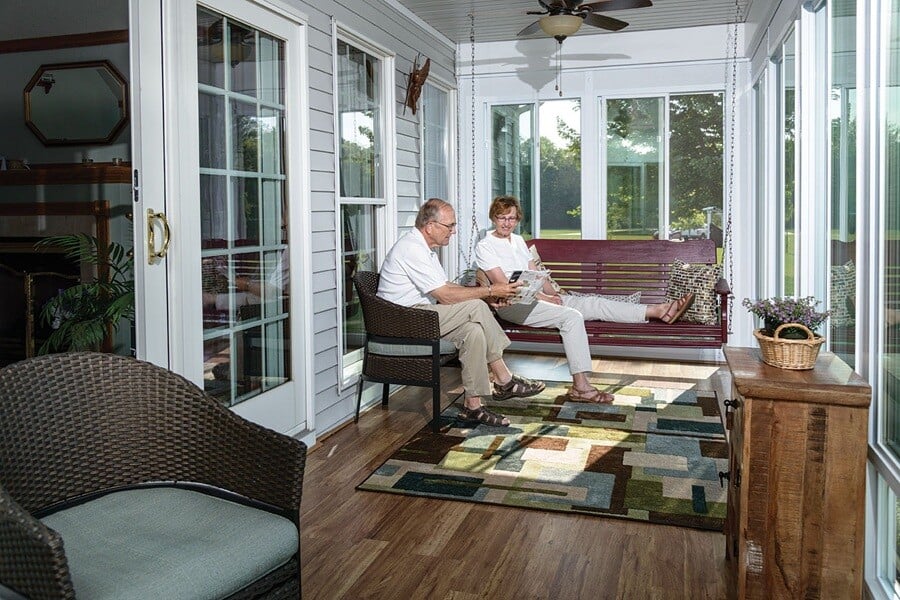
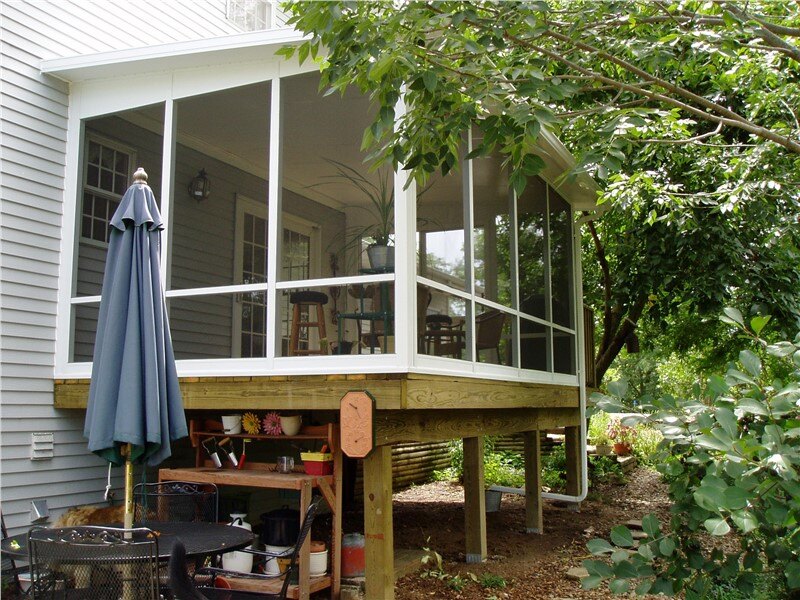
A screened-in porch or screen room can make an outdoor space more comfortable by reducing exposure to mosquitoes, flies, leaves, direct sun, and light rain while preserving fresh air and backyard views.
It may be a good fit when you want a breezy place for dining, relaxing, or entertaining without the cost and climate control of a full sunroom.
A screen room is not designed for year-round heating and cooling. Homeowners who want stronger protection from cold, heat, wind, or severe weather may be better served by a three-season or four-season sunroom.
What Is a Screened-In Porch?
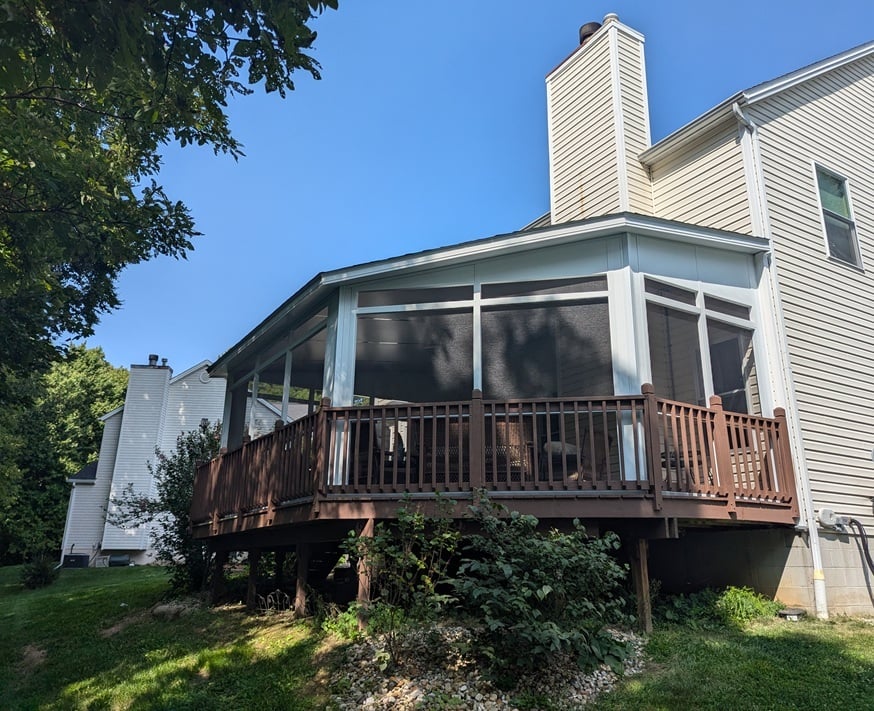
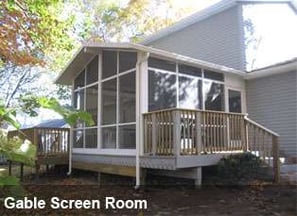 A screened-in porch is a covered outdoor area enclosed with screened walls.
It allows air and natural light to move through the space while helping keep out mosquitoes, flies, gnats, leaves, and other debris.
The terms “screened-in porch,” “screened-in patio,” and “screen room” are often used interchangeably, but there can be small differences:
- A screened-in porch or patio usually refers to an existing covered space that has been enclosed.
- A screen room may be a more structured enclosure built over a patio, deck, or another approved foundation.
- A patio cover provides overhead shade and rain protection but leaves the sides open.
- A three-season sunroom uses windows or panels to provide more protection during spring, summer, and fall.
- A four-season sunroom is designed for more consistent year-round comfort.
Joyce offers all four types of outdoor living solutions, allowing homeowners to choose the level of enclosure that matches their home, climate, and budget.
Screen Room vs. Other Outdoor Living Options
| Feature | Open patio or deck | Patio cover | Screen room | Three-season room | Four-season sunroom |
|---|---|---|---|---|---|
| Fresh air | Fully open | Fully open | High airflow | Adjustable through windows | Adjustable through windows |
| Insect protection | No | No | Yes | Yes when closed | Yes when closed |
| Shade | Depends on location | Yes | Yes with roof | Yes | Yes |
| Rain protection | Limited | Overhead protection | Protection from light, wind-driven rain varies | Greater protection | Greater protection |
| Heating and cooling | No | No | Not designed for it | Limited or seasonal | Designed for more consistent comfort |
| Typical use | Fair-weather outdoor living | Shaded outdoor living | Seasonal breezy living | Spring-through-fall living | More year-round use |
| Relative project scope | Lowest | Lower | Moderate | Higher | Highest |
The right option depends on how often you want to use the space and how much protection you expect.
1. A Screen Room Helps Keep Bugs Out
Insect protection is one of the clearest reasons to enclose a porch, patio, or deck.
Screens can help reduce interruptions from:
- Mosquitoes
- Flies
- Gnats
- Moths
- Wasps
- Other flying insects
That can make outdoor dining, reading, playing games, or relaxing more enjoyable.
A screen room cannot guarantee that no insects will ever enter. Bugs may come through an open door, a damaged screen, a small gap, or another unsealed area. Keeping doors closed and repairing screen damage promptly remains important.
Joyce screen rooms use screen mesh with Water Shed Technology™, which is designed to repel water and reduce dirt and debris buildup. Optional BetterVue® screening is also available for clearer views, increased airflow, and more natural light.
2. You Can Enjoy Fresh Air With More Shade
An open patio may become uncomfortable during the brightest or hottest parts of the day.
A roofed screen room can provide shade while screened walls preserve airflow and views. This creates a more open feeling than a glass-enclosed room.
A screen room may be useful for:
- Morning coffee
- Outdoor meals
- Reading
- Card and board games
- Casual gatherings
- Watching children play
- Working on a laptop
- Crafting
- Exercising
- Relaxing with pets
The space will still reflect outdoor temperatures and humidity. A ceiling fan may improve air movement, but a screen room is not a climate-controlled interior room.
3. A Screened Porch Provides More Protection From Light Weather
A roof and screened walls can help protect furniture and occupants from direct sun, falling leaves, and some light rain.
However, a screen room is not weatherproof.
Wind-driven rain may pass through the screens, and the space may still be affected by:
- Strong winds
- Heavy rain
- Pollen
- Dust
- Cold temperatures
- High humidity
- Snow
- Severe storms
Furniture, rugs, electronics, and decorations placed in the room should be suitable for covered outdoor use unless the space provides greater weather protection.
Homeowners who want a room that remains more protected during changing weather should compare a three-season or four-season sunroom.
4. It Creates a Flexible Place to Relax or Entertain
A screen room can make an underused patio or deck more functional.
Depending on its size and layout, homeowners may use it as:
- An outdoor dining room
- A conversation area
- A reading space
- A plant room
- A play space
- A hobby area
- A game-night location
- A place to watch television using outdoor-rated equipment
- A quiet work area during comfortable weather
The room does not need to serve one permanent purpose. Lightweight furniture and flexible seating can make it easier to change the arrangement for family time, meals, or gatherings.
Before planning the layout, consider traffic flow, door placement, electrical needs, lighting, furniture size, and how people will move between the house and yard.
5. Screen Rooms Usually Cost Less Than Fully Enclosed Sunrooms
A screen room generally requires fewer enclosure and climate-control components than a three-season or four-season sunroom.
That can make it a more approachable option for homeowners who mainly want:
- Insect protection
- Shade
- Fresh air
- Outdoor views
- A defined gathering space
Joyce’s published pricing currently places screen rooms below many full sunroom projects, although the exact cost depends on size, structure, roof requirements, site conditions, design, and installation needs.
Cost should not be the only consideration. A lower-cost screen room may not meet your needs if your goal is winter use, air conditioning, or stronger protection from outdoor temperatures.
Related Article: Screened-In Porch Ideas
6. A Custom Screen Room Can Complement Your Home
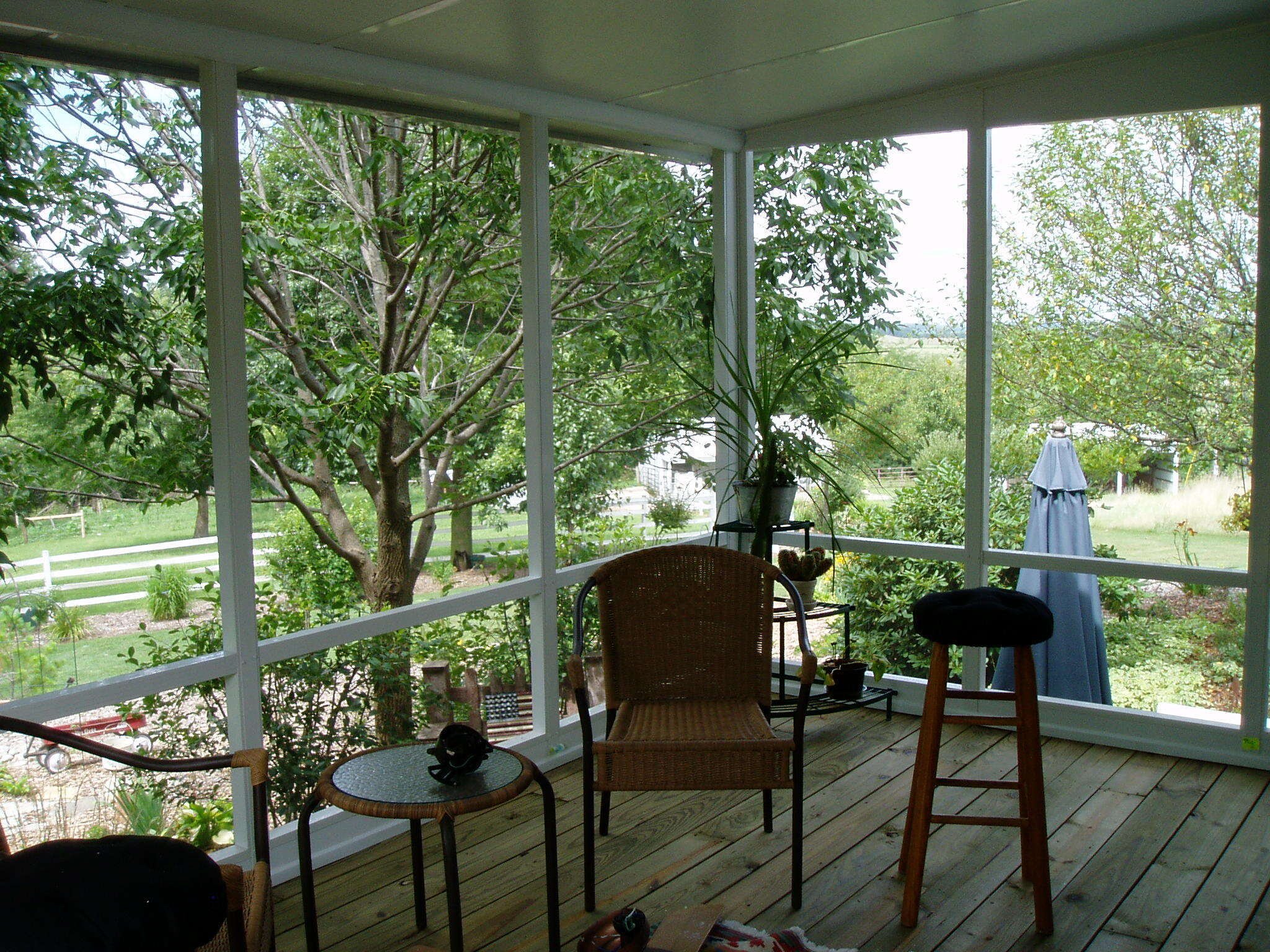
A well-designed screen room should look connected to the home rather than added as an afterthought.
Important design decisions include:
- Roof style
- Wall height
- Screen-wall configuration
- Frame color
- Door placement
- Chair rail or knee wall
- Patio or deck condition
- Connection to the house
- Sight lines from inside
- Furniture layout
- Exterior trim
- Drainage
Joyce screen rooms are custom-designed for the home and are currently available with white, beige, or black wall colors. Homeowners can choose floor-to-ceiling screen walls or add a chair rail and panel sections for a more structured appearance.
Black framing may suit contemporary, modern farmhouse, or high-contrast exteriors. White or beige may blend more naturally with traditional siding and trim.
What Features Are Available in a Joyce Screen Room?
Current Joyce screen room options include:
Heavy-duty aluminum framing
Joyce uses extruded aluminum framing intended to provide strength and durability.
Water-shedding screen mesh
Standard screen mesh includes a hydrophobic coating designed to help repel water and reduce dirt and debris buildup.
Optional BetterVue® screening
BetterVue® screening is intended to provide clearer views, improved airflow, and more natural light than traditional screening.
Flexible wall configurations
Homeowners may select floor-to-ceiling screens or a wall design with a chair rail, knee wall, transom, or trapezoid panels.
Screen doors
Joyce screen rooms may include up to two outward-swinging screen doors, depending on the design.
Multiple frame colors
Current color choices include:
- White
- Beige
- Black
Actual features depend on the approved design and project specifications.
Can a Screen Room Be Built on an Existing Deck or Patio?
Often, yes—but the existing structure must be evaluated first.
A deck or patio must be suitable for the weight, attachment method, roof, wind requirements, drainage, and local building-code conditions of the planned enclosure.
A site evaluation may consider:
- Foundation condition
- Deck framing
- Footings
- Ledger connection
- Patio cracking or settlement
- Roof structure
- Water drainage
- Connection to the home
- Electrical lines
- Utility locations
- Access
- Local permits
- Property setbacks
An existing surface should not be assumed to be ready simply because it appears solid.
Joyce evaluates the proposed area before recommending a screen room or enclosure.
Related Article: Putting a Screen Room On A Deck
Is a Screen Room Safe for Children and Pets?
A screen room can create a more contained outdoor area, but it should not be described as automatically safe or childproof.
Screens are not intended to function as fall-protection barriers, security walls, pool fencing, or substitutes for adult supervision.
Families should consider:
- Door latches
- Steps and railings
- Electrical outlets
- Furniture placement
- Screen durability
- Pet claws
- Access to pools or streets
- Small gaps around doors
- Outdoor-rated furnishings
- Slippery flooring after rain
Ask the designer which materials and door options may be appropriate for your household.
Does a Screened-In Porch Count as Living Space?
A screen room generally is not counted as heated, finished interior living space.
Local definitions vary, but screened areas commonly lack the insulation, glazing, heating, cooling, and finished construction required for conditioned square footage.
That does not mean the space lacks value. It may improve how the homeowner uses the property and make outdoor living more appealing.
Avoid assuming that a screen room will add a specific amount to the home’s appraisal or resale price. Market response depends on the home, neighborhood, workmanship, design, condition, and buyer preferences.
Will a Screened Porch Increase Home Value?
A well-designed screen room may improve buyer appeal and outdoor functionality, but there is no universal return.
Potential buyers may appreciate:
- Insect protection
- Covered outdoor seating
- A defined entertainment area
- Low-maintenance materials
- A room that visually complements the house
Other buyers may prefer a glass sunroom, open patio, or different use of the space.
Plan the project primarily around how your household expects to use it. Any resale benefit should be treated as a possible advantage rather than a guaranteed return.
Is a Screen Room Easy to Maintain?
A screen room may reduce the amount of leaves and large debris entering the covered area, but it is not maintenance-free.
Typical care may include:
- Cleaning screens
- Removing pollen and dust
- Checking door operation
- Inspecting screen mesh for tears
- Cleaning the floor
- Washing frames
- Clearing roof drainage
- Checking sealant and attachment points
- Moving or covering furniture during severe weather
- Following manufacturer care instructions
Joyce screen rooms use low-maintenance aluminum framing and coated screen materials, but periodic cleaning and inspection are still needed.
When Is a Screen Room Not the Best Choice?
A screen room may not be right when:
- You want year-round heating and cooling.
- You need the space to feel like a fully finished interior room.
- You want protection from extreme heat or winter cold.
- You expect to use sensitive indoor furniture or electronics.
- Strong wind or wind-driven rain is a frequent concern.
- You want maximum sound reduction.
- You need conditioned living space for a bedroom or permanent office.
- You rarely use the existing patio, deck, or yard.
- The existing structure cannot support the planned enclosure without major work.
In these situations, compare other room types before committing to screens.
Should You Choose a Screen Room, Three-Season Room, or Four-Season Sunroom?
Choose a screen room when:
- Fresh air is a priority.
- Bugs are the main problem.
- You plan to use the space mainly in mild weather.
- You want shade and a covered gathering area.
- You prefer a more open outdoor feeling.
- You want a lower project scope than a full sunroom.
Choose a three-season room when:
- You want more protection from rain, wind, and temperature swings.
- You plan to use the room through spring, summer, and fall.
- Operable windows and screens are important.
- You want more separation from outdoor weather.
Choose a four-season sunroom when:
- You want more consistent year-round comfort.
- The room will be connected to the home’s daily living space.
- Insulation and energy-efficient glass are priorities.
- You expect to heat or cool the room as permitted by the design and local requirements.
Choose a patio cover when:
- Shade and overhead shelter are the main goals.
- You want the sides to remain completely open.
- Bugs are not a major concern.
- You prefer the simplest connection to the yard.
Related Article: Three-Season vs Four-Season Sunroom

Questions to Ask Before Adding a Screen Room
Ask every contractor:
- Can my existing patio or deck support the enclosure?
- Will a new foundation or structural reinforcement be required?
- Which permits are included?
- What roof system will be used?
- How will rainwater drain away from the room?
- Which screen material is included?
- Are upgraded screens available?
- What frame and wall colors can I choose?
- How many doors are included?
- Is electrical work included?
- Are ceiling fans or lighting included?
- How will the room attach to the home?
- What maintenance is required?
- What does the product warranty cover?
- What labor warranty is included?
- How will hidden damage or code issues be handled?
- What is the complete project schedule?
- What could increase the final price?
Screen Room Planning Worksheet
| Planning question | Your answer |
|---|---|
| How will the room be used most often? | |
| Which months do you expect to use it? | |
| Is bug protection the main priority? | |
| Do you need heating or cooling? | |
| Is there an existing patio or deck? | |
| Is there an existing roof? | |
| How many people should the room seat? | |
| Do you need space for dining? | |
| Will pets use the room? | |
| Do you need lighting or a ceiling fan? | |
| Which frame color matches the home? | |
| What is the comfortable project budget? |
How Much Does a Joyce Screen Room Cost?
Screen room pricing varies based on:
- Size
- Existing patio or deck condition
- Foundation work
- Roof requirements
- Wall configuration
- Screen type
- Frame color
- Doors
- Panels
- Electrical work
- Site access
- Permits
- Local labor conditions
- Installation complexity
Joyce’s published sunroom cost guide currently gives a general screen room range of approximately $25,000 to $40,000, depending on size and installation requirements.
That range is only a planning estimate. A design consultation and site evaluation are required for exact pricing.
Related Article: Joyce Pricing
Why Consider a Joyce Screen Room?
Joyce Windows, Sunrooms & Baths designs, manufactures, and installs custom screen rooms and other outdoor enclosures.
Current Joyce screen room benefits include:
- Custom designs for the home
- Proprietary screen wall systems
- Heavy-duty aluminum framing
- Multiple screen options
- White, beige, and black colors
- Coordinated design and installation
- Warranty protection
- More than 70 years of home improvement experience
Joyce has served homeowners since 1955 and currently provides sunrooms, screen rooms, patio enclosures, and patio covers across service areas in Ohio, Pennsylvania, North Carolina, and South Carolina.
Frequently Asked Questions
Do screened-in porches keep all bugs out?
They are designed to reduce mosquitoes, flies, gnats, and other insects, but no room can guarantee that every insect will stay out. Doors, damaged screens, and small gaps can allow bugs to enter.
Can rain come through a screened porch?
Yes. A roof provides overhead protection, but wind-driven rain may pass through screened walls. Use furnishings and materials suitable for a covered outdoor environment.
Can a screen room be heated or air-conditioned?
A traditional screen room is not designed for climate control. Homeowners who want heating or cooling should compare a three-season or four-season sunroom.
Can Joyce enclose an existing patio or deck?
Possibly. Joyce can build screen rooms over many existing patios and decks, but the structure must first be evaluated for condition, support, code compliance, drainage, and suitability.
What colors are available for Joyce screen rooms?
Joyce currently offers white, beige, and black screen room wall colors.
What screen options does Joyce offer?
Joyce screen rooms include screen mesh with Water Shed Technology™. Optional BetterVue® screening is available for clearer views, airflow, and natural light.
Is a screen room cheaper than a sunroom?
A screen room generally has a lower project scope and cost than a three- or four-season sunroom. Exact pricing depends on size, structure, roof, design, and installation conditions.
Can a screened-in porch add value to a home?
It may improve outdoor functionality and buyer appeal, but the financial return varies. A screen room should not be presented as guaranteeing a particular increase in appraisal or resale value.
Can I use a screen room during winter?
A screen room can remain accessible, but it is not designed for warm, climate-controlled winter use. Cold temperatures, wind, and snow may limit comfort.
Does Joyce provide a warranty?
Joyce currently advertises manufacturer warranty protection and a two-year limited labor warranty for qualifying remodeling projects. The signed warranty documents should be reviewed before purchase.
The Bottom Line
A screened-in porch can make an outdoor area more useful by adding shade, insect protection, fresh air, and a defined place to relax or entertain.
It is often a strong choice when homeowners want to preserve the feeling of being outdoors without building a fully enclosed, climate-controlled room.
It is not the right solution for every household. A three-season room, four-season sunroom, patio enclosure, or patio cover may be better when comfort, weather protection, or year-round use is the main priority.
Joyce Windows, Sunrooms & Baths can help you compare the available room types, evaluate your existing patio or deck, and create a custom plan for your home.
Ready to enjoy your outdoor space with fewer bugs and more comfort?
Prefer to compare designs and costs first?

Topics: