
A backyard can look inviting without being especially easy to use.
Strong sun may make the patio uncomfortable. Mosquitoes can interrupt dinner. Rain may cancel an afternoon outside. During colder or hotter months, a basic outdoor space may sit empty.
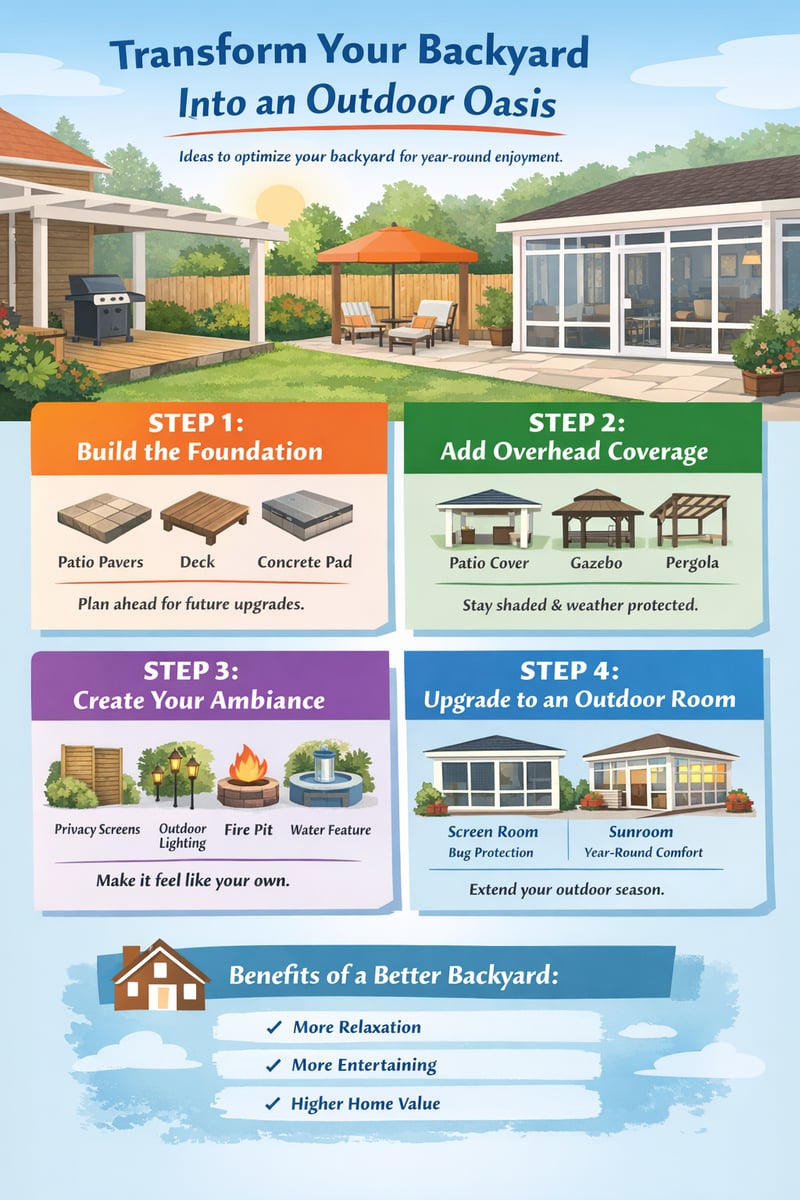
A sunroom, screen room, patio enclosure, or patio cover can help you use more of the space you already have. The right choice depends on how much protection you want, which seasons matter most, and how you plan to use the finished area.
Joyce Windows, Sunrooms & Baths designs, manufactures, and installs custom three-season and four-season sunrooms, screen rooms, patio and deck enclosures, and patio covers.

Which Outdoor Room Is Right for You?
Choose a:
- Patio cover when you want shade and overhead rain protection while keeping the sides open.
- Screen room when fresh air and insect protection are your main priorities.
- Three-season sunroom when you want a glass-enclosed room for comfortable spring, summer, and fall use.
- Four-season sunroom when you want more insulation and a room that functions more like everyday living space.
- Patio or deck enclosure when you already have a suitable covered structure that may be converted with custom sunroom walls.
Before choosing, consider the existing structure, intended use, comfort expectations, roof design, glass, electrical needs, permits, and budget.
Not sure which room fits your backyard? Book a Design Consultation
What Is an Outdoor Room?
An outdoor room is a space designed to strengthen the connection between the home and backyard.
It may remain mostly open to the air, as with a patio cover, or it may be enclosed with screens, windows, walls, and an insulated roof.
Outdoor rooms can be used for:
- Dining
- Entertaining
- Reading
- Hobbies
- Working from home
- Family gatherings
- Morning coffee
- Plants and gardening
- Children’s activities
- Quiet relaxation
The best design starts with a practical question: What do you want to do in the room that your current backyard does not allow you to do comfortably?
Compare Sunrooms and Outdoor-Room Options
| Room type | Main protection | Typical seasonal use | Best for |
|---|---|---|---|
| Patio cover | Overhead sun and light rain | Pleasant-weather use | Shade, dining, grilling, and open-air relaxation |
| Screen room | Insects, some debris, and direct sun | Spring through fall in many climates | Fresh air without mosquitoes and gnats |
| Three-season sunroom | Insects, rain, wind, and broader weather changes | Primarily spring, summer, and fall | A bright seasonal retreat with windows and screens |
| Four-season sunroom | Weather, insects, and wider temperature changes | Designed for more consistent year-round use | Daily living, work, dining, hobbies, and family space |
| Patio or deck enclosure | Depends on selected walls, glass, roof, and insulation | Seasonal or year-round, depending on design | Converting a suitable existing covered patio or deck |
The room names alone do not tell you everything. Compare the actual wall system, roof, glass, insulation, ventilation, foundation, and heating or cooling plan before making a decision. Joyce describes three-season rooms as a more seasonal and generally lower-cost option, while four-season rooms include more insulation and comfort-focused construction.
Option 1: Add Shade With a Patio Cover
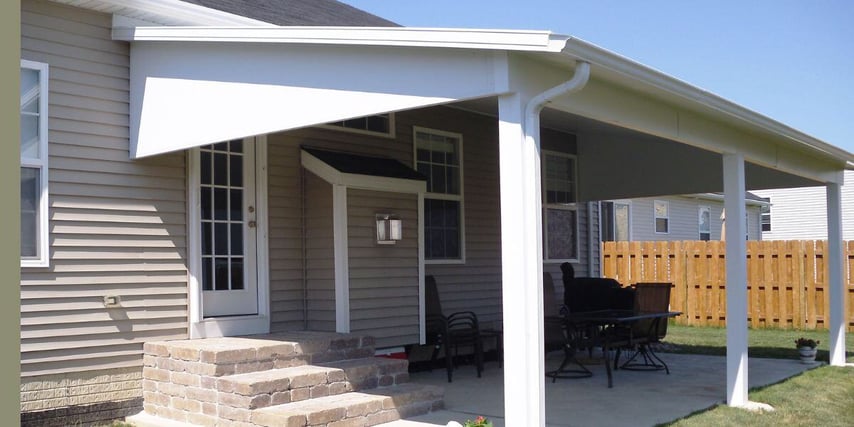
A patio cover is a permanent roof installed over a patio, porch, or deck. The sides typically remain open.
It may be a good choice when your main concerns are:
- Strong direct sunlight
- Light rain
- An uncovered dining area
- Protecting outdoor furniture from overhead weather
- Creating a more defined backyard gathering space
- Keeping an open-air feel
Because the sides remain open, a patio cover will not provide meaningful protection from insects, wind-driven rain, pollen, humidity, heat, or cold.
Joyce patio covers use the company’s ClimateMaster® insulated roof-panel system and are custom-fitted to the home and existing outdoor area.
A Patio Cover May Be Right for You When:
- You enjoy being fully outdoors.
- Insects are not your main concern.
- You want permanent shade rather than an umbrella or retractable awning.
- You want to keep open views and natural airflow.
- You do not need an insulated room.
Learn more: Explore Patio and Porch Covers
Option 2: Enjoy Fresh Air Without the Bugs in a Screen Room
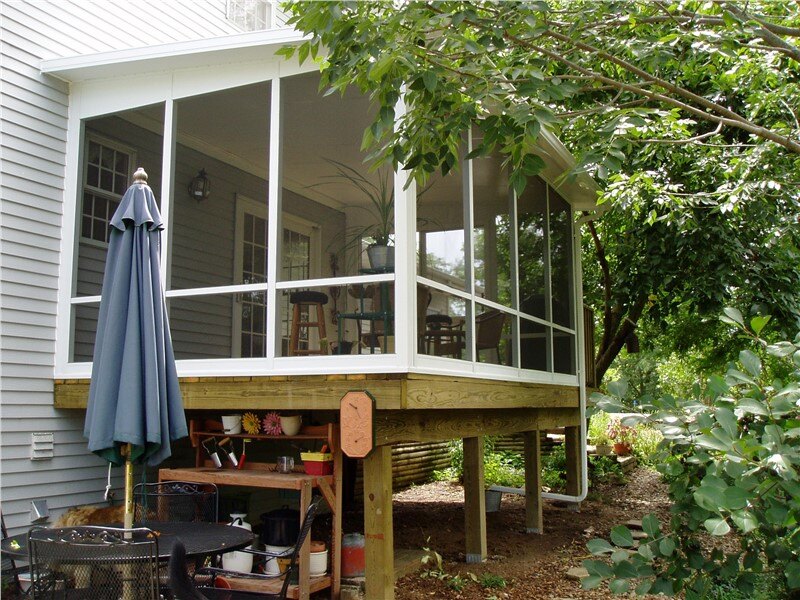
A screen room has screened walls that allow airflow and outdoor views while helping keep mosquitoes, flies, gnats, and other insects outside.
It may work well as:
- An outdoor dining room
- A shaded lounge
- A play area
- A place for morning coffee
- A comfortable spot for entertaining
- A transition between the home and backyard
Joyce screen rooms can be designed over suitable existing patios or decks. Current Joyce options include heavy-duty aluminum framing, screen-wall configurations, standard Water Shed Technology™ screen mesh, optional BetterVue® screening, and white, black, or beige frame colors.
Understand the Limitations of a Screen Room
A screen room still behaves like an outdoor space.
It does not provide the insulation or temperature control of a four-season sunroom. Wind, humidity, pollen, and seasonal temperatures may still affect comfort.
Choose a screen room when airflow and insect protection matter more than full weather protection.
Learn more: Explore Screen Rooms and Screened-In Patios
Option 3: Extend Your Seasons With a Three-Season Sunroom
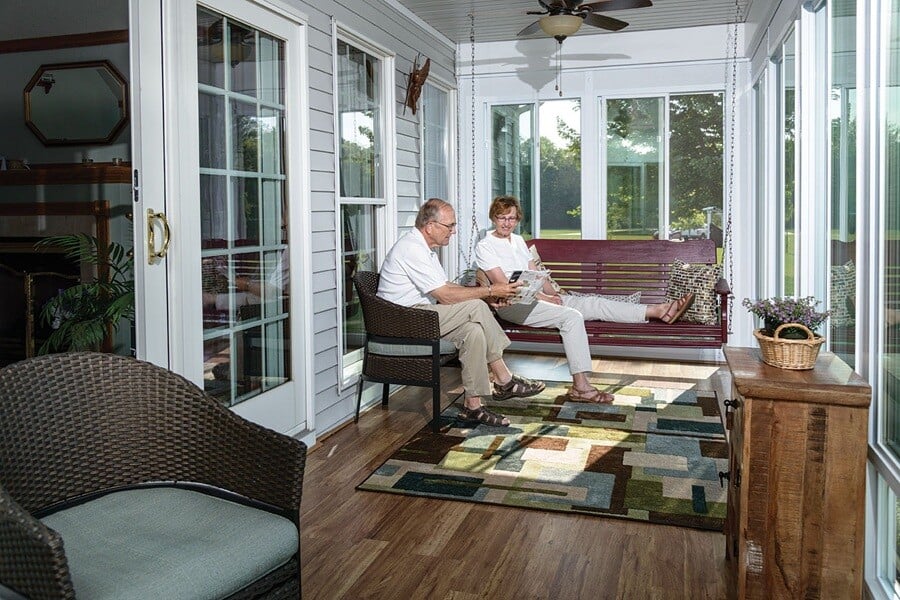
A three-season sunroom is generally designed for comfortable use through much of spring, summer, and fall.
It includes more protection than a screen room and may feature:
- Glass windows
- Operable screens
- A permanent roof
- Enclosed walls
- Doors
- Electrical planning
- Custom colors and finishes
A three-season room can be a good fit when you want:
- A bright place to relax
- More protection from rain and wind
- Better separation from insects
- Seasonal dining or entertaining space
- A stronger connection to the backyard
- A lower investment than a more insulated year-round room
It should not automatically be treated as an extension of the home’s conditioned living area. Comfort during extreme temperatures depends on the design, glass, insulation, orientation, and any approved heating or cooling plan.
Related Article: Three Season vs Four Season Sunroom
Option 4: Create More Everyday Living Space With a Four-Season Sunroom
A four-season sunroom is designed with more insulation and comfort features so it can be used more consistently through changing weather.
Homeowners may use a four-season room as:
- A family room
- A dining space
- A home office
- A hobby room
- A reading room
- A plant room
- A gathering space
- A quiet retreat
Joyce identifies four-season rooms as the better option for homeowners who want a room that functions more like everyday living space, with greater flexibility for work, hobbies, dining, and family use.
Related Article: Reasons for a Four-Season Sunroom
A Four-Season Room Requires More Planning
A year-round room may involve decisions about:
- Foundation or structural support
- Roof insulation
- Wall construction
- Energy-efficient glass
- Heating and cooling
- Electrical service
- Flooring
- Doors
- Drainage
- Connection to the existing home
- Local permits and building requirements
A four-season room generally requires a larger investment than a screen room or basic seasonal enclosure because it uses more comfort-focused construction.
Learn more: Compare Three- and Four-Season Sunrooms
Option 5: Enclose an Existing Patio or Deck
An existing covered patio, porch, or deck may provide a starting point for an enclosed outdoor room.
Joyce offers proprietary vinyl sunroom wall systems that can be used to convert suitable existing structures into enclosed spaces. The system can include custom glass packages and is designed to integrate with the home and existing layout.
However, an existing patio or deck cannot be assumed to be ready for enclosure.
It should be evaluated for:
- Structural support
- Foundation or footings
- Levelness
- Drainage
- Roof condition
- Connection to the house
- Existing damage
- Site access
- Applicable wind and snow loads
- Permit and code requirements
Some structures may be suitable as they are. Others may need reinforcement, repair, or replacement before an enclosure can be installed.
Learn more: Explore Patio and Deck Enclosures
How Will You Use the Finished Room?
The intended use should guide the design.
For Dining and Entertaining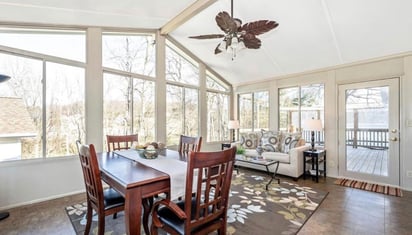
Think about:
- Table and chair dimensions
- Walking paths
- Access to the kitchen
- Serving space
- Lighting
- Ceiling fans
- Electrical outlets
- Door placement
A room that looks large when empty may feel crowded after furniture is added.
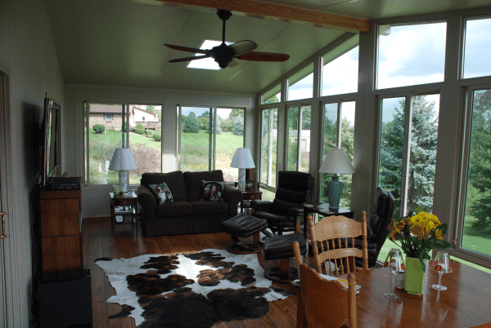
For a Home Office
Consider:
- Glare on computer screens
- Heating and cooling
- Electrical outlets
- Internet access
- Privacy
- Sound
- Furniture placement
- Direct afternoon sun
A screen room may not offer the temperature control or protection needed for daily office use.
For Plants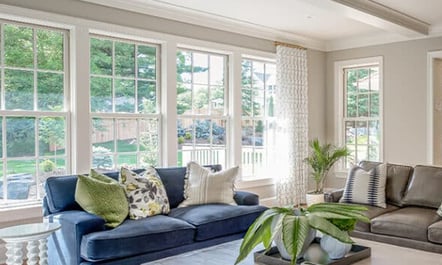
Review:
- Sun direction
- Heat buildup
- Ventilation
- Winter temperatures
- Water access
- Flooring
- Drainage
A bright sunroom can support plants, but not every plant will tolerate the same temperature and light conditions.
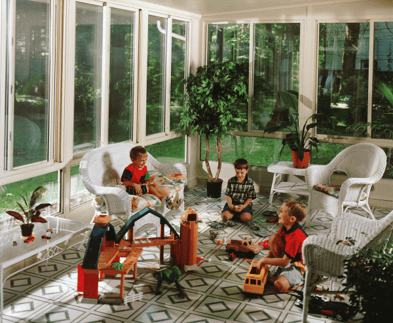
For Children or Pets
Consider:
- Door hardware
- Screens
- Flooring
- Steps
- furniture placement
- Temperature
- Supervision
- Access to the yard
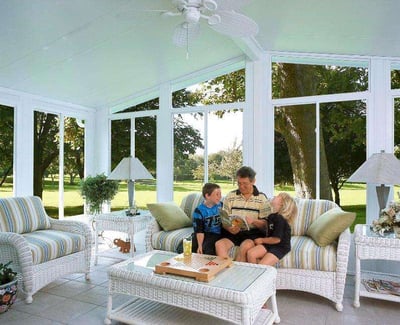
Screens help reduce insect entry, but they should not be treated as fall-prevention or security barriers.
For Everyday Family Living
A room intended for daily use may need more insulation, electrical planning, finished flooring, and temperature control than a casual seasonal retreat.
How Much Backyard Space Do You Need?
The room should fit the home and yard without overwhelming either one.
Before selecting dimensions, mark the proposed footprint outside with stakes, tape, or temporary furniture. Walk around it and check:
- How much lawn remains
- Access to gates and side yards
- Distance from property lines
- Door and window locations
- Views from inside the house
- Drainage paths
- Outdoor equipment
- Landscaping
- Grills and fire features
- Steps and changes in elevation
Also verify local setback, zoning, permit, and homeowners association requirements before construction.
How Does Sun Direction Affect an Outdoor Room?
The direction the room faces can influence glare, temperature, and how the space feels during different parts of the day.
For example:
- East-facing rooms often receive stronger morning sun.
- West-facing rooms may experience more intense afternoon sun.
- South-facing rooms can receive substantial sunlight through the day.
- North-facing rooms may receive softer or more indirect light.
Trees, neighboring homes, roof overhangs, glass selection, ventilation, and local climate can change these patterns.
A design consultation should consider when you plan to use the room, not just the total amount of sunlight it receives.
How Much Does a Sunroom or Outdoor Room Cost?
The cost varies because each project is designed around a particular home, site, and comfort goal.
Major cost factors include:
- Room type
- Size
- Existing patio or deck condition
- New foundation or structural work
- Roof style
- Glass package
- Insulation
- Windows and doors
- Electrical work
- Heating or cooling plans
- Flooring and finishes
- Site access
- Permits
- Installation complexity
- Custom design choices
Joyce currently explains that a screen room or simple patio enclosure usually costs less than a more insulated year-round sunroom. Joyce’s published cost guide lists installed sunroom projects in a broad $40,000 to $90,000 range, but the actual project price depends on the selected room and site conditions. Because published pricing can change, link readers to the maintained cost guide rather than embedding a permanent figure in the article.
Related Article: Sunroom Cost Explained
Does an Existing Patio or Deck Lower the Cost?
Sometimes, but not always.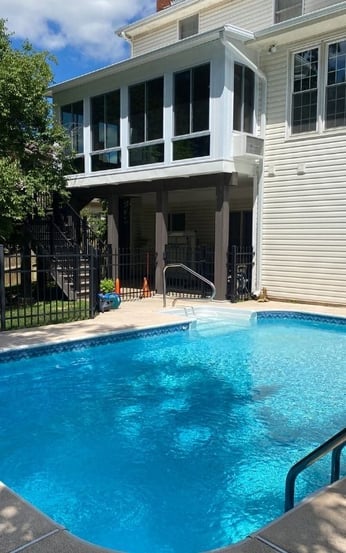
Reusing a suitable structure may reduce some foundation or preparation work. However, an older or undersized patio or deck may need repairs, reinforcement, or replacement.
Joyce evaluates:
- Existing condition
- Structural support
- Attachment to the house
- Levelness
- Drainage
- Site access
- Local requirements
A structure that looks solid from above may not have been designed to support walls, glass, a roof, or applicable weather loads.
Which Outdoor Room Requires the Least Maintenance?
Maintenance depends on the materials, design, surrounding trees, and local environment.
In general:
- Patio covers require cleaning and periodic inspection of the roof, drainage, posts, and attachment points.
- Screen rooms require screen, frame, door, and roof care.
- Glass-enclosed rooms require window, track, glass, roof, drainage, and seal maintenance.
- Finished four-season rooms may also involve flooring and heating or cooling equipment.
Joyce describes its screen-room and vinyl sunroom components as low-maintenance, but homeowners should follow the care instructions and written warranty for their specific project.
Questions to Ask Before Building a Sunroom or Outdoor Room
Ask your design consultant:
- Which room type fits how we plan to use the space?
- During which seasons should we expect it to be comfortable?
- Can our existing patio or deck support the project?
- What foundation or preparation work is needed?
- How will the roof connect to the house?
- Which glass and screen options are available?
- How will direct sun affect the room?
- Is heating or cooling recommended?
- What electrical work is included?
- Which permits and inspections apply?
- How will rainwater drain away from the room?
- What product and labor warranty coverage applies?
- Who manages design, manufacturing, installation, and service?
- What is included in the written price?
- What could change the final scope or cost?
A detailed consultation should leave you with a clear understanding of both the room’s benefits and its limitations.
Related Article: Picking the Correct Contractor For You
Why Choose Joyce for a Sunroom or Outdoor Room?
Joyce provides a factory-direct process for custom sunrooms and outdoor-room projects.
Joyce designs, manufactures, and installs its own sunroom systems, allowing one team to guide the project from the initial design conversation through fabrication and installation.
Available Joyce outdoor-living options include:
- Screen rooms
- Screened-in patios
- Three-season sunrooms
- Four-season sunrooms
- Patio and deck enclosures
- Patio and porch covers
Joyce currently provides these services in areas of Ohio, Pennsylvania, North Carolina, and South Carolina.
Frequently Asked Questions About Sunrooms and Outdoor Rooms
What is the difference between a sunroom and a screen room?
A screen room uses screened walls to allow airflow while helping keep insects outside. A sunroom is enclosed with windows or glass and provides more protection from weather and seasonal temperature changes.
Is a three-season room the same as a four-season room?
No. A three-season room is primarily intended for spring, summer, and fall. A four-season room includes more insulation and comfort-focused construction for more consistent use during hotter and colder weather.
Can a sunroom be built on an existing deck?
Possibly. The deck must be evaluated for condition, support, attachment, levelness, drainage, and applicable requirements. Additional structural work may be needed.
Does Joyce build detached sunrooms?
No. Joyce states that its sunrooms are designed to attach to a home or garage rather than stand separately in the yard.
Do screen rooms keep all weather outside?
No. Screen rooms help with insects and some debris while preserving airflow. Wind, humidity, rain, pollen, heat, and cold may still affect the space.
Is a patio cover the same as a sunroom?
No. A patio cover has a permanent roof but normally leaves the sides open. A sunroom includes enclosed walls, windows, or screens.
Which type of outdoor room costs the least?
A screen room is often the most affordable Joyce outdoor-room category because it typically uses fewer materials than a glass-enclosed three-season or year-round room. The actual cost still depends on size, site conditions, and installation needs.
Does a sunroom require electrical work?
Many sunrooms include electrical planning for outlets, lighting, ceiling fans, or local code requirements. The exact scope depends on the room design and intended use.
Can a patio cover be enclosed later?
Possibly, but it should not be assumed. Tell the designer about future enclosure plans before the patio cover is engineered and installed.
How long does a sunroom project take?
Timing depends on design, engineering, permits, site preparation, manufacturing, installation complexity, electrical work, and weather. Request a project-specific schedule after the property has been evaluated.
Make Your Backyard Easier to Enjoy
A better backyard does not always require more land. Sometimes it requires a space that works more reliably.
A patio cover can add shade. A screen room can reduce insect problems. A three-season room can extend spring-through-fall enjoyment. A four-season sunroom can create more flexible everyday living space.
The right choice depends on how you want to live—not simply which room looks best in a photograph.
Joyce Windows, Sunrooms & Baths can help you compare the available room types, evaluate your existing space, and create a custom plan for your home.

Topics: