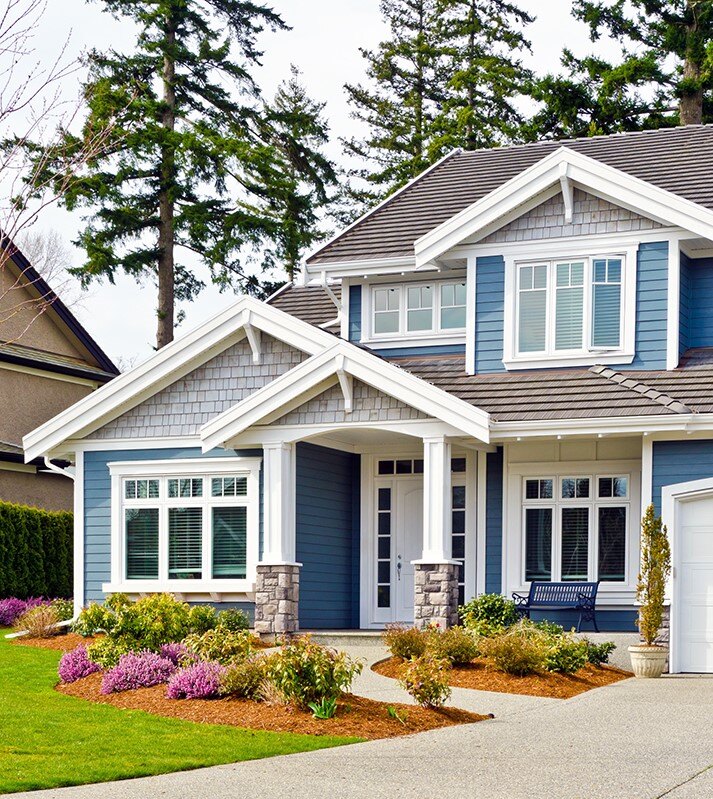

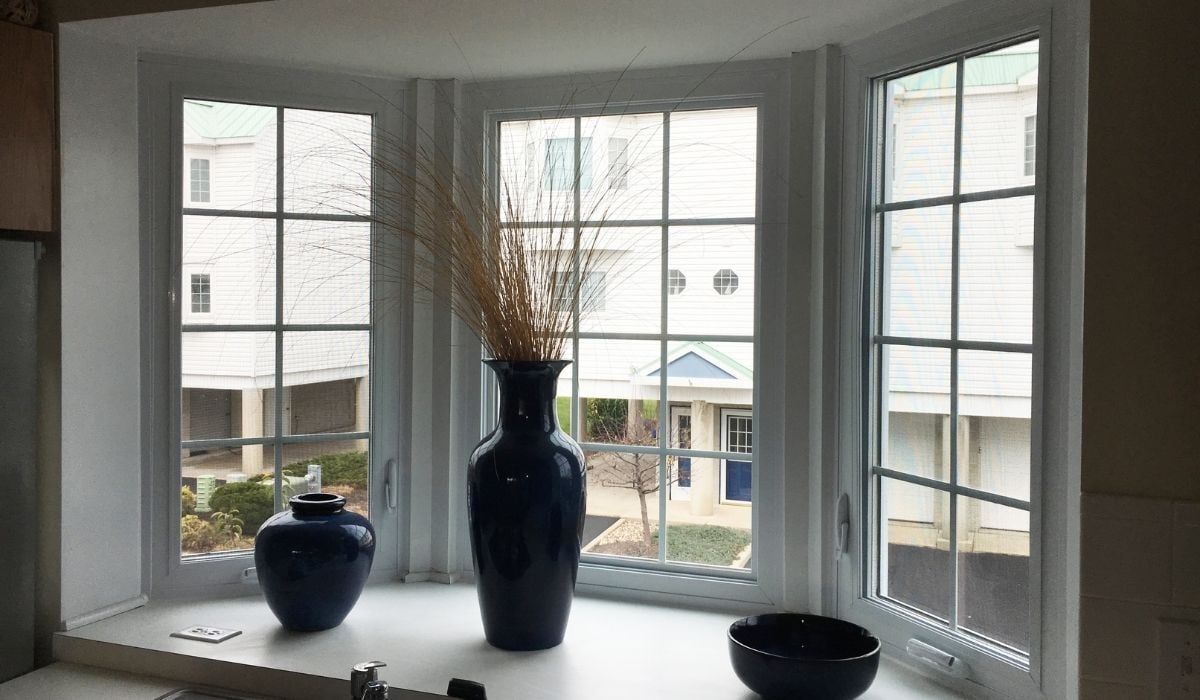
Bay and bow windows are both combination window styles that extend outward from your home’s exterior wall. That “pop-out” design can instantly add architectural character, bring in more natural light, and create bigger, better views thanks to the larger glass area.

Because both styles project beyond the wall, they typically need protection from the elements. That often means a small roof (sometimes called a “cap”) above the unit, or installation under an existing soffit/overhang to help shield the window from rain, snow, and wind.
So how do you choose between a bay window vs. a bow window? The best option depends on your home’s architecture, the size of the opening, your budget, and how you want the space to function.
Quick Definitions
What is a bay window?
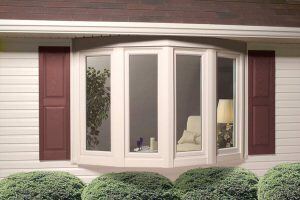
A bay window is an angled window unit that protrudes outward and typically includes three windows. Most commonly, you’ll see:
- A fixed picture window in the center
- Two operable windows on the sides (often casement or double-hung)
- Side windows are set at angles (commonly around 25° to 45°, depending on design)
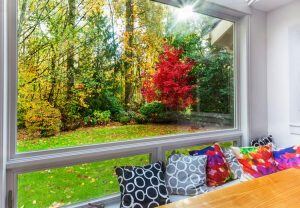
Bay windows are a favorite for creating a deep ledge or a true window seat.
What is a bow window?
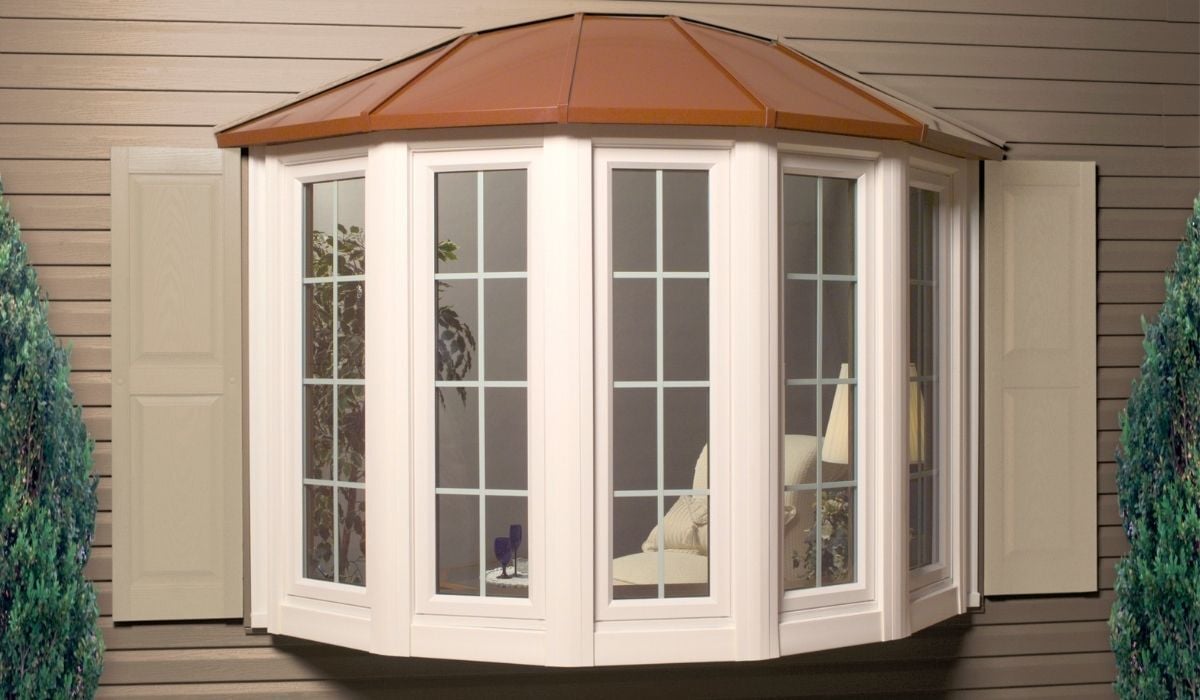
A bow window is similar, but instead of sharp angles it forms a soft curve across the opening. Bow windows usually have:
- 4–6+ window panels
- A mix of picture and casement windows
- Panels set at consistent angles to create a sweeping arc
Bow windows often look more “continuous” and elegant from both inside and out.
What’s the Difference Between Bay and Bow Windows?
| Feature | Bay Window | Bow Window |
|---|---|---|
| Overall shape | Angled “pointed” projection | Curved, sweeping arc |
| Typical number of panels | 3 | 4–6+ |
| Best for opening size | Great for standard openings | Often ideal for wider openings (commonly 7’+) |
| Center window | Usually, a large fixed picture window | Often, multiple picture/casement units for a curved look |
| Ventilation | Typically, the two side windows open | Some or many panels can open (often casements) |
| Projection/depth | Often projects farther (varies by angle) | Usually shallower than a deep bay (varies by design) |
| Window seat potential | Excellent for a large seat/ledge | Can work, but typically less “deep-seat” friendly |
| Exterior look | Strong architectural “pop” | Softer, more uniform façade line |
| Cost (typical trend) | Often slightly less, but can vary | Often slightly higher due to more panels/hardware |
Cost Differences: Is a Bow Window More Expensive?
In many cases, the price difference isn’t dramatic, but bow windows often cost more on average because:
- They usually fill larger openings
- They typically include more individual window units (4–6+ vs. 3)
- More units can mean more framing, glass, hardware, and labor
That said, a bay window can become the pricier option when it includes a deeper custom projection or a more complex structural “shell” design.
What impacts cost the most?
Regardless of bay vs. bow, major cost drivers usually include:
- The custom insulated shell/frame, often built from high-quality lumber materials
- Whether a new roof cap is needed above the window
- Interior finishing, including new casing/trim and seat area finishing
- How many panels are operable (more opening sashes = more hardware and cost)
Finishing tip: If you want a stained interior, choose a unit with edge banding so the exposed seat/frame edges can stain evenly to match your trim. Without it, you may be trying to stain raw cut plywood edges, which rarely look as clean.
How Do Size, Style, and Function Affect Your Window Choice?
Sometimes your home’s architecture will steer the decision for you. But two practical factors matter most:
1) Opening width
- Wider openings (often 7 feet or more) are frequently better suited to a bow window, since it can use more panels to span the space gracefully.
- Standard openings often pair beautifully with a bay window, especially if you want a strong architectural focal point.
2) How you want to use the space
Choose a bay window if you want:
- A deeper ledge
- A true window seat
- A cozy nook for reading, plants, décor, or storage
Choose a bow window if you want:
- A more uniform, curved appearance
- A wide “panoramic” feel
- A softer exterior profile that blends smoothly with the façade
Ventilation: Which One Opens More?
- Bay windows: usually only the two side windows open.
- Bow windows: you can often choose some or many panels to open, typically as casements.
Even though bow windows can have more opening panels, each unit is often narrower (and there’s more framing between panes). In practice, ventilation between bay and bow windows can end up being more similar than you’d expect, depending on how many panels you choose to operate.
Cost note: Making more bow panels operable typically increases cost due to additional hardware and window configurations.
Depth and Projection: Which Adds More Space?
Bay windows often project farther outward (though not always), which can:
- Create more interior “useful space”
- Improve window seat comfort
- Add room for décor or furniture placement
Bow windows typically have a gentler, often shallower projection, but the curved shape can make a room feel wider and brighter.
Both styles can work well with boxed-in window seats, depending on your interior design goals.
What Are the Most Frequently Asked Questions About Bay and Bow Windows?
Are bay and bow windows the same thing?
Not quite. They’re similar because both project outward and use multiple window panels, but bay windows are angled and typically 3-panel, while bow windows are curved and typically 4–6+ panel.
Which is better for a window seat?
Bay windows are often preferred because they have a deeper projection that creates a more comfortable seating ledge.
Which one lets in more light?
Both bring in a lot of light. Bow windows may have slightly more glass area in some designs, but the real difference lies in overall size, glass selection, and configuration.
Which one is more expensive?
Bow windows are often used because they typically include more window units and can fill wider openings. But a large, deep bay with a custom build-out can cost more than a bow.
Do bay and bow windows need a roof?
They often need protection from the elements. Many installations use a small roof cap above the unit or place the window under an existing soffit/overhang.
Can you open the middle window?
Typically, the center panel is fixed in many bay designs. Bow windows can be configured with more operable panels, but making additional panels operable can increase cost.
Bottom Line: Which Should You Choose?
- Choose a bay window for a bold architectural feature, deeper projection, and the best setup for a window seat.
- Choose a bow window for a softer, curved look that shines in wide openings and delivers a panoramic feel.
At Joyce, we’ve been helping homeowners choose the right windows for their homes for decades, and we know that the “best” option often comes down to the details: your home’s architecture, the size of the opening, how much projection you want, and whether ventilation or a window seat is the priority.
Our team can walk you through bay vs. bow window layouts, explain the cost and installation considerations (including roof caps, trim, and finishing), and recommend a configuration that fits your style and budget. If you’d like, we can review your space and goals and help you make a confident decision between a bay window and a bow window, without the guesswork.

Topics: