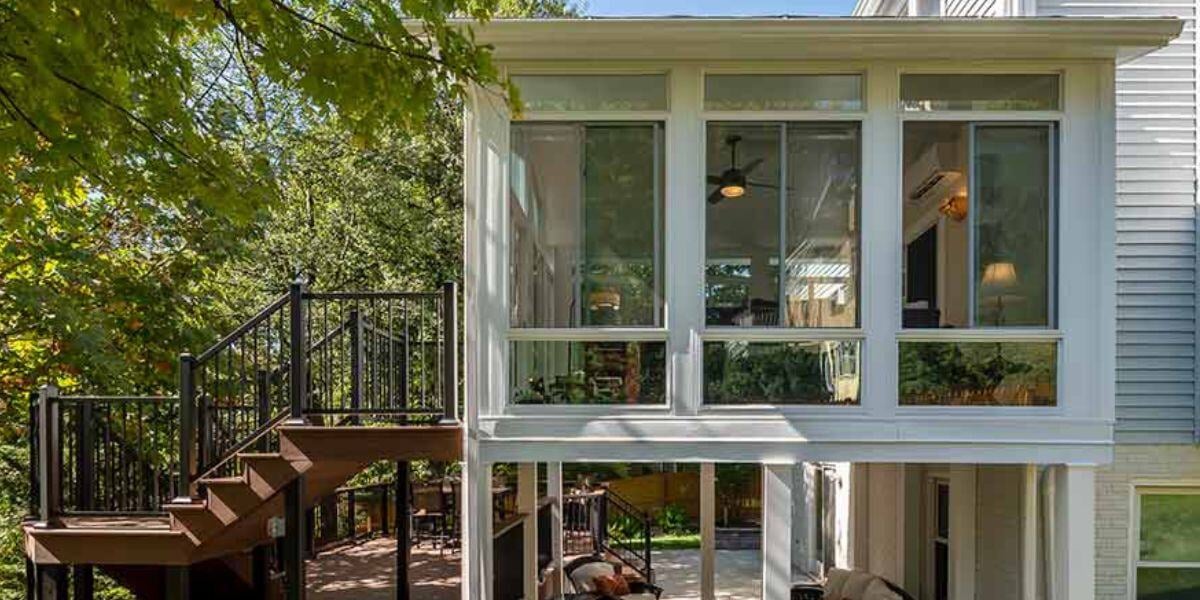

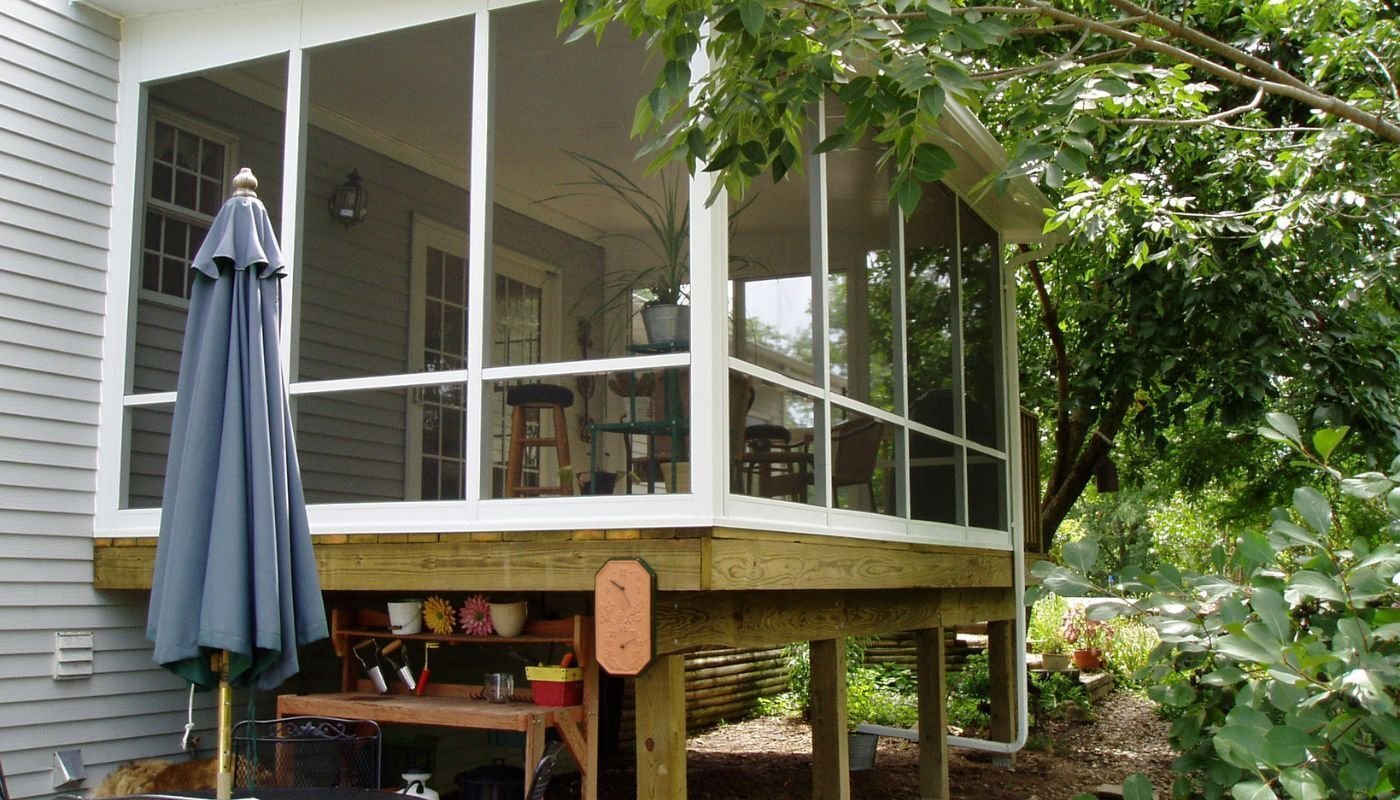
Executive Summary
A screened porch enclosure can make a patio, porch, or suitable deck more comfortable by adding shade and helping reduce mosquitoes, flies, gnats, leaves, and other outdoor annoyances.
Its three biggest benefits are:
- A more comfortable place to relax and entertain
- Fewer insects without losing fresh air and outdoor views
- More opportunities to use an outdoor area during mild weather
A screen room is not weatherproof or climate-controlled. Outdoor temperatures, humidity, pollen, dust, and wind-driven rain can still enter. Homeowners who want greater protection from heat, cold, or changing weather should also compare three-season and year-round sunrooms.
What Is a Screened Porch Enclosure?
A screened porch enclosure is a covered outdoor space surrounded by screened walls.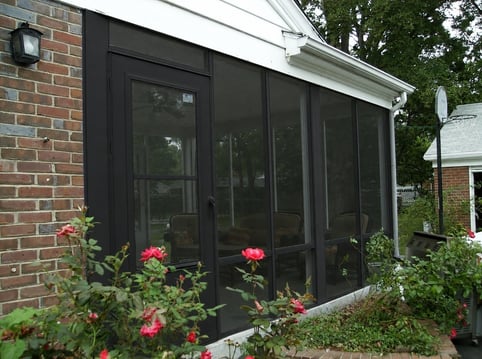
It may be created by:
- Enclosing an existing covered patio
- Enclosing a suitable porch
- Building over an approved deck
- Adding a new custom screen-room structure
A screened-in patio usually refers to an existing patio that has been enclosed. A screen room may be a more complete structure designed around a patio, deck, foundation, roof, and wall system.
Both provide airflow and outdoor views while helping reduce exposure to insects.
Joyce designs custom screen rooms for suitable patios and decks. The existing structure must first be evaluated for condition, support, drainage, attachment, and local code requirements.
Screen Room Benefits at a Glance
| Benefit | What it may provide | Important limitation |
|---|---|---|
| More comfortable outdoor living | Shade, airflow, seating, lighting, and optional fan planning | The room still follows outdoor temperature and humidity |
| Fewer insects | A barrier against mosquitoes, flies, gnats, and other pests | Doors, damaged screens, and small gaps can still let insects enter |
| More usable gathering space | A defined place for dining, reading, games, or conversation | Wind-driven rain and pollen may still enter |
| Better shade | A roof blocks direct overhead sun | It does not cool or air-condition the space |
| Less large debris | Screens help reduce leaves and some outdoor debris | Cleaning and maintenance are still required |
| Outdoor views | Fresh air and a visual connection to the yard | Privacy and screen clarity depend on the design |
1. A Screen Room Creates a More Comfortable Place to Relax and Entertain
An open patio or deck may be difficult to use during the brightest part of the day or when insects are active.
Adding a roof and screened walls can create a more defined place for:
- Outdoor dining
- Morning coffee
- Reading
- Family conversations
- Card and board games
- Casual gatherings
- Supervised time with pets
- Watching children play in the yard
- Enjoying evening breezes
The room can be furnished with a dining table, conversation seating, or a flexible combination of both.
Plan the room around its main use
Before selecting the room size, decide how you expect to use it most often.
A dining room may need:
- A convenient route from the kitchen
- Enough space to pull chairs away from the table
- Lighting above the table
- An outlet for serving equipment
- A door leading to an open grilling area
A conversation space may need:
- Comfortable covered-outdoor furniture
- Small tables
- A ceiling fan
- Charging outlets
- A layout focused on the best backyard view
A mixed-use room needs enough open space to move between each activity without blocking doors or walking paths.
Use outdoor-rated furnishings
A screen room is not the same as a conditioned interior room.
Furniture and décor may be exposed to:
- Humidity
- Pollen
- Dust
- Temperature changes
- Condensation
- Wind-driven rain
- Insects entering through open doors
Use materials intended for covered outdoor conditions. Valuable books, indoor upholstered furniture, and standard electronics may not hold up well when left in the room year-round.
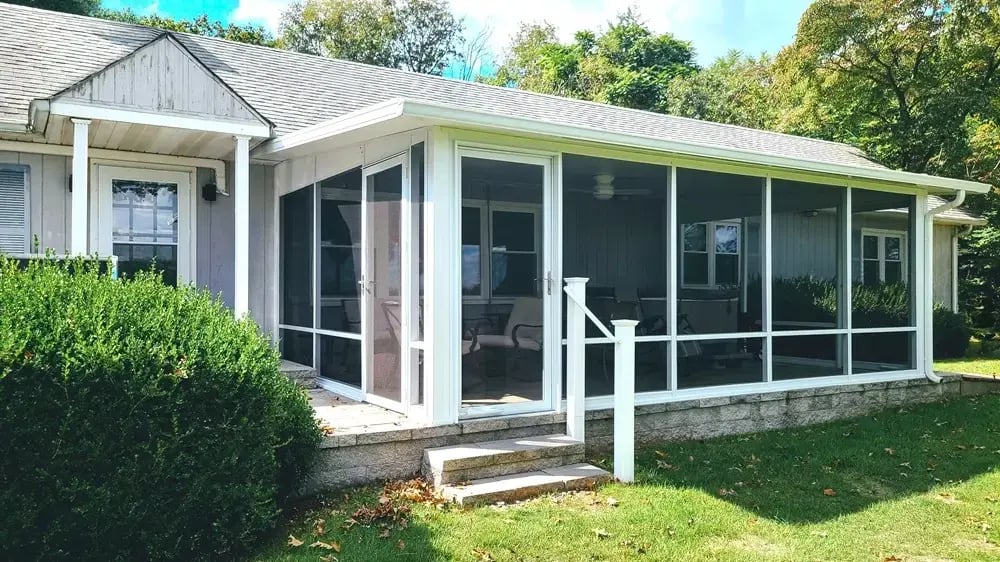
2. Screens Help Reduce Bugs Without Blocking Fresh Air
Mosquitoes, flies, gnats, moths, and other insects can shorten an evening outdoors.
Screened walls create a physical barrier while allowing air and natural light into the space.
This can make activities such as eating, reading, talking, or playing games more enjoyable.
A screen room should not be described as completely bug-free. Insects may still enter through:
- An open door
- A damaged screen
- Gaps around the enclosure
- Floor or roof transitions
- Items carried into the room
Regular inspection and prompt screen repair remain important.
What screen options does Joyce offer?
Joyce’s current screen-room system includes screen mesh with Water Shed Technology™, a hydrophobic coating designed to help repel water and reduce dirt and debris buildup.
Optional BetterVue® screening is also available. Joyce describes it as providing clearer views, increased airflow, and more natural light than traditional screen mesh.
The right choice may depend on:
- Desired view clarity
- Airflow
- Sun exposure
- Pets
- Maintenance preferences
- Budget
- Screen durability needs
Ask to compare current physical samples before choosing.
Related Article: Screened-In Porch Ideas
3. A Screen Room Can Extend the Use of Your Outdoor Space
A roof and screened walls can make a patio or deck more useful during conditions that might send homeowners indoors.
A screen room may provide:
- Shade from direct overhead sun
- Protection from light falling rain
- Reduced exposure to leaves and debris
- A place to enjoy breezes
- A more comfortable setting during mild spring, summer, and fall weather
- Lighting and ceiling-fan options for evening use
However, the enclosure does not eliminate the need to watch the weather.
Rain can still enter
The roof provides overhead protection, but wind-driven rain can pass through the screens.
Use:
- Covered-outdoor furniture
- Outdoor-rated cushions
- Moisture-tolerant flooring
- Weather-resistant storage
- Electronics rated or protected for the environment
A party may still need to move indoors during severe storms, strong wind, cold temperatures, or heavy rain.
A ceiling fan does not lower the air temperature
A ceiling fan moves air across the occupants’ skin, which may make them feel more comfortable.
It does not make the room’s actual air temperature lower than the outdoor temperature.
A fan should be:
- Rated for the room’s conditions
- Mounted to an approved fan-support box
- Positioned with proper blade clearance
- Included in the electrical plan before construction
- Turned off when the room is unoccupied
Screen rooms are intended for seasonal use
A traditional screen room has no insulated glass enclosure and is not designed for heating or air conditioning.
It will still be affected by:
- Summer heat
- Winter cold
- Humidity
- Pollen
- Wind
- Outdoor noise
Homeowners seeking more protection should compare:
- Three-season sunrooms
- Four-season or year-round sunrooms
- Patio and deck enclosures with glass windows
Joyce describes its screen rooms as best suited to seasonal outdoor living rather than year-round climate control.
What Design Options Are Available for a Joyce Screen Room?
A custom screen room can be designed around the home, patio or deck, views, and intended use.
Current Joyce options include:
Heavy-duty aluminum framing
Joyce uses extruded aluminum framing designed for strength and durability.
White, beige, or black framing
White and beige can blend with many traditional exteriors. Black framing can create a stronger contrast and a more contemporary appearance.
Floor-to-ceiling screening
Full-height screens can maximize airflow and views.
Adjustable chair rails
A chair rail divides the upper and lower portions of the wall and can provide a more structured appearance.
Lower and upper panels
Optional Korad® knee-wall, transom, and trapezoid panels can add protection, privacy, and architectural detail.
Screen doors
Depending on the approved design, Joyce screen rooms may include up to two outward-swinging screen doors.
Door placement should support easy movement between:
- The house
- Screen room
- Open deck or patio
- Grill
- Yard
- Garden
- Pool area
Can a Screen Room Be Added to an Existing Deck or Patio?
Often, but the existing structure must be evaluated first.
The review may include:
- Patio condition
- Deck framing
- Posts and beams
- Footings
- Connection to the home
- Levelness
- Drainage
- Roof attachment
- Wind and snow loads
- Property setbacks
- Permit requirements
- Access for construction
A patio or deck that appears sound may not have been designed to support walls and a roof.
Possible outcomes include:
- Reusing the existing structure
- Reinforcing part of it
- Adding or replacing footings
- Rebuilding the deck
- Installing a new foundation
- Reducing or changing the room design
The evaluation should happen before final pricing.
Related Article: Converting Existing Deck
Is a Screen Room the Same as a Three-Season Sunroom?
No.
A screen room uses screened walls and remains open to outdoor air.
A three-season room generally uses windows and screens, providing more protection from wind, rain, and seasonal temperature changes.
| Feature | Screen room | Three-season sunroom |
|---|---|---|
| Walls | Screening | Windows and screens |
| Airflow | High | Adjustable |
| Insect protection | Yes | Yes when closed |
| Rain protection | Limited | Greater |
| Temperature control | No | Limited |
| Typical use | Mild-weather outdoor living | Mainly spring through fall |
| Relative project scope | Lower | Higher |
A four-season room adds more insulation and higher-performing components for broader comfort.
Joyce offers screen rooms, three-season sunrooms, year-round sunrooms, patio and deck enclosures, and patio covers.
Related Article: Three-Season vs Four-Season Sunroom
Does a Screen Room Add Living Space?
It adds usable space, but it generally does not count as heated, finished living area.
Local definitions vary, but a screened enclosure usually lacks the insulation, glazing, heating, cooling, and finished construction needed to be treated like conditioned interior square footage.
Use the phrase additional usable outdoor space unless a local building official, appraiser, or real-estate professional confirms another classification.
Will a Screen Room Increase Home Value?
A well-designed screen room may improve outdoor functionality and appeal to some future buyers.
Its effect on value depends on: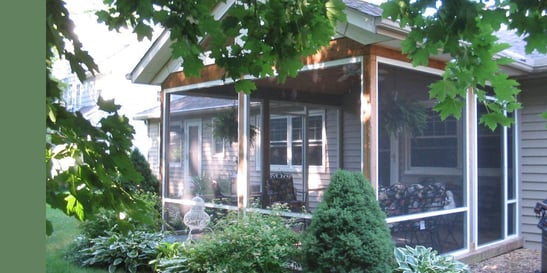
- Design quality
- Condition
- Local climate
- Neighborhood
- Buyer preferences
- Remaining open outdoor space
- Permit compliance
- Integration with the home
- Maintenance
Do not promise a particular return on investment.
The strongest reason to build a screen room is that the household expects to use and enjoy it.
How Much Does a Screen Room Cost?
Joyce explains that project cost depends on the type of room, size, existing structure, foundation, roof, electrical needs, options, and the way the enclosure connects to the home. A basic screen room generally costs less than a fully insulated year-round sunroom.
Important cost factors include:
- Room dimensions
- Patio or deck condition
- New foundation or reinforcement
- Roof design
- Framing color
- Screen type
- Wall configuration
- Number of doors
- Panel options
- Lighting and electrical work
- Ceiling fan
- Site access
- Permits
- Engineering
- Installation complexity
Exact pricing requires an in-home design consultation.
Questions to Ask Before Adding a Screen Room
- Can my existing patio or deck support the enclosure?
- Will structural reinforcement be required?
- Which permits and inspections are included?
- What roof system will be used?
- How will rainwater be drained?
- Which screen material is included?
- Is BetterVue® screening available?
- Which framing colors can I choose?
- Do I want full-height screens or lower panels?
- How many doors are included?
- Where should the doors be located?
- Are lighting and outlets included?
- Is a ceiling-fan support box included?
- What furnishings are suitable for the room?
- How should the room be maintained?
- What does the product warranty cover?
- What labor warranty applies?
- What could increase the final price?
- What is the complete project schedule?
- Who handles future service?
Screen Room Planning Worksheet
| Planning question | Your answer |
|---|---|
| What is the main purpose of the room? | |
| How many people should it hold? | |
| Is dining or lounging the priority? | |
| Which view should the layout preserve? | |
| Is there an existing patio or deck? | |
| Should part of the outdoor area remain open? | |
| How many doors are needed? | |
| Do you prefer white, beige, or black framing? | |
| Do you want full-height screens or panels? | |
| Is a clearer-view screen important? | |
| Are lighting, outlets, or a fan needed? | |
| What is the comfortable planning budget? |
Why Consider a Joyce Screen Room?
Joyce Windows, Sunrooms & Baths designs and installs custom screen rooms for suitable patios and decks.
Current Joyce features include:
- Heavy-duty extruded aluminum framing
- Low-maintenance painted finishes
- Water Shed Technology™ screen mesh
- Optional BetterVue® screening
- White, beige, and black framing
- Floor-to-ceiling screen options
- Adjustable chair rails
- Knee-wall, transom, and trapezoid panels
- Up to two outward-swinging screen doors
- Coordinated design and installation
- A two-year limited labor warranty on qualifying projects
The exact product, options, installation scope, and warranty terms should be confirmed in the contract.
Explore Your Screen Room Options
A screen room may be a strong fit when you:
- Enjoy spending time outside
- Want fewer insects
- Need more shade
- Prefer fresh air to climate control
- Have a patio, porch, or deck that receives limited use
- Want a seasonal place for dining or relaxing
It may not be the right fit when you want:
- Year-round heating and cooling
- Complete protection from outdoor weather
- Finished interior living space
- A fully sound-controlled room
- A space for moisture-sensitive furnishings
- A guaranteed resale return
Joyce can evaluate your outdoor area, compare wall and screen options, and prepare a custom enclosure plan.

Frequently Asked Questions
What are the main benefits of a screened porch enclosure?
The main benefits are fewer insects, greater shade, fresh air, outdoor views, and a more defined place for dining, relaxing, and entertaining.
Do screen rooms keep every bug out?
No enclosure can guarantee that every insect will stay out. Doors, damaged screens, and small gaps may allow insects to enter, but screening can substantially reduce common flying pests.
Can rain get into a screened porch?
Yes. A roof provides overhead protection, but wind-driven rain can pass through screened walls. Use outdoor-rated furniture and moisture-tolerant materials.
Is a screen room cooler than being outside?
The roof provides shade, and a fan may make occupants feel more comfortable by moving air. The screen room’s air temperature will generally remain close to the outdoor temperature.
Can Joyce build a screen room on an existing deck?
Possibly. The deck must first be evaluated for condition, structure, support, attachment, drainage, and code requirements.
Can a screen room be heated or air-conditioned?
A traditional screen room is not designed for climate control because air moves through the screens. Compare a three-season or year-round sunroom when temperature control is important.
Does a screen room count as finished square footage?
Generally, no. It is normally considered usable seasonal outdoor space rather than heated, conditioned interior living area.
What colors are available for Joyce screen rooms?
Joyce currently offers white, beige, and black screen-room framing.
What screening options does Joyce offer?
Joyce includes screen mesh with Water Shed Technology™ and offers BetterVue® screening for clearer views, increased airflow, and more natural light.
How do I get a screen-room price?
Schedule a design consultation so Joyce can evaluate the existing area, room size, structure, roof, wall configuration, screens, doors, electrical needs, and installation conditions.

The Bottom Line
A screened porch enclosure can make an outdoor area more comfortable and useful.
Its three strongest benefits are:
- A shaded and flexible gathering space
- Fewer insects without losing fresh air
- More opportunities to enjoy a patio or deck during mild weather
A screen room does not eliminate outdoor temperature, humidity, pollen, storms, or wind-driven rain. It is best understood as a seasonal outdoor enclosure—not a fully conditioned room.
The best results come from matching the room’s size, screens, wall configuration, doors, electrical features, and furnishings to the way your household plans to use the space.
Book a Joyce Design Consultation to explore whether a custom screen room is right for your patio, porch, or deck.
Topics: