
Is a Walk-In Shower Worth It?
A walk-in shower can be a smart bathroom upgrade if you want easier entry, more usable shower space, simpler cleaning, modern style, and features that can support changing mobility needs.
For homeowners who rarely use their bathtub, a tub-to-shower conversion can also make the bathroom better match their daily routine.
The biggest benefits are:
- Easier entry and exit
- More room to move
- A cleaner, more modern look
- Lower-maintenance surfaces
- Custom storage and comfort features
- Better options for long-term accessibility
- A bathroom designed around how you actually use it
Joyce Windows, Sunrooms & Baths offers custom shower replacements and tub-to-shower conversions with SignatureStone wall systems, fixtures, shelving, seating, grab bars, glass doors, and other available design options.

What Is a Walk-In Shower?
A walk-in shower is a shower designed for easier entry than a traditional tub-and-shower combination.
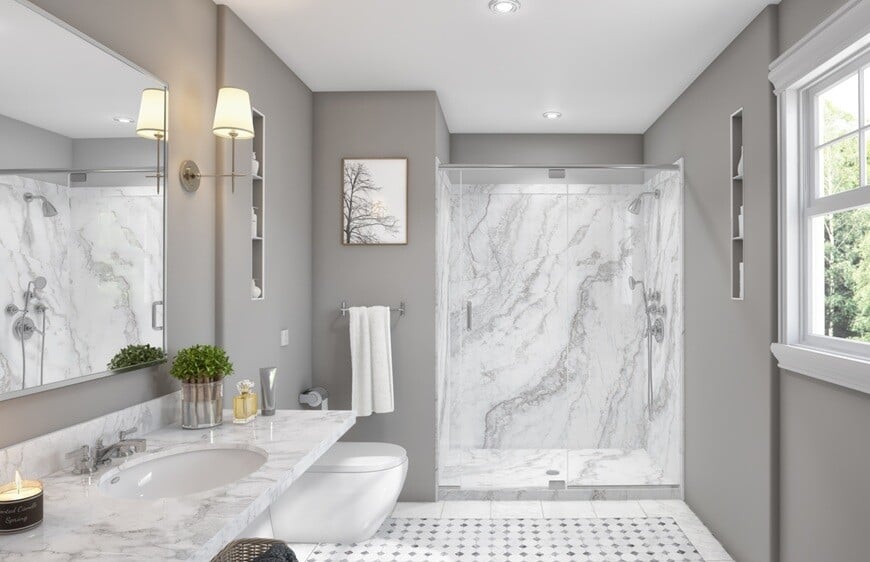
Instead of stepping over a full bathtub wall, you enter through a lower shower threshold. Depending on the specific design, features can also include:.jpg?width=446&height=436&name=Onaistis%20shower%20(2%20of%203).jpg)
- Grab bars
- Seating
- Handheld showerheads
- Slip-resistant surfaces
- Shelving
- Glass doors
- More open shower layouts
Joyce specifically offers low-threshold shower options as part of its bath remodeling solutions.
It is important not to assume that every “walk-in shower” is completely curbless or wheelchair-accessible. Threshold height, opening width, seating, grab-bar placement, and available floor space all depend on the specific project.
If accessibility is a major reason for remodeling, discuss those needs during the design consultation rather than relying on the phrase “walk-in shower” alone.
Why Are Homeowners Replacing Tubs With Walk-In Showers?
For many homeowners, the answer is simple:
They use the shower every day and rarely use the bathtub.
A tub-to-shower conversion takes the existing bathing area and redesigns it around showering instead.
That can make the bathroom feel more practical while also creating opportunities for:
- Easier access
- Better storage
- Seating
- Updated fixtures
- A more open appearance
- Lower-maintenance wall materials
Joyce currently describes tub-to-shower conversions as a popular option for homeowners who want easier entry, more usable shower space, modern styling, and a bathroom that better fits their current routine.
Benefit #1: Easier Entry and Exit
One of the biggest advantages of replacing a traditional bathtub with a walk-in shower is reducing the height you have to step over.
A bathtub has a relatively tall side wall.
A shower can be designed with a lower entry threshold.
That difference can matter if you:
- Have limited mobility
- Have trouble lifting your legs
- Experience balance problems
- Are recovering from an injury
- Want to plan ahead for aging in place
- Simply prefer easier shower access
AARP specifically recommends considering walk-in showers, shower seating, handheld showerheads, grab bars, and slip-resistant surfaces when making bathrooms easier to use as people age.
Important Safety Note
A walk-in shower is not automatically “fall-proof.”
Bathroom surfaces can still become wet and slippery.
Safety depends on the complete design, including:
- Entry height
- Flooring
- Grab bars
- Lighting
- Seating
- Shower controls
- Available space
A grab bar should also be properly anchored. A towel bar or suction-cup handle is not a substitute for a securely installed grab bar.
Benefit #2: More Usable Shower Space
A traditional tub may take up most of the available wet-area footprint even when nobody in the home regularly takes baths.
Converting that space into a shower can make the area feel more open and give you more room for standing, moving, and storing shower products.
That can be especially useful in smaller bathrooms.
The actual size of the bathroom does not necessarily change, but removing the visual and physical barrier of a high tub wall can make the space feel less confined.
What Can You Do With the Extra Usability?
Depending on the project, you may be able to incorporate:
- Corner shelving
- Additional storage
- Seating
- Grab bars
- A handheld shower fixture
- A glass door
- A wider-feeling shower area
Joyce offers customizable shower accessories and safety features including shelving, seating, grab bars, fixtures, and glass doors.
Benefit #3: A Cleaner, More Modern Look
A walk-in shower can dramatically change the visual center of a bathroom.
Instead of an older tub surround, shower curtain, or dated tile, you can create a cleaner shower area with coordinated walls, fixtures, storage, and doors.
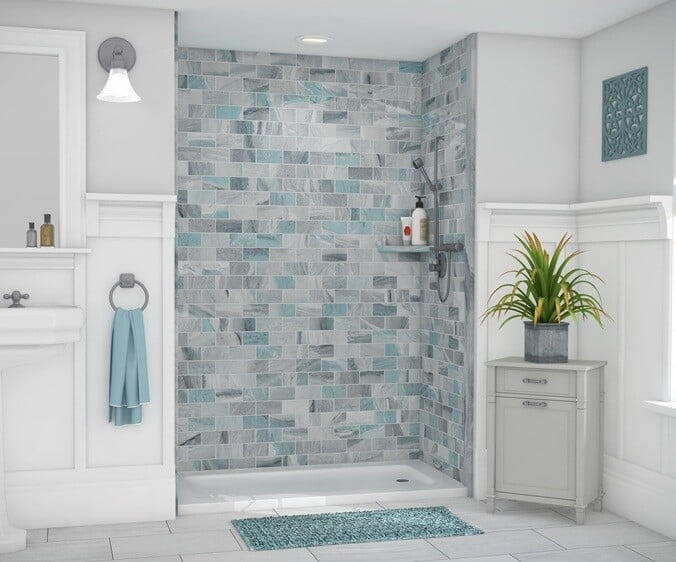
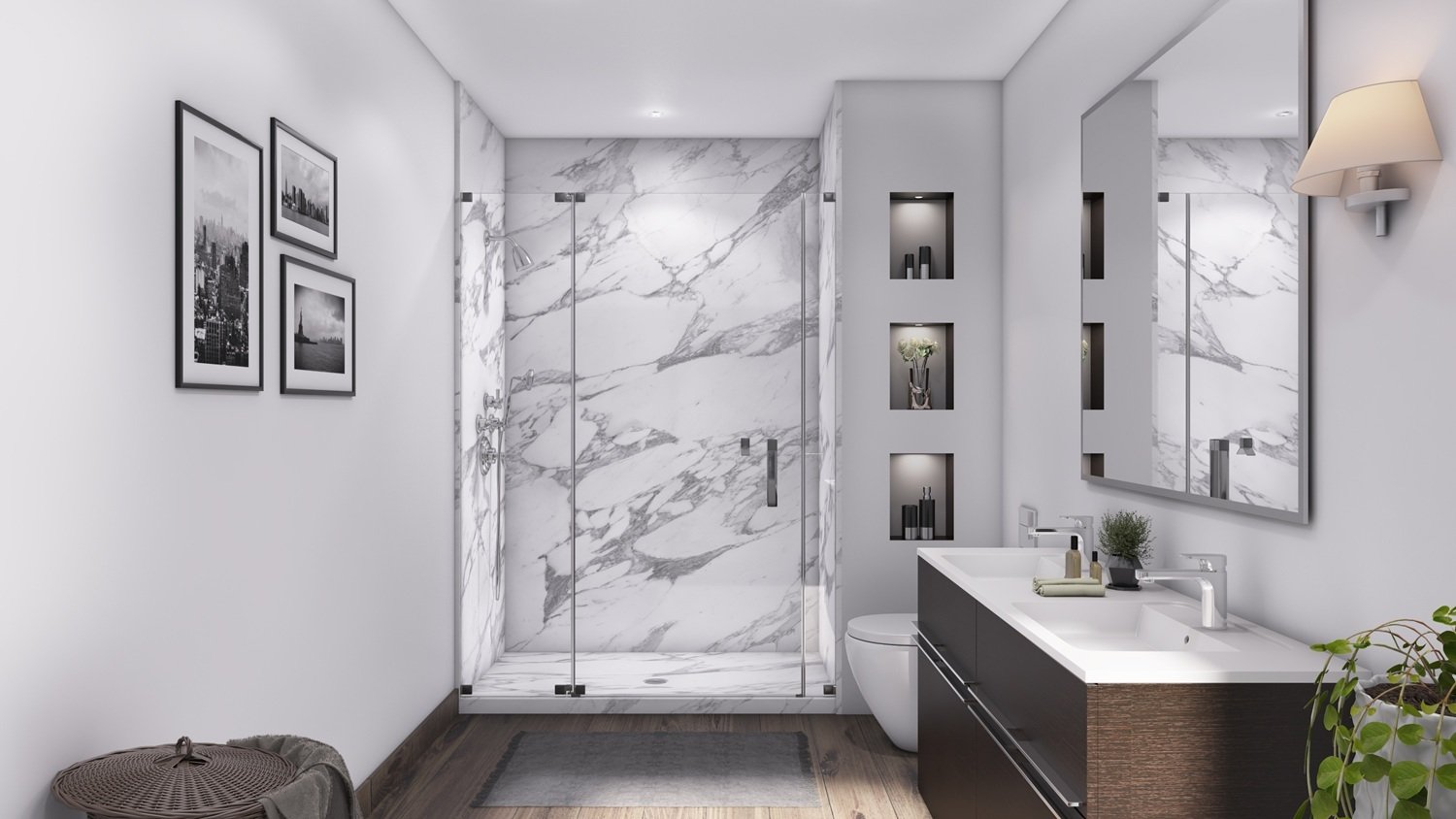
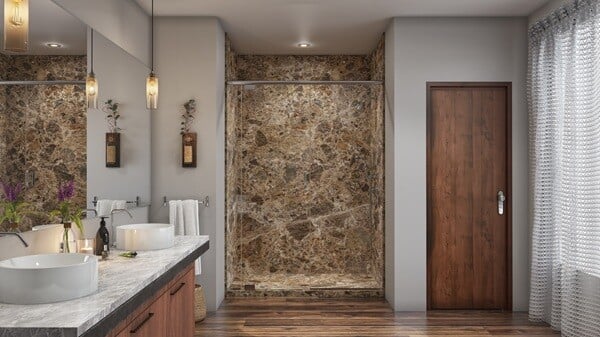
Joyce offers SignatureStone wall systems designed to recreate the look of natural stone without conventional grout lines. Available design choices include different colors, wall patterns, fixtures, shelving, and other accessories.
That gives homeowners flexibility to create a look that is:
- Light and simple
- Warm and stone-inspired
- High contrast
- Traditional
- Contemporary
- Designed around existing bathroom finishes
Related Article: View the Joyce Bath Gallery
Benefit #4: Easier Cleaning and Lower Maintenance
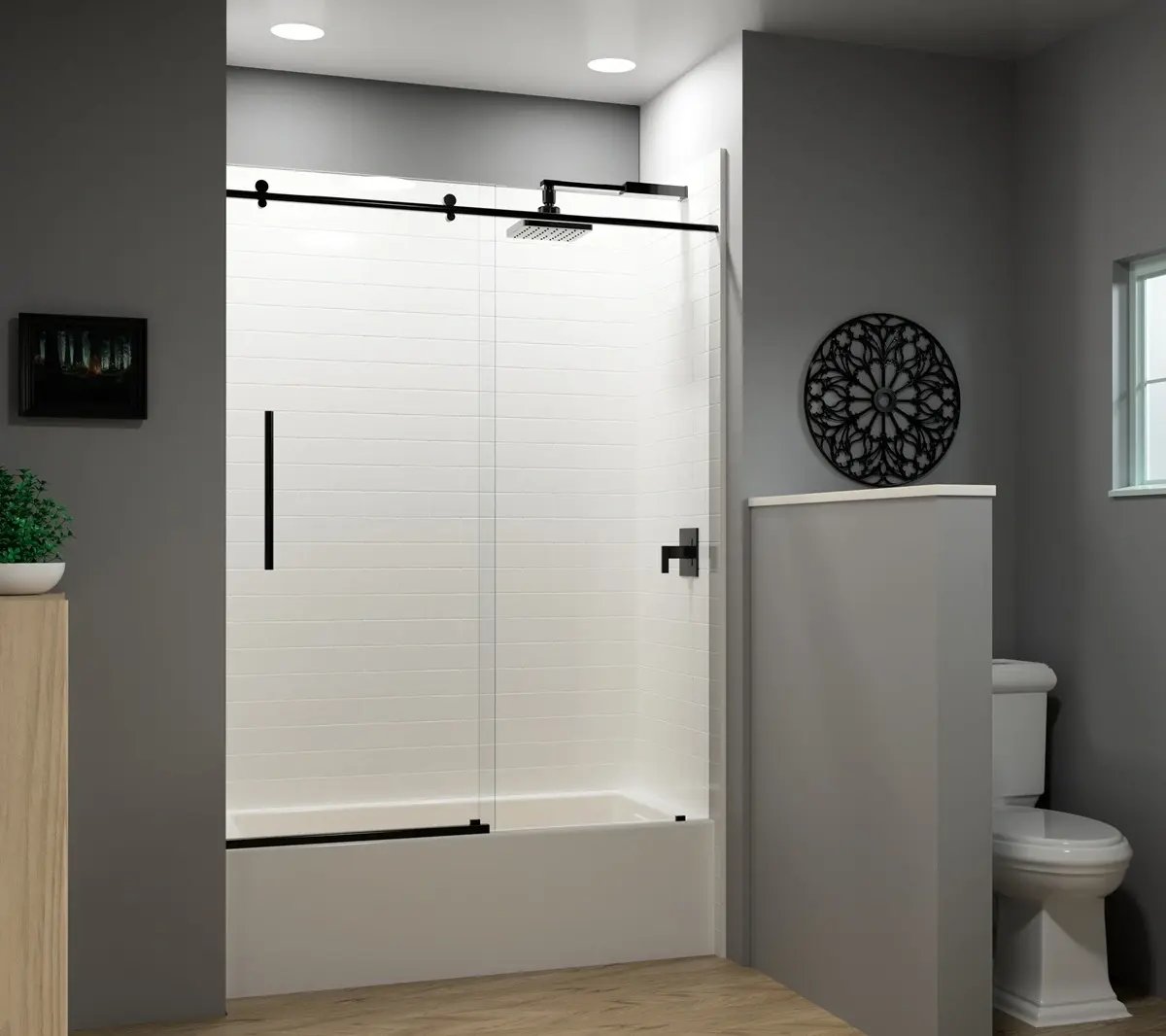
One of the strongest practical benefits of a Joyce shower remodel is the opportunity to reduce traditional grout maintenance.
SignatureStone is Joyce's multi-layered polymer bath and shower surface. Joyce describes it as a low-maintenance wall system designed to resist mold, mildew, staining, and everyday wear.
That can be especially appealing if your existing shower has:
- Discolored grout
- Hard-to-clean corners
- Cracked or aging tile
- Surfaces that require frequent scrubbing
Ask About Maintenance Before You Buy
No bathroom surface should simply be described as “maintenance-free” without explanation.
Ask:
What cleaners should I use?
What products should I avoid?
Are there grout lines?
How should glass doors be maintained?
How should seams and fixtures be cleaned?
Understanding routine care before installation can prevent frustration later.
Benefit #5: You Can Customize the Shower Around Your Routine
A shower remodel should solve actual problems in the bathroom.
Do you need somewhere to sit?
Do shampoo bottles end up on the floor?
Would a handheld showerhead make bathing easier?
Do you want grab bars now—or reinforcement for them later?
Would a glass door work better than a curtain?
Joyce lets homeowners choose from available options such as:
- Wall colors and patterns
- Fixtures
- Shelving
- Seating
- Grab bars
- Shower doors
- Other accessories
The shower is custom-measured for the existing space rather than treated as a one-size-fits-all product.
Design Around Daily Use
A beautiful shower that is inconvenient every morning is not a successful remodel.
During the design process, think about:
- Where you reach for soap
- Where towels are located
- Whether you prefer standing or seated bathing
- Which hand you use for controls
- How easily you can enter and exit
- Whether another family member has different needs
Those small decisions often matter more than following the latest bathroom trend.
Benefit #6: A Walk-In Shower Can Support Aging in Place
You do not have to wait until bathing becomes difficult to think about accessibility.
A bathroom remodel is an opportunity to make choices that could help the space work better later.
AARP recommends bathroom updates such as walk-in showers, benches, handheld showerheads, grab bars, slip-resistant flooring, and improved lighting as part of planning for aging in place.
That does not mean every homeowner needs every accessibility feature.
Instead, ask:
What would make this shower easier for me five or ten years from now?
Possible features might include:
- Lower-threshold entry
- Grab bars
- Seating
- Handheld showerhead
- Slip-resistant surfaces
- Easier-to-reach controls
It can be easier to include those considerations during the original remodel than to retrofit the shower later.
Benefit #7: The Bathroom Can Better Match How You Live
The final benefit is less about the shower itself and more about removing something you no longer use.
If your bathtub mostly collects laundry baskets or gathers dust, keeping it simply because “bathrooms are supposed to have tubs” may not make sense for your household.
A tub-to-shower conversion can help the space match your actual routine.
A Walk-In Shower May Be a Good Fit If:
You primarily shower instead of bathe.
You want easier entry.
You want more usable standing space.
You want lower-maintenance wall surfaces.
You want better shower storage.
You are planning for changing mobility needs.
You want to modernize an outdated wet area without completing a full gut remodel.
You May Want to Keep a Tub If:
You regularly take baths.
You have young children who use the tub.
The bathtub is important to someone else in the household.
You simply prefer having both bathing options.
There is no rule that every tub should become a shower.
The best remodel is the one that fits the people living in the home.
Walk-In Shower vs. Tub-and-Shower Combination
| Feature | Walk-In Shower | Tub/Shower Combination |
|---|---|---|
| Entry | Lower threshold possible | Requires stepping over tub wall |
| Bathing | Shower-focused | Bathing and showering |
| Open feel | Often more open | Tub creates higher visual barrier |
| Seating | Can be incorporated | Less common |
| Grab bars | Can be designed into project | Can also be added where properly supported |
| Storage | Custom shelving available | Depends on surround |
| Best for | Homeowners who primarily shower | Households that still regularly use a tub |
Related Article: Walk-In Tub vs. Walk-In Shower
Will a Walk-In Shower Make My Bathroom Look Bigger?
It can make the room feel larger even when the actual square footage stays the same.
Removing a high tub wall can reduce visual barriers.
Glass doors and lighter wall colors can also help make the shower area feel more open.
But avoid promising that every walk-in shower “saves space.”
The result depends on:
- Existing layout
- Shower dimensions
- Door configuration
- Bathroom size
- Storage choices
- Whether plumbing or walls are moved
A custom design consultation can help determine how the existing footprint can be used more effectively.
Does a Walk-In Shower Increase Home Value?
It may improve the appeal of an updated bathroom to some future buyers, but a walk-in shower does not automatically increase resale value by a predictable amount.
Resale depends on the overall home, local market, project quality, number of bathrooms, buyer preferences, and whether the home still has a bathtub elsewhere.
That is why I would not remodel solely around an assumed resale return.
A better question is:
Will this shower make the bathroom safer, more comfortable, easier to maintain, and more useful while I live here?
If resale is a major concern, talk with a local real-estate professional who understands buyer expectations in your area.
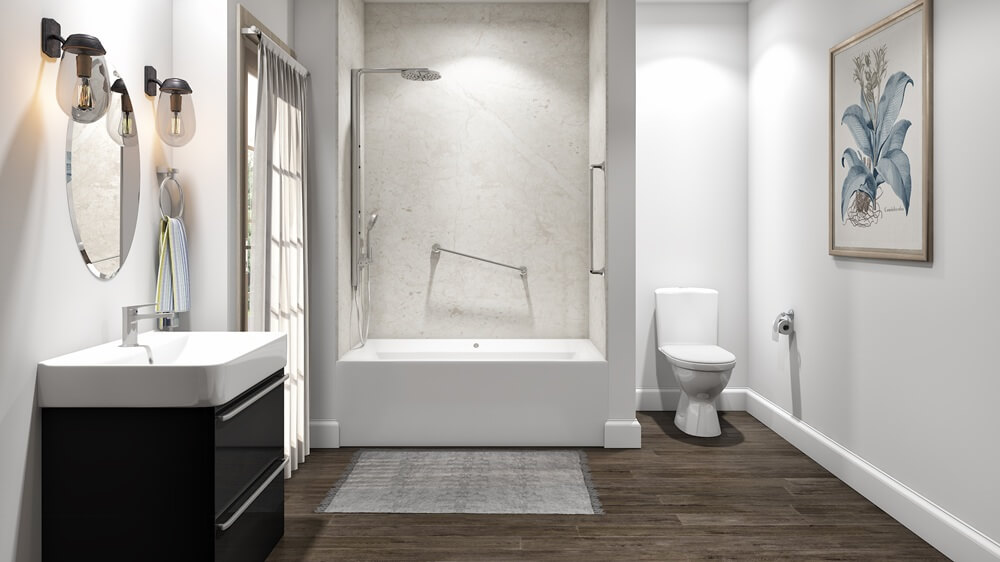
Should You Remove the Only Bathtub in Your Home?
This is one of the most important questions to answer before a tub-to-shower conversion.
There is no universal rule.
Consider:
- Does anyone in the household take baths?
- Do you have young children?
- Is another bathtub available?
- Are you planning to remain in the home long term?
- Is easier access more important than keeping a tub?
- How important is resale flexibility to you?
If the bathtub is rarely used and creates a daily accessibility problem, replacing it may be a logical choice.
If it is the only tub and your household regularly uses it, keeping the tub may make more sense.
What Features Should You Add to a Walk-In Shower?
A good shower design balances appearance, comfort, safety, and maintenance.
Consider:
Grab bars
Useful for balance and support when correctly anchored.
Seating
Helpful if you prefer to sit while showering or want a place to rest.
Handheld showerhead
Can make seated bathing, cleaning, and rinsing easier.
Storage
Shelves help keep shampoo, soap, and other products off the shower floor.
Slip-resistant surface
Worth discussing when safety is a priority.
Glass doors or curtain system
Choose based on appearance, cleaning preference, entry width, and available space.
Low-maintenance walls
SignatureStone offers a grout-free wall option with stone-inspired designs.
Related Article: Bathroom Upgrade Options
How Much Does a Tub-to-Shower Conversion Cost?
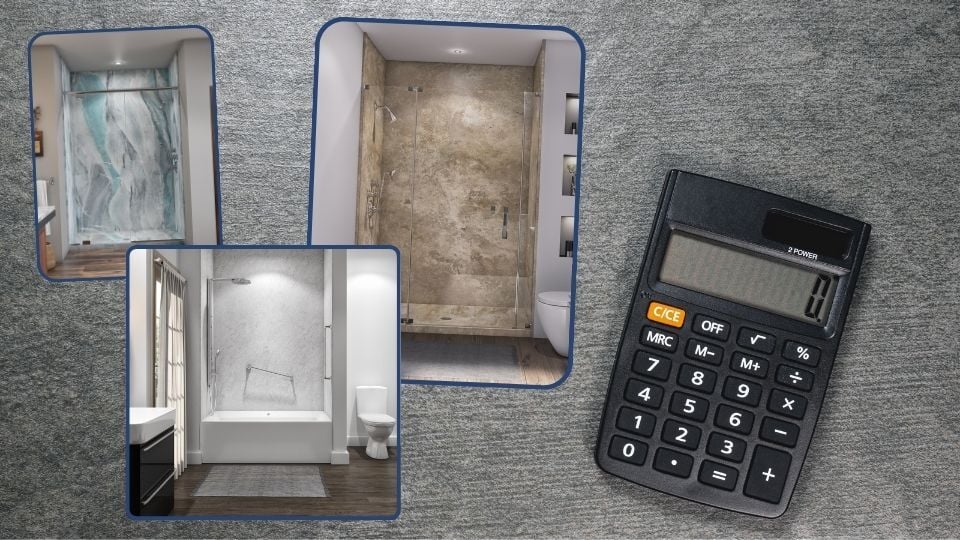
Joyce currently publishes a general planning range of approximately $9,000 to $14,000 for tub-to-shower conversions, including removal, new plumbing fixtures, accessories, and professional installation. Actual project pricing depends on the home and product selections.
Factors that can affect the final price include:
- Size of the existing bath area
- Wall design
- Shower base
- Fixtures
- Shower doors
- Storage
- Seating
- Grab bars
- Plumbing adjustments
- Existing conditions
- Installation complexity
Joyce also offers a Bath Cost Calculator for homeowners who want a realistic starting range before scheduling an appointment.
What Happens During a Joyce Tub-to-Shower Conversion?
The exact project varies, but a professional bath remodel typically includes several stages.
Joyce's process can involve:
- Reviewing the existing bath or shower
- Taking measurements
- Selecting walls, fixtures, doors, and accessories
- Preparing the work area
- Removing the existing bathtub or shower
- Inspecting the exposed area
- Completing necessary installation preparation
- Installing the new shower base and walls
- Adding fixtures and accessories
- Sealing, finishing, cleaning, and completing the final walkthrough
Joyce emphasizes custom-fit bath and shower systems and professional installation rather than a full gut remodel for every project.

Frequently Asked Questions About Walk-In Showers
What is a walk-in shower?
A walk-in shower is a shower designed for easier entry than a traditional bathtub. Depending on the project, it may have a low threshold and can include features such as grab bars, seating, handheld shower fixtures, shelving, and glass doors.
Is a walk-in shower safer than a bathtub?
It can provide easier entry because you do not have to step over a high tub wall. However, no shower is automatically safe from falls. Flooring, grab bars, lighting, seating, entry height, and the user's mobility all matter.
Are walk-in showers good for seniors?
They can be. AARP includes walk-in showers, seating, handheld showerheads, grab bars, and slip-resistant surfaces among bathroom improvements worth considering for aging in place.
Does a walk-in shower have to be completely curbless?
No. Some walk-in showers have low thresholds rather than completely barrier-free entries. The exact design depends on the shower system, bathroom, and accessibility requirements.
Can I replace my bathtub with a walk-in shower?
Yes. Joyce offers tub-to-shower conversions that replace an existing bathtub with a custom shower designed around easier access, style, storage, and daily comfort.
Is a walk-in shower easier to clean?
It can be, especially when the shower uses low-maintenance wall panels without traditional grout lines. Joyce's SignatureStone wall system is designed as a grout-free, easy-to-clean option.
Should I remove the only bathtub in my house?
It depends on your household. Consider whether anyone regularly takes baths, whether you have young children, whether another tub is available, and how important easier shower access is to you.
How much does a Joyce tub-to-shower conversion cost?
Joyce currently lists a general planning range of about $9,000 to $14,000 for a tub-to-shower conversion. Final pricing depends on size, products, accessories, plumbing, existing conditions, and installation requirements.
Is a Walk-In Shower Right for You?
A walk-in shower is not automatically the right remodel for every bathroom.
But it can be an excellent choice when your current tub no longer fits the way you live.
The biggest benefits are practical:
Easier entry.
More room to move.
Simpler cleaning.
Better storage.
Modern design choices.
Safety and accessibility options.
A bathing space designed around your actual routine.
Joyce Windows, Sunrooms & Baths offers custom shower replacements and tub-to-shower conversions featuring SignatureStone wall systems, customizable fixtures and accessories, and professional installation. Joyce has served homeowners since 1955.
If you are deciding whether to keep your bathtub or replace it with a walk-in shower, start with your priorities.
Then design the room around what will make bathing easier and more comfortable every day.

Topics: