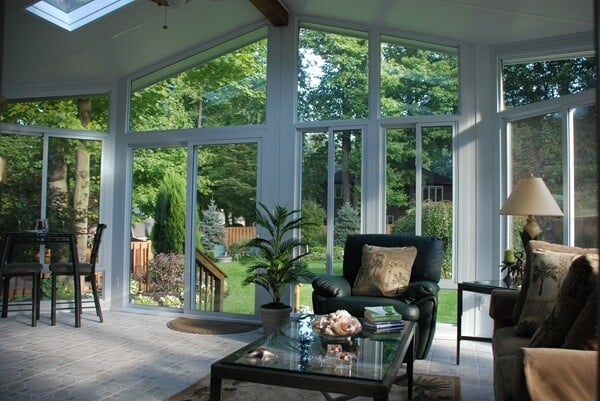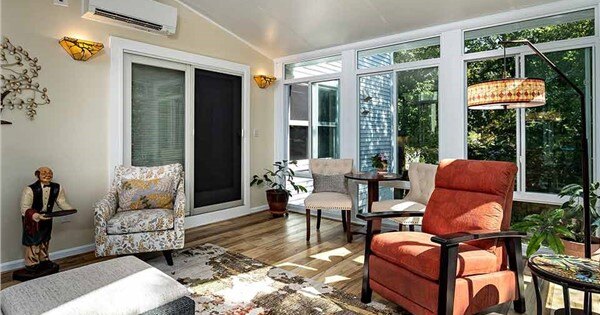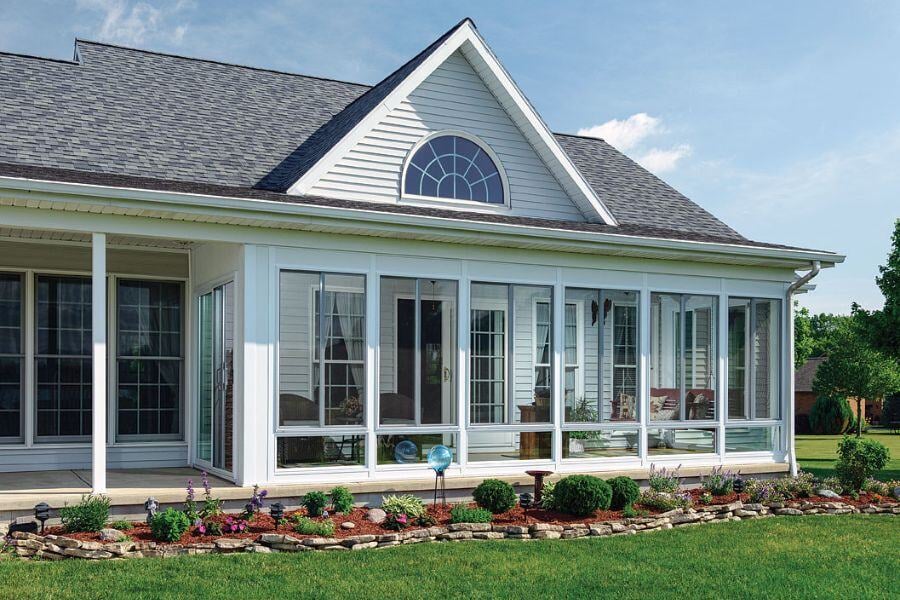

A four-season sunroom can give you a bright, comfortable place to relax while maintaining a strong connection to the outdoors.
Unlike a screen room or basic three-season room, a four-season sunroom is designed with more insulation and comfort-focused features for use during hotter and colder weather. It can become a family room, dining area, home office, hobby space, or quiet retreat.
Before deciding, homeowners should understand the benefits, cost factors, comfort requirements, and limits of this type of addition.
Is a Four-Season Sunroom Worth It?
A four-season sunroom may be worth considering when you want:
- A room designed for use throughout more of the year
- Additional space for relaxing, working, dining, or entertaining
- More natural light and outdoor views
- Better protection from insects, rain, wind, heat, and cold than a seasonal room
- A custom space that feels connected to your home
- An alternative to a traditional framed addition
A four-season sunroom generally costs more than a screen room or three-season room because it requires more insulation, higher-performing glass, and additional comfort planning. The exact project also depends on the foundation, roof, electrical needs, existing structure, finishes, and installation conditions.
Joyce Windows, Sunrooms & Baths designs, manufactures, and installs custom three-season and four-season sunrooms for homeowners in Ohio, Pennsylvania, North Carolina, and South Carolina.
Ready to explore a year-round sunroom?
Book a Design Consultation

What Is a Four-Season Sunroom?
A four-season sunroom—also called a year-round sunroom—is an enclosed room designed for more consistent use through changing temperatures.
It typically includes:
- Insulated wall components
- Energy-efficient glass
- An insulated roof system
- Operable windows or ventilation options
- Doors connecting the room to the house or outdoors
- Electrical planning
- A heating and cooling strategy
- A foundation or suitable supporting structure
Joyce four-season rooms use comfort-focused features such as SmartShield glass packages and the ClimateMaster® roof system. Joyce also offers studio and gable roof styles, custom vinyl wall systems, glass options, doors, and room-specific heating and cooling choices.
A four-season sunroom should not be assumed to perform exactly like every other room in the house. Comfort depends on the room’s orientation, glass, insulation, roof, air sealing, heating and cooling plan, climate, and installation.
How Is a Four-Season Sunroom Different From a Three-Season Room?
The main difference is how the room is designed to handle changing temperatures.
| Feature | Three-season sunroom | Four-season sunroom |
|---|---|---|
| Intended use | Primarily spring, summer, and fall | More consistent use throughout the year |
| Insulation | Seasonal comfort level | More insulation and comfort-focused construction |
| Glass | Selected for seasonal use | Higher-performing options are generally emphasized |
| Heating and cooling | May use supplemental comfort measures | Requires a planned year-round comfort strategy |
| Typical cost | Usually lower | Usually higher |
| Best use | Seasonal relaxation and entertaining | Office, family room, dining, hobbies, and frequent use |
Joyce describes three-season rooms as a lower-cost option for spring-through-fall enjoyment and four-season rooms as the better fit for homeowners seeking more insulation and everyday flexibility.
Related Article: Three-Season vs Four-Season Sunroom
Reason 1: You Can Use the Room During More of the Year
An open deck, screen room, or lightly insulated enclosure may become difficult to use during very hot or cold weather.
A properly designed four-season sunroom gives homeowners more protection from:
- Cold temperatures
- Summer heat
- Rain and wind
- Insects
- Pollen and outdoor debris
- Rapid weather changes
That does not mean the room will remain comfortable without planning. Large glass areas can gain heat in direct sunlight and lose heat during colder weather. The design should account for the home’s climate, sun direction, room size, glass selection, insulation, ventilation, and heating and cooling needs.
How Can a Four-Season Sunroom Be Heated and Cooled?
Possible approaches may include:
- A ductless mini-split system
- Another room-specific heating and cooling unit
- Approved electric heating
- Ceiling fans
- Operable windows
- Window coverings
- A connection to the home’s existing HVAC system when properly evaluated and permitted
Do not assume that existing ductwork can simply be extended. A qualified HVAC professional should determine whether the current system has enough capacity and whether an extension complies with local requirements.
Joyce offers insulation packages and on-demand heating and cooling options based on the climate and intended room use.
Related Article: Heating a Sunroom
Reason 2: You Gain Flexible, Light-Filled Living Space
A four-season sunroom can provide additional space without feeling disconnected from the backyard.
Homeowners may use the room as:
- A family room
- A breakfast or dining area
- A home office
- A reading room
- A hobby or craft space
- A playroom
- A plant room
- A music room
- A place for entertaining
- A quiet retreat
The strongest designs begin with the room’s intended use.
Planning a Home Office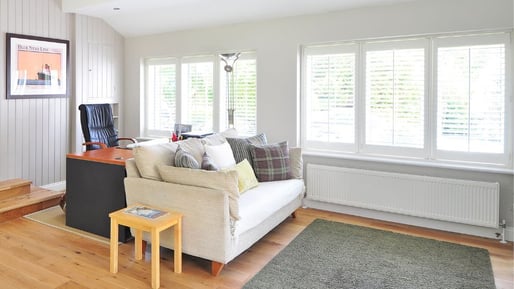
Consider:
- Screen glare
- Electrical outlets
- Internet access
- Desk placement
- Privacy
- Heating and cooling
- Sound
- Direct afternoon sunlight
Planning a Dining or Entertaining Space
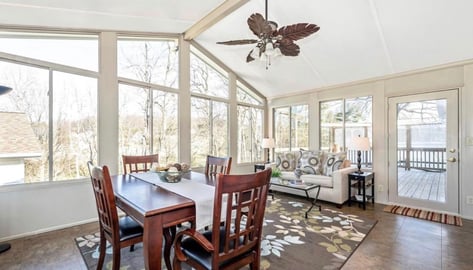
Consider:
- Table dimensions
- Chair clearance
- Walking paths
- Access to the kitchen
- Serving space
- Lighting
- Door placement
- Outdoor access
Planning a Family Room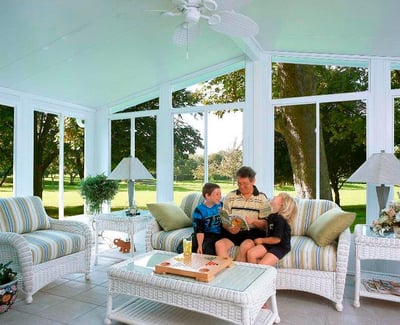
Consider:
- Furniture layout
- Television glare
- Flooring
- Electrical needs
- Storage
- Window placement
- Temperature control
- Traffic flow into the rest of the home
Marking the proposed room dimensions outside and planning the furniture before approving the final design can help prevent a room that feels too small or poorly arranged.
Reason 3: You Can Enjoy Outdoor Views With Greater Protection
A four-season sunroom provides a visual connection to the yard without requiring you to sit directly in the weather.
You may be able to enjoy:
- Snowfall during winter
- Spring rain
- Autumn color
- Summer greenery
- Morning sunlight
- Backyard wildlife
- Garden views
Operable windows can also provide fresh air during pleasant weather while screens help limit insect entry.
A sunroom will not eliminate every outdoor concern. Bright sun may create glare, pollen can enter through open windows, and temperature control still depends on the complete design. The goal is a more protected connection to the outdoors—not a room that ignores climate and site conditions.
Is a Four-Season Sunroom the Same as a Traditional Home Addition?
No.
A traditional home addition is usually framed and finished to function as a fully integrated extension of the home. It may include plumbing, extensive structural changes, and direct integration into the home’s main systems.
A four-season sunroom generally emphasizes large glass areas and indoor-outdoor views. Depending on the design, it may have a separate heating and cooling system and remain divided from the main home by an existing exterior door.
Joyce's sunrooms may not be the right fit for homeowners who want plumbing or a completely open addition tied directly into the home’s main HVAC system.
Choose a four-season sunroom when you want:
- More glass and outdoor views
- A bright retreat
- Faster or less invasive construction than some traditional additions
- A room attached to the home or garage
- A custom seasonal-to-year-round living area
Consider a traditional addition when you require:
- Plumbing
- A bedroom or bathroom
- Full integration with the existing floor plan
- An open connection without exterior-style doors
- Conventional framed-room construction
- A space intended to meet requirements Joyce sunrooms do not address
Can a Four-Season Sunroom Be Built on an Existing Deck or Patio?
Possibly.
An existing deck or patio must be evaluated before it can be used as the base for a sunroom.
Joyce reviews:
- Structural condition
- Support and load capacity
- Levelness
- Attachment to the house
- Drainage
- Site access
- Local code requirements
- The type and weight of the proposed room
Some existing spaces can be reused. Others may need reinforcement, preparation, a new foundation, or replacement.
A deck that safely supports people and outdoor furniture is not automatically designed to support walls, glass, an insulated roof, and applicable snow or wind loads.
Related Article: Converting Your Deck to a Sunroom
What Features Should You Compare?
Glass Packages
Large glass areas affect comfort, glare, light, and energy performance.
Ask about:
- Low-E coatings
- Insulating glass
- Gas fills
- Spacer systems
- Visible light
- Solar heat gain
- Winter heat loss
- Privacy glass
- Operable window styles
- Screens
Joyce offers SmartShield glass packages designed to support year-round comfort and energy performance. Exact options should be confirmed for the selected room.
Roof Style and Insulation
Joyce sunrooms are available with studio and gable roof designs, along with other custom applications.
A studio roof creates a simpler single-slope profile. A gable roof can provide a higher, more open interior.
Compare:
- Roof insulation
- Ceiling height
- Connection to the home
- Drainage
- Snow and wind design
- Lighting and fan placement
- Interior appearance
- Cost and structural complexity
Wall and Frame Construction
Joyce uses custom vinyl sunroom structures. The company describes vinyl as durable, low-maintenance, insulating, and resistant to routine weather exposure.
Use “low-maintenance” rather than “maintenance-free.” Homeowners will still need to clean the glass and frames, inspect seals and drainage, and follow the care instructions for their specific room.
Heating and Cooling
Ask:
- Which system is recommended?
- Is it included in the price?
- Who installs it?
- Does it require a separate electrical circuit?
- Will it maintain the expected temperature in local conditions?
- How should the room be ventilated?
- Are ceiling fans recommended?
- What maintenance does the system require?
Electrical Features
The room may need planning for:
- Outlets
- Lighting
- Ceiling fans
- Heating and cooling
- Television
- Internet equipment
- Floor lamps
- Work-from-home equipment
Joyce notes that many sunrooms require electrical planning based on the design and applicable code requirements.
What Does a Four-Season Sunroom Cost?
A year-round sunroom generally costs more than a three-season room because it typically requires more insulation, upgraded glass, and comfort-focused construction.
Pricing depends on:
- Room size
- Foundation or structural work
- Roof style
- Glass package
- Insulation
- Heating and cooling
- Electrical work
- Windows and doors
- Flooring
- Interior and exterior finishes
- Site access
- Permit requirements
- Connection to the home
- Installation complexity
Joyce’s current pricing guide lists installed sunroom projects in a broad $40,000 to $90,000 range, including professional design, engineering, and installation. That range includes different sunroom types and is not a guaranteed price for an individual four-season room.
Because pricing can change, the article should link readers to the maintained cost guide rather than treating one figure as permanent.
Related Article: Why Is a Sunroom So Expensive
_flipped.jpg?width=3246&height=2550&name=joyce_034-outside(c)_flipped.jpg)
How Long Does a Four-Season Sunroom Project Take?
The on-site room construction may take only several days in some projects, but the complete schedule can be much longer.
The total project may include:
- Design
- Measurements
- Engineering
- HOA approval
- Permits
- Site preparation
- Foundation work
- Manufacturing
- Installation
- Electrical work
- Heating and cooling installation
- Inspections
- Weather delays
Complete sunroom projects can range from a few weeks to a few months depending on permits, weather, preparation, and project complexity.
Ask for a project-specific schedule after the property and proposed design have been evaluated.
Is a Four-Season Sunroom Right for Your Home?
A four-season room may be a strong fit when:
- You want to use the space during changing weather.
- You need a flexible room for daily activities.
- Natural light and backyard views are priorities.
- You prefer a glass-rich room over a conventional addition.
- You are comfortable using a dedicated heating and cooling solution when needed.
- Your home has an appropriate location for an attached room.
- The project fits your budget and long-term plans.
It may not be the right choice when:
- You want to add a bathroom or kitchen plumbing.
- You want the new area completely open to the main house.
- You require a bedroom.
- You want a detached backyard building.
- You are looking for a low-cost do-it-yourself kit.
- You expect a seasonal room to perform like a fully insulated four-season design.
- You do not want to maintain glass, windows, screens, drainage, or comfort equipment.
Joyce sunrooms are designed to attach to a home or garage and are not offered as detached, stand-alone rooms.
Questions to Ask During a Sunroom Consultation
Ask your designer:
- Is a three-season or four-season room better for my goals?
- How will the direction of the sun affect comfort?
- What foundation or structural work is required?
- Can my existing deck or patio be reused?
- Which glass package is recommended?
- How is the roof insulated?
- Which heating and cooling system should I consider?
- Is electrical work included?
- How will the room attach to the house?
- Which permits and inspections are required?
- What is included in the written price?
- What can change the project cost?
- What is the expected design and construction schedule?
- What product and labor warranties apply?
- Who provides service after installation?
Joyce’s consultation process includes an assessment of the proposed area, measurements, review of room types and options, glass information, pricing, payment choices, and warranty guidance.
Related Article: Finding the Right Contractor
Why Choose Joyce for a Four-Season Sunroom?
Joyce Windows, Sunrooms & Baths designs, manufactures, and installs its own sunroom systems, giving homeowners one team from the initial consultation through fabrication and installation.
Joyce four-season sunrooms may include:
- Custom room dimensions
- Vinyl sunroom structures
- SmartShield glass packages
- ClimateMaster® insulated roofs
- Studio and gable roof styles
- Operable windows and screens
- Entry and patio doors
- Heating and cooling options
- Electrical planning
- Custom colors and finishes
- Professional installation
Exact options and warranty coverage depend on the current product documentation and project agreement.
Joyce has served homeowners since 1955 and currently provides sunroom services in Ohio, Pennsylvania, North Carolina, and South Carolina.

Frequently Asked Questions About Four-Season Sunrooms
What is a four-season sunroom?
A four-season sunroom is an enclosed, glass-rich room designed with more insulation and comfort features for use during hotter and colder weather.
Can you use a four-season sunroom in winter?
Yes, when the room is properly designed for the local climate and includes appropriate insulation, glass, air sealing, and heating. Actual comfort depends on the complete design and outdoor conditions.
Does a four-season sunroom need heating and cooling?
Usually, yes. The appropriate solution may be a ductless system, room-specific unit, or another approved approach. Extending the home’s existing HVAC system requires professional evaluation.
Is a four-season sunroom considered living space?
How the room is classified depends on its design, permits, local code, heating and cooling, connection to the house, and appraisal standards. Homeowners should not assume it will automatically be counted as conventional finished living area.
Is a four-season sunroom cheaper than a traditional addition?
It can be, but not always. Cost depends on the size, foundation, structure, roof, glass, finishes, utilities, permits, and site conditions. Compare complete written scopes rather than relying on a general price assumption.
Can a four-season sunroom be built on an existing deck?
Possibly. The deck must be evaluated for condition, support, attachment, levelness, drainage, and applicable structural requirements. Additional work may be needed.
Does a four-season sunroom add home value?
It may improve functionality and buyer appeal, but no specific return is guaranteed. The most dependable benefit is the additional enjoyment and use it provides while you own the home.
Does Joyce build detached four-season sunrooms?
No. Joyce sunrooms are designed to attach to a home or garage.
What is the best direction for a four-season sunroom?
There is no single best direction. East-, west-, north-, and south-facing rooms receive different patterns of sunlight. Local climate, trees, neighboring buildings, glass, ventilation, and expected use should all be considered.
How much does a four-season sunroom cost?
The cost depends on size, foundation, roof, glass, insulation, electrical work, heating and cooling, finishes, and installation conditions. Joyce provides exact pricing after an in-home design consultation.
Create a Room You Can Enjoy Through Changing Seasons
A four-season sunroom can give your household more usable space, more natural light, and a better way to enjoy the backyard during changing weather.
The right room should be designed around how you plan to use it, where the sun hits your home, how it will be heated and cooled, and what the existing structure can support.
Joyce Windows, Sunrooms & Baths can help you compare three-season and four-season options, understand the major cost factors, and design a custom room for your home.