
What Is a Casement Window?
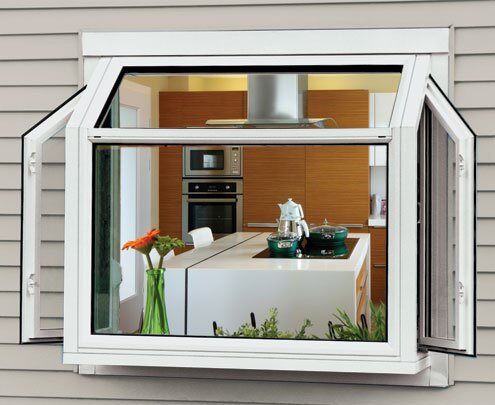
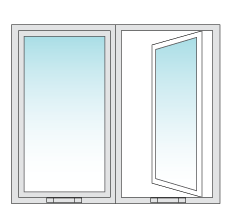
A casement window is a window that is hinged on one side and opens outward, usually with a crank handle near the bottom of the frame. Unlike a double-hung or slider window, the entire sash can swing open.
Casement windows are a good choice when you want:
- A wide, unobstructed view
- Strong ventilation
- A window that can catch passing breezes
- A simple crank-style operating system
- An operable window with a clean appearance
They may not be the best fit in every location because the sash opens outward and needs clearance outside the home.
Joyce Windows, Sunrooms & Baths offers custom casement replacement windows as part of its window collections, along with professional installation and multiple design and energy-efficiency options.
Related Article: Explore Joyce Replacement Windows
How Does a Casement Window Work?
A casement window operates more like a door than a traditional double-hung window.
The sash is attached to hinges along one vertical side of the frame. Turning the crank moves the sash outward, allowing most or all of the window opening to be used for ventilation.
When you close the window, the sash returns against the frame.
The screen is typically placed on the interior side because the window itself swings outward.
Casement windows can be installed individually or grouped with other windows to create a larger window arrangement.
What Does a Casement Window Look Like?
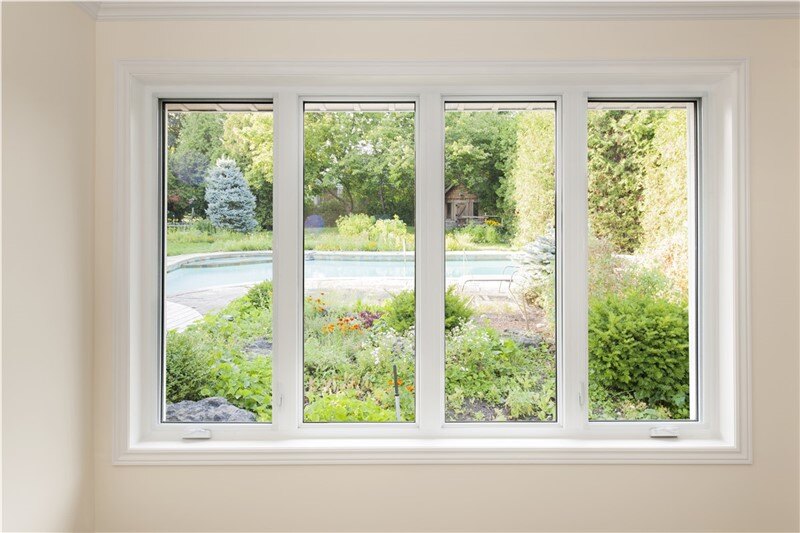
Casement windows usually have one large area of glass rather than two overlapping operating sashes.
That gives them a clean appearance and can provide a wider view through the window.
They can also be customized with grids and other design details when a more traditional appearance is preferred. Joyce offers casement windows as part of both its Heritage and Eloquence window collections.
Casement Window at a Glance
| Feature | Casement Window |
|---|---|
| How it opens | Hinged on one side and swings outward |
| Operation | Crank handle |
| Ventilation | Most or all of the sash opens |
| Screen location | Interior |
| View | Broad area of glass |
| Best for | Ventilation, views, easy crank operation |
| Main consideration | Requires exterior clearance |
What Are the Benefits of Casement Windows?
Casement windows have several practical advantages, but the best reason to choose one depends on the room and how you want the window to function.
1. Excellent Ventilation
Because the sash swings outward rather than sliding behind another sash, a casement window can open a large portion of the window opening.
That allows significant airflow through the opening.
The angled sash can also help catch a passing breeze depending on wind direction and window placement.
This makes casement windows especially worth considering in rooms where ventilation is a priority.
2. A Clear, Open View
A casement window typically uses one large operating sash.
Without the meeting rail found in many double-hung windows, there is less frame material crossing the center of your view.
That can make casements appealing when the window looks out toward:
- A backyard
- Landscaping
- Trees
- A patio
- A scenic view
If the view matters more than ventilation, a fixed picture window may provide an even more uninterrupted opening because it has no operating hardware.
3. Crank-Style Operation
Casement windows open with a crank rather than requiring you to lift or slide a sash.
That can be useful in locations where reaching the window is more difficult.
For example, a casement window may be worth considering above a kitchen counter or sink because the homeowner can operate the crank without needing to lift a sash vertically.
Whether it is actually easier to use depends on the window location, hardware, and individual homeowner.
4. Flexible Window Combinations
Casements do not have to be used alone.
They can be grouped with:
- Other casement windows
- Picture windows
- Specialty-shaped windows
One common approach is to place a fixed picture window in the center with operating casement windows on one or both sides.
That combination provides a broad central view while still allowing ventilation.
5. Energy-Efficient Options
Window style is only one part of energy performance.
The glass package, frame construction, weatherstripping, spacers, sizing, installation, and sealing all affect how efficiently a replacement window performs. Joyce's current energy-efficient window guidance emphasizes those same factors.
ENERGY STAR also recommends choosing windows based on verified performance for your climate rather than assuming a particular operating style is automatically the most efficient. ENERGY STAR performance requirements differ by climate region.
So while a properly built and installed casement can provide strong performance, homeowners should compare the complete window, not just the fact that it opens with a crank.
Related Article: Energy-Efficient Windows
Are Casement Windows More Energy Efficient Than Double-Hung Windows?
Not automatically.
Casement windows can create a tight closure when the sash is fully shut, but you should not choose a replacement window based solely on operating style.
Compare measurable performance features such as:
- Glass package
- U-factor
- Solar heat gain coefficient
- Frame construction
- Weatherstripping
- Installation quality
- Correct sizing and sealing
ENERGY STAR recommends selecting certified products designed for your climate zone. Northern climates place more emphasis on insulation, while southern climates place more emphasis on controlling solar heat gain.
For homeowners in Joyce's service areas across Ohio, Pennsylvania, North Carolina, and South Carolina, that means the ideal glass and performance package may differ by location. Joyce currently serves major markets including Cleveland, Pittsburgh, Charlotte, Asheville, Columbia, and Greenville.
What Are the Drawbacks of Casement Windows?
Casement windows are useful, but they are not the right choice for every opening.
They Need Exterior Clearance
The sash opens outward.
That means a casement window may not work well where the open sash could interfere with:
- A walkway
- A deck
- A patio
- Landscaping
- Another exterior structure
Before choosing the style, think about what is directly outside the window.
The Crank and Hardware Need to Work Properly
Casement windows rely on hinges and operating hardware.
The crank should move smoothly, and the sash should open and close properly.
ENERGY STAR recommends opening and closing new windows before an installer leaves to make sure operating windows function correctly; for casements specifically, the guidance says the window should crank open easily.
They Are Not Always the Simplest Window for Every Space
A slider may make more sense where horizontal operation fits the room.
A double-hung window may better complement a traditional design.
A picture window may be preferable if your main priority is the largest possible view and you do not need ventilation.
Window style should solve a problem rather than simply follow a trend.
Casement vs. Double-Hung Windows: What Is the Difference?
Casement and double-hung windows operate very differently.
| Feature | Casement | Double-Hung |
|---|---|---|
| Operation | Cranks outward | Sashes slide vertically |
| Hinges | Side-hinged | No side hinges |
| Ventilation opening | Large portion of opening | One or both sashes move |
| Center rail | Usually none across single sash | Meeting rail between sashes |
| Screen | Interior | Typically exterior |
| Good fit for | Views and strong ventilation | Traditional style and familiar operation |
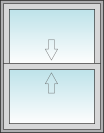 Joyce describes its double-hung windows as having two operable sashes that move vertically, while its casements are side-hinged and crank outward.
Neither style is universally better.
Choose based on appearance, ventilation, operation, room layout, exterior clearance, and overall performance.
Casement vs. Slider Windows: Which Is Better?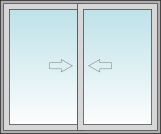
A slider opens horizontally along a track.
A casement swings outward.
Joyce describes slider windows as offering easy horizontal operation and a wide view, while casements use a crank and outward-opening sash.
Consider a Casement If:
- You want a large ventilation opening
- You like crank operation
- Exterior clearance is available
- You want fewer frame lines across the glass
Consider a Slider If:
- Outward clearance is limited
- Horizontal operation fits the opening better
- You prefer a simple sliding mechanism
- The window opening is wider than it is tall
The shape of the opening and the room's layout can often make the decision clearer.
Casement vs. Picture Windows: Which Should You Choose?
The main difference is simple:
Casement windows open. Picture windows do not.
Joyce describes picture windows as large fixed windows designed for an unobstructed view and natural light.
Choose a picture window when:
- The view is the main priority
- You do not need ventilation
- You want a fixed window
Choose a casement when:
- You want both a view and ventilation
- You want the window to open
- Crank operation works well for the space
You can also combine the two.
Where Do Casement Windows Work Best?
Casement windows can work in many rooms, but they are particularly useful where ventilation or easy crank operation matters.
Kitchens
Casements are often worth considering near counters or sinks because the crank can be easier to reach than a vertically sliding sash.
Living Rooms
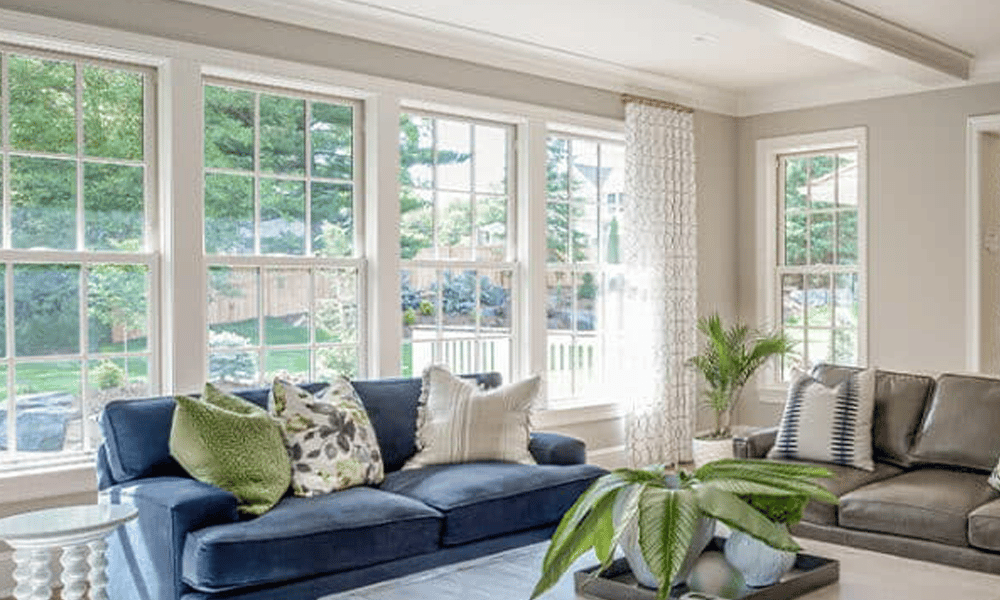
A larger casement or group of casements can provide both daylight and an open view while still allowing ventilation.
Bedrooms
Casements may work well in bedrooms where ventilation is important.
However, if a window is intended to serve as an emergency escape and rescue opening, it must satisfy applicable building-code requirements for the specific opening and location. Do not assume that a window qualifies for egress solely because it is a casement.
Areas With a View
Because casements generally have less obstruction through the center of a single sash, they can be useful where the outdoor view is a priority.
When Should You Avoid a Casement Window?
A casement may not be the best choice if:
- The sash would open into a busy walkway
- Landscaping sits immediately outside the opening
- An exterior deck or patio would interfere with operation
- You want a fixed window with no opening hardware
- The opening's proportions work better for another window style
- You strongly prefer traditional double-hung operation
A design consultation can help determine which operating style actually fits the opening.
Can Casement Windows Be Combined Together?
Yes.
Casements can be installed in groups to create a larger bank of windows.
How Do You Choose the Right Casement Window?
Do not choose based on style alone.
Compare the complete window.
Ask About the Glass
ENERGY STAR recommends looking at performance information appropriate for your climate.
Ask about:
- U-factor
- Solar heat gain coefficient
- Number of panes
- Low-E coatings
- Insulating glass options
Ask About the Frame
Frame construction can affect strength, durability, and energy performance.
Test the Hardware
Open and close the sample window.
The crank should feel comfortable and operate smoothly.
Look at the Full Window
Do not evaluate only a small frame sample.
Look at:
- Glass area
- Frame width
- Hardware
- Grid pattern
- Color
- Screen
- Overall proportions
Think About the Outside Too
Because the sash opens outward, check the space immediately outside the proposed window.
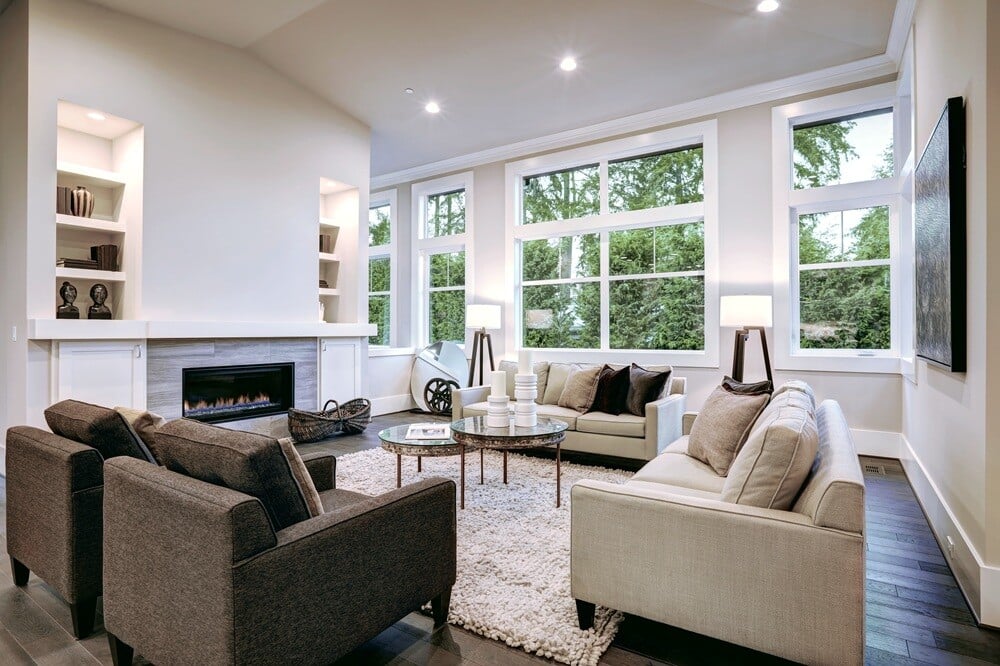
What Casement Windows Does Joyce Offer?
Joyce currently offers casement windows in both its Heritage and Eloquence replacement-window collections. Both collections include multiple operating styles, including double-hung, slider, picture, casement, and awning windows.
Joyce custom manufactures replacement windows for the specific home and provides professional installation. Homeowners can select among available styles, colors, grid patterns, glass packages, and other design options depending on the collection and project.
Related Article: Heritage vs Eloquence Windows
How Much Do Casement Replacement Windows Cost?
There is no single price for every casement window.
Replacement-window pricing can vary based on:
- Window size
- Number of windows
- Window collection
- Glass package
- Color
- Grid selections
- Customization
- Installation requirements
Joyce offers a Window Pricing Calculator that provides homeowners with a ballpark project range before scheduling a consultation.

Questions to Ask Before Buying Casement Windows
Before choosing this window style, ask:
Will the sash have enough room to open outside?
Is ventilation one of my main priorities?
Do I want an unobstructed view?
Will the crank be easy to reach from inside?
What glass package is appropriate for my climate?
What are the window's U-factor and SHGC?
Can I see and operate a full-size sample?
What colors and grid patterns are available?
Who will measure and install the window?
What warranty applies to the product and installation?
Those questions will tell you much more than simply asking whether casement windows are “good.”

Frequently Asked Questions About Casement Windows
What is a casement window?
A casement window is hinged on one vertical side and opens outward, typically using a crank handle near the bottom of the frame.
Do casement windows open all the way?
The operating sash swings outward and can open a large portion of the window opening. The exact opening range depends on the specific product and hardware.
Are casement windows good for ventilation?
Casement windows can provide strong ventilation because most or all of the operating sash swings outward rather than sliding behind another sash.
Are casement windows energy efficient?
They can be part of an energy-efficient replacement-window system, but performance depends on much more than window style. Glass, frame construction, weatherstripping, sizing, sealing, and installation all matter.
Do casement windows have screens?
Yes. Because the sash opens outward, the screen is typically mounted on the interior side of the window.
What is the difference between a casement and double-hung window?
A casement window is side-hinged and cranks outward. A double-hung window has two sashes that move vertically.
Where should you not install a casement window?
Think carefully about locations where the open sash could interfere with a walkway, patio, deck, landscaping, or another exterior feature.
Does Joyce make casement windows?
Yes. Joyce currently offers casement windows within both its Heritage and Eloquence replacement-window collections.
Is a Casement Window Right for Your Home?
Casement windows are a strong option when you want a combination of ventilation, clear views, crank operation, and flexible design.
But the right window depends on more than the style name.
Consider the room, exterior clearance, view, ventilation needs, glass package, energy performance, design preferences, and installation before making your decision.
Joyce Windows, Sunrooms & Baths manufactures custom replacement windows and offers casement styles in both its Heritage and Eloquence collections. Joyce also provides professional installation and a Window Pricing Calculator for homeowners who want to understand a ballpark project cost before scheduling a consultation.
Topics:





_flipped.jpg?width=3246&height=2550&name=joyce_%23034-outside(c)_flipped.jpg)