
The best time to replace your windows is before they fully fail. If you notice drafts, rising energy bills, foggy glass, sticking windows, or visible wear, your windows may already be underperforming and costing you money.
Quick Takeaways:
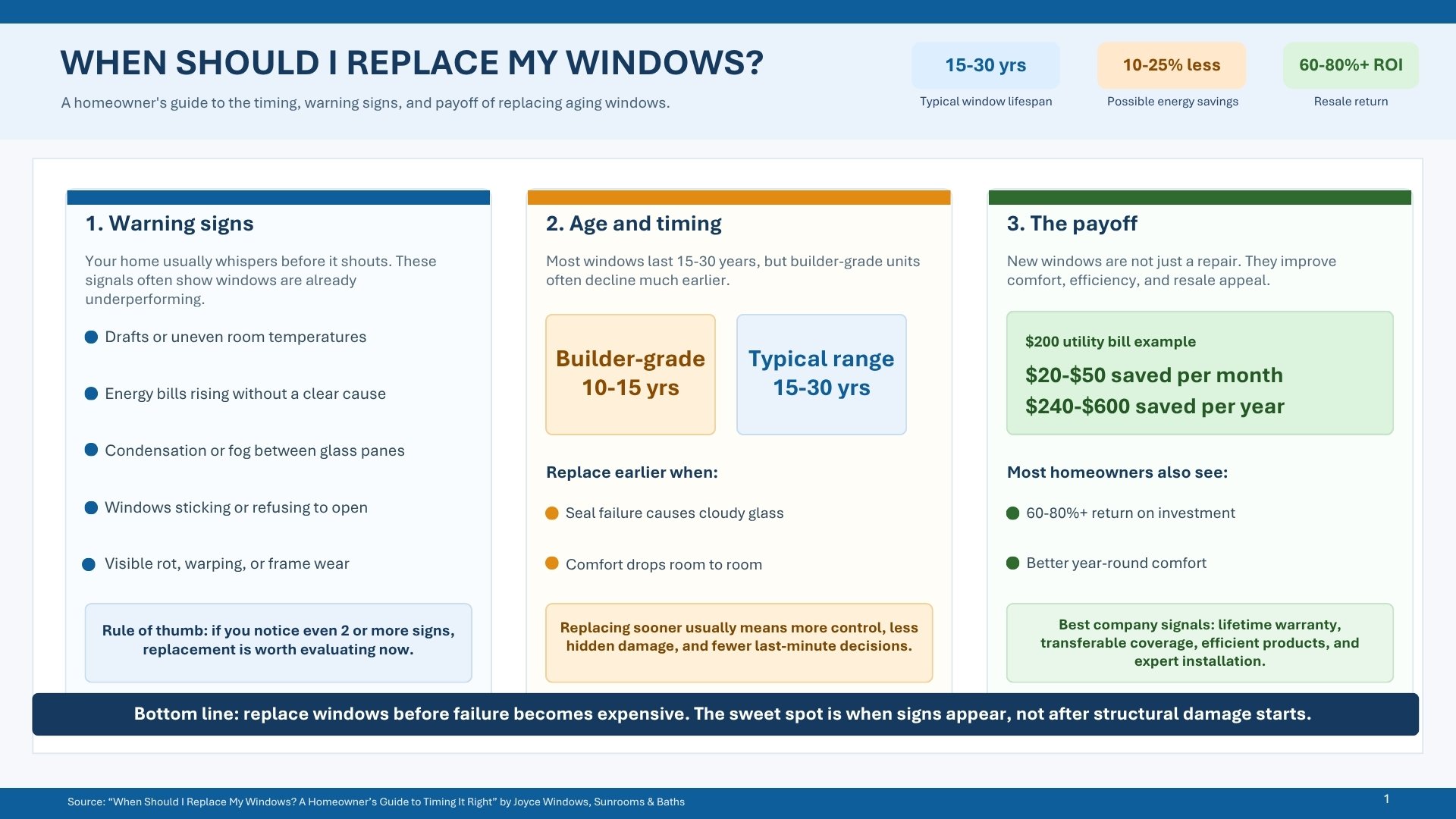
- Most windows last 15 to 30 years
- Builder-grade windows often begin failing in 10 to 15 years
- Common warning signs include drafts, condensation between panes, rising utility costs, and difficulty opening or closing
- Replacing windows early can improve comfort, efficiency, and home value
- Many homeowners save 10% to 25% on energy bills after upgrading old windows
- Waiting too long can lead to higher long-term costs, moisture damage, rot, or mold
Top Signs It’s Time to Replace Your Windows:
Drafts, uneven room temperatures, foggy or cloudy glass, sticking frames, visible rot, warping, and unexplained increases in energy bills.
Why It Matters:
Old or inefficient windows can quietly drain energy, reduce comfort, and create larger repair issues over time. Replacing them before total failure gives homeowners more control over timing, budget, and long-term value.
If You’ve Been Wondering When to Replace Your Windows, You’re Not Alone
One of the most common questions homeowners ask is, “When should I replace my windows?” It usually comes up when energy bills start creeping higher, certain rooms never seem comfortable, or the windows simply don’t work like they used to.
The reality is that many homeowners wait too long.
By the time windows clearly fail, they may have already been costing you money, comfort, and efficiency for years. The better approach is to catch the warning signs early, before small problems turn into expensive ones.
At Joyce, we believe homeowners deserve clarity, not guesswork, so they can make the right decision at the right time.

Signs It May Be Time to Replace Your Windows
Your home will usually give you clues when your windows are no longer doing their job. The key is knowing what to look for.
Drafts or Uneven Temperatures
If you notice certain rooms feel colder in the winter or hotter in the summer, your windows may be leaking air and reducing your home’s efficiency.
Rising Energy Bills
When heating and cooling costs go up without a clear explanation, poor-performing windows may be part of the problem.
Condensation Between Glass Panes
Foggy or cloudy glass often means the seal inside the window has failed, which can reduce insulation and visibility.
Windows That Stick or Won’t Open Properly
Windows should open, close, and lock smoothly. If they stick or resist movement, worn hardware, warped frames, or age may be the cause.
Visible Wear, Rot, or Warping
Damage to the frame or sash can signal that the window is no longer protecting your home effectively.
If you’re noticing even a couple of these issues, your windows may already be underperforming and costing you more than you realize.
How Long Do Windows Last?
Most windows are built to last 15 to 30 years, but lifespan depends on several factors, including materials, installation quality, weather exposure, and maintenance.
Not all windows are made the same, though.
In many homes, especially those built in the last few decades, the original windows are builder-grade. These windows are often designed to meet minimum standards, not deliver the best long-term performance.
Builder-Grade Windows Often Wear Out Sooner
Builder-grade windows can begin breaking down in as little as 10 to 15 years. Common issues include:
- Seal failure that causes foggy or cloudy glass
- Poor insulation that leads to drafts
- Weaker hardware that wears out faster
- Frames that warp or lose efficiency over time
Even if these windows still technically work, they may already be costing you in comfort and monthly energy loss.
Should You Replace Windows Early or Wait Longer?
Timing matters more than many homeowners realize.
Replacing your windows sooner gives you more control over cost, planning, and results. Waiting too long often means you continue paying for inefficiency while increasing the risk of larger problems.
Benefits of Replacing Windows Early
- Lower monthly energy costs sooner
- More consistent indoor temperatures
- Reduced risk of hidden moisture damage
- More time to budget and plan
- Less stress than a last-minute replacement
Risks of Waiting Too Long
- Ongoing energy loss every month
- Higher long-term costs from inefficiency
- Greater chance of rot, mold, or structural issues
- More urgent and stressful replacement decisions
In many cases, replacing windows before they fully fail is the more practical and cost-effective choice.
Is It Worth Replacing Windows?
For many homeowners, yes.
Window replacement is not just a home improvement expense. It is also an investment in performance, comfort, and long-term value.
Common Benefits of New Windows
- Improved year-round comfort
- Better energy efficiency
- Lower utility costs
- Increased home value
- Better curb appeal
- Stronger buyer appeal if you plan to sell
Many homeowners see an estimated 60% to 80%+ return on investment, along with noticeable improvements in how their home feels.
How Much Can New Windows Save on Energy Bills?
There is often a real monthly benefit to replacing old or inefficient windows.
For a homeowner with a $200 utility bill, upgrading from older or builder-grade windows can typically reduce energy costs by 10% to 25%.
That can mean:
- $20 to $50 saved per month
- $240 to $600 saved per year
Homes with original builder-grade windows often see savings toward the higher end of that range.
What to Look for in a Window Replacement Company
Choosing the right time to replace your windows matters. Choosing the right company matters just as much.
Look for a replacement partner that offers:
- True lifetime warranty coverage
- Transferable warranty protection
- High-performance, energy-efficient products
- Expert installation that supports long-term performance
A quality product installed the right way helps ensure your investment performs as intended for years to come.

The Joyce Difference
At Joyce Windows, Sunrooms & Baths, we help homeowners navigate this decision every day.
We are not here to pressure you. We are here to help you make the right call for your home.
Homeowners choose Joyce because we offer:
- A trusted local reputation
- Products built for Midwest weather conditions
- Strong homeowner-first warranties
- Professional installation done right the first time
Our goal is simple: help you avoid costly mistakes and feel confident in your investment.
Final Answer: When Should You Replace Your Windows?
You should replace your windows when they begin showing signs of poor performance, not just when they stop working entirely.
If you notice drafts, foggy glass, sticking frames, rising utility bills, or visible damage, your windows may already be costing you money in comfort and efficiency. Most windows last 15 to 30 years, but builder-grade windows often begin failing much sooner.
The best time to replace your windows is before ongoing inefficiency and hidden damage make the problem more expensive.
Window FAQ Section
How do I know when it’s time to replace my windows?
It may be time to replace your windows if you notice drafts, uneven temperatures, rising energy bills, condensation between panes, sticking windows, or visible signs of damage like rot or warping.
How long do house windows usually last?
Most house windows last between 15 and 30 years. Builder-grade windows may begin to fail sooner, often within 10 to 15 years.
Should I replace windows before they fail?
Yes. Replacing windows before total failure can help reduce energy loss, improve comfort, and prevent moisture damage or more expensive repairs.
Is replacing windows worth the cost?
In many cases, yes. New windows can improve energy efficiency, increase comfort, support home value, and offer a strong return on investment.
How much can new windows save on utilities?
Many homeowners save 10% to 25% on energy bills after replacing older or inefficient windows. For a $200 monthly utility bill, that can equal $20 to $50 per month.
What are the signs of failing builder-grade windows?
Common signs include foggy glass, drafts, poor insulation, sticking frames, weak hardware, and visible frame warping or wear.







_flipped.jpg?width=3246&height=2550&name=joyce_%23034-outside(c)_flipped.jpg)