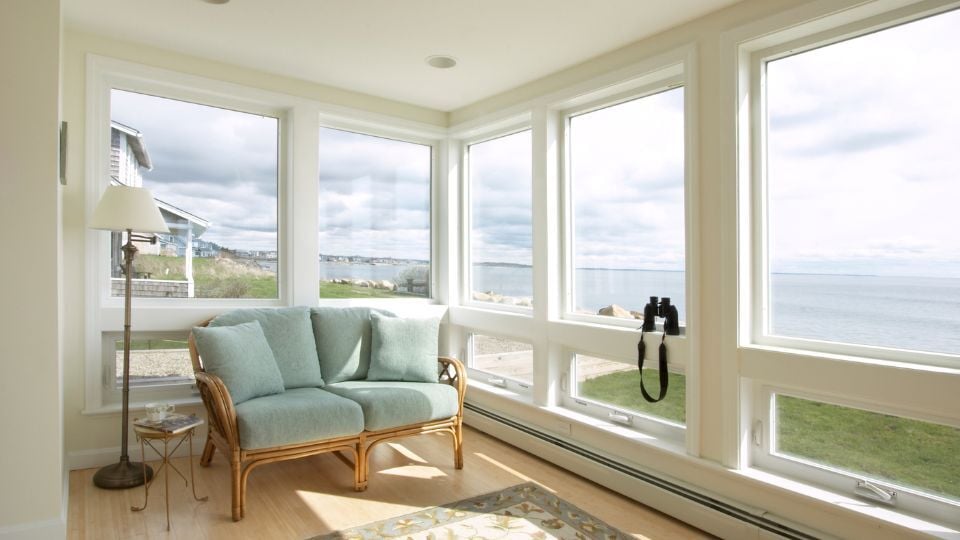
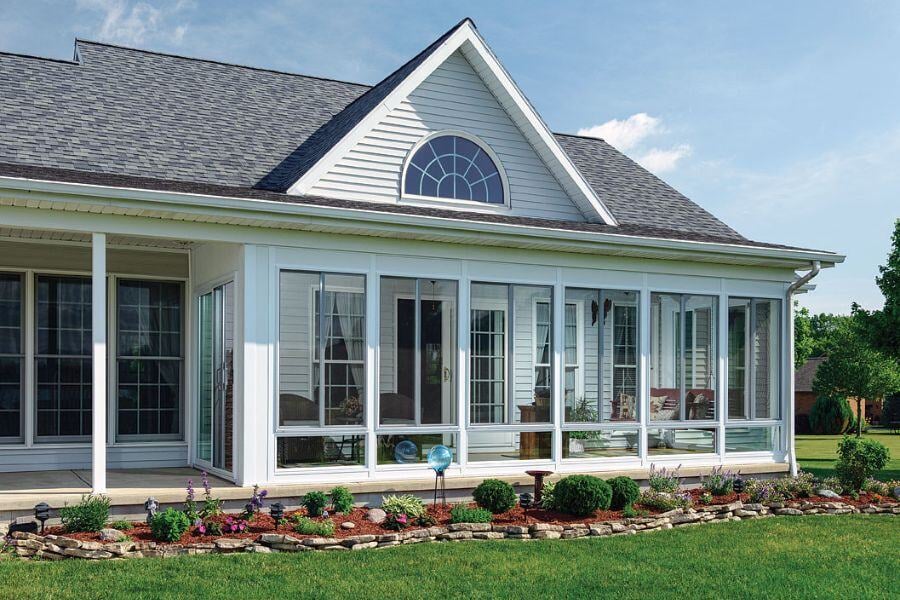
If you are researching sunroom costs, you have probably already realized there is no one-size-fits-all answer. The final price depends on more than square footage alone. The type of room, how it connects to your home, the roof style, the glass package, the condition of the site, and the level of customization can all change the number in a meaningful way.
That is why “How much does a sunroom cost?” is really two questions. First, what is a realistic ballpark range? Second, what choices push the price higher or lower for your specific home?
This guide answers both.
Quick Overview
Joyce’s current pricing guide lists ballpark installed ranges of about $40,000 to $90,000 for a sunroom, $25,000 to $40,000 for a screen room, and $10,000 to $30,000 for a patio cover. Final pricing depends on factors such as room type, size, foundation or structural needs, roof style, glass package, electrical work, doors, flooring, site conditions, and custom design choices. An existing deck or patio may help lower cost in some cases, but only if it is suitable for the project after evaluation.

What Does a Sunroom Cost Right Now?
Based on Joyce’s current Sunroom Cost Guide, homeowners can use these general starting ranges as a practical planning point:
- Sunrooms: about $40,000 to $90,000, including professional design, engineering, and installation
- Screen rooms: about $25,000 to $40,000
- Patio covers: about $10,000 to $30,000
Those numbers are helpful for early budgeting, but they are still broad on purpose. A simple room and a highly customized room can both be called a “sunroom,” yet land in very different price ranges.
Related Article: Why is a Sunroom so Expensive?
Why is There Such a Wide Price Range for Sunrooms?
Sunroom pricing varies because homeowners are not all building the same type of space.
Some want a bright seasonal room to enjoy in milder weather. Others want a more insulated room that feels more connected to the home year-round. Some already have a covered patio or deck they want to enclose. Others are starting from scratch and need more structural work. Joyce’s current sunroom pages make that distinction clear by separating three-season and four-season rooms, patio and deck enclosures, screen rooms, and patio covers.
That means the cost question is not just “How big is the room?” It is also “What kind of room are you trying to build?”
Related Article: Sunroom Price Guide
Which Sunroom Type Usually Costs More or Less?
One of the biggest cost drivers is the room type itself.
Three-Season Sunrooms
A three-season sunroom is usually designed for use in spring, summer, and fall. It can be a strong fit for homeowners who want more light and usable living space without going all the way to a more insulated year-round room. Joyce positions these rooms as a seasonal-use option.
Four-Season Sunrooms
A four-season sunroom is built for more year-round comfort and typically includes more advanced insulation and glass performance. Joyce says its four-season rooms use SmartShield Glass and a ClimateMaster roof system for greater energy efficiency and comfort. Features like that often place a room toward the higher end of the range.
Screen Rooms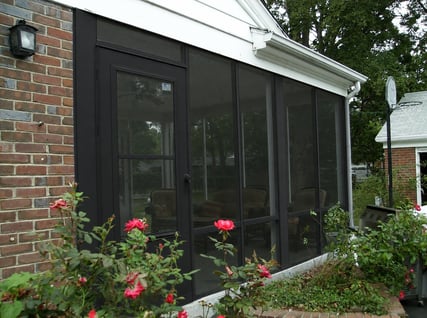
A screen room is often a lower-cost path than a full enclosed sunroom because it is designed more for fresh air and protection from bugs than full seasonal or year-round enclosure. Joyce currently lists screen rooms in a lower pricing range than full sunrooms.
Patio covers
Patio covers are usually the simplest and lowest-cost option among Joyce’s outdoor-living products because they provide shade and protection without creating a fully enclosed room.
What Factors Make a Sunroom Cost More?
Joyce’s current pricing guide names the biggest variables that can raise the project total. These are the decisions that usually move the number up fastest:
Related Article: Sunroom Addition Benefits
1. Room type
A year-round sunroom or a larger three-season room generally costs more than a simpler patio enclosure or screen room.
2. Size
A larger footprint means more windows, more roof, more materials, and more labor. Bigger rooms almost always cost more.
3. Foundation or structural work
A new foundation, major support work, or challenging site prep can add significantly to the total. If the project needs more than a straightforward attachment, costs can rise quickly.
4. Roof style
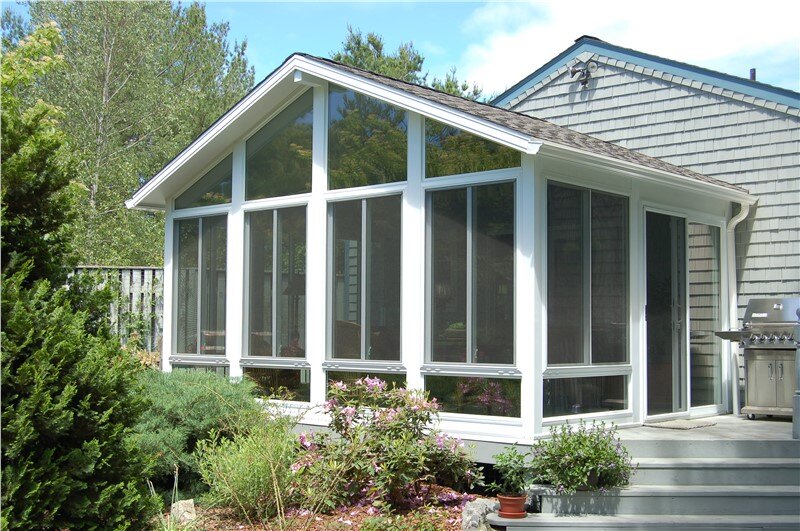
Joyce highlights gable and studio roof styles, with more complex rooflines or tie-ins generally increasing price compared with simpler roof designs.
5. Glass package and insulation
Higher-performance glass and more energy-efficient features usually increase cost, especially for a room intended for broader seasonal use or year-round comfort. Joyce specifically highlights upgraded glass options and thermal performance on its four-season pages.
6. Electrical and interior finish choices
Extra outlets, lighting, ceiling fans, flooring upgrades, and more finished interior details can move the budget up. Joyce lists electrical, flooring, and finish choices among the common pricing variables.
7. Doors and customization
Premium patio doors, French doors, upgraded trim, and personalized design elements can all add to the final total. The more custom the space becomes, the more the budget usually grows.
8. Site conditions
Difficult access, uneven ground, drainage issues, and other site complications can all increase cost even before the visible room starts taking shape. Joyce lists site conditions as a meaningful variable in its current cost guide.
Related Article: Sunroom Additions
-resized-600.jpg?width=600&height=494&name=joyce_008-outside(b)-resized-600.jpg)
Can an Existing Patio or Deck Lower The Cost?
Sometimes, but not automatically.
Joyce says an existing deck or patio can help if it is in good condition and suitable for the project, but not every existing structure can support a sunroom without additional work. Joyce evaluates the condition of the structure, how the room will attach to the home, whether the area is level and prepared properly, drainage and access, and local code requirements before finalizing price.
That means homeowners should think of an existing patio or deck as a possible advantage, not a guaranteed shortcut.
Related Article: Joyce Pricing
What Extras Can Change The Price?
This is where projects often move from “basic” to “custom.”
Depending on the design, homeowners may choose:
- Upgraded doors
- Additional electrical features
- Ceiling fans or lighting
- Premium glass or insulation packages
- Finished interior surfaces
- Custom trim or color choices
- Flooring upgrades
- Exterior finishing details
The important point is not that extras are bad. It is that they are often where two rooms of the same size stop costing the same amount.
Related Article: Sunroom Extra Additions
How Do You Budget For a Sunroom More Accurately?
A good first step is to narrow down the kind of room you actually want.
For example:
- If your goal is a bright seasonal room, a three-season sunroom may fit better
- If you want a room for broader year-round comfort, a four-season sunroom may make more sense
- If you want open-air comfort without bugs, a screen room may be enough
- If your main goal is shade and weather protection, a patio cover may be the smartest budget fit
Once you know the room type, the next questions are size, roof style, glass package, and whether the site is straightforward or complex.
Related Article: Three Season vs Four Season Sunroom
Why a Design Consultation Matters For Sunroom Pricing
Ballpark ranges are useful, but they are still only ballpark ranges.
Joyce’s current pricing content makes clear that accurate pricing depends on the home, the structure, the site, and the design decisions behind the project. That is why the company pushes homeowners toward a design consultation once they move beyond the early research stage. Joyce also offers a brochure download and financing information alongside its sunroom pricing resources.

A consultation helps answer questions like:
- Which room type fits your goals best?
- Can your existing patio or deck be used?
- Which glass and roof options make sense?
- What details are worth upgrading?
- What will your specific home require?
The Bottom Line on Sunroom Cost
A sunroom can be a simple seasonal retreat, a more comfortable enclosed patio, or a brighter living space you use much more often throughout the year. The cost depends on what kind of room you want and what your home needs to support it.
Joyce’s current price ranges give homeowners a practical starting point: about $40,000 to $90,000 for sunrooms, $25,000 to $40,000 for screen rooms, and $10,000 to $30,000 for patio covers. From there, factors like size, roof style, glass package, electrical work, foundation needs, and site conditions determine where your project will land.
If you want a more accurate number, the next step is to compare room types and schedule a design consultation based on your home, your goals, and your budget.

Frequently Asked Questions
How much does a sunroom cost?
Joyce’s current pricing guide lists sunrooms at about $40,000 to $90,000 installed, though the final price depends on room type, size, glass, roof design, structural needs, and site conditions.
Are four-season sunrooms more expensive than three-season sunrooms?
They often are, because they are typically designed for greater thermal performance and more year-round comfort. Joyce highlights more advanced glass and roof systems for four-season rooms.
Can I build a sunroom on my existing deck or patio?
Possibly. Joyce says some existing patios and decks are suitable, but they still need to be evaluated for structure, levelness, drainage, attachment method, and code requirements.
What makes a sunroom cost more?
Major cost drivers include room type, size, roof style, foundation or support work, glass package, electrical needs, doors, flooring, site conditions, and the level of customization.
Is a screen room cheaper than a full sunroom?
Usually yes. Joyce’s current pricing guide places screen rooms below full sunrooms in ballpark installed cost.
Topics:
.jpg?width=961&height=640&name=Gable%202600SL%20in%20White%20(3%20of%204).jpg)
_flipped.jpg?width=3246&height=2550&name=joyce_034-outside(c)_flipped.jpg)