

Executive Summary
Argon gas is commonly used in the sealed space between panes of insulated window glass.
Because argon transfers heat less readily than ordinary air, it can help improve the thermal performance of a double-pane or triple-pane window. It works as one part of a complete glass package that may also include low-emissivity coatings, insulated spacers, multiple panes, and sealed edges.
Argon gas can help:
- Reduce heat transfer through the center of the glass
- Keep the interior glass surface more comfortable during cold weather
- Support lower U-factor ratings
- Improve the performance of insulated-glass windows
- Reduce convection within the space between panes
Argon alone does not determine whether a replacement window is energy efficient. Homeowners should compare the complete window’s NFRC-certified ratings, frame construction, weatherstripping, glass package, sizing, installation, and warranty.
Joyce Windows, Sunrooms & Baths offers custom replacement windows with insulated and energy-efficient glass options designed around the home, climate, style, and comfort goals.
Ready to compare replacement-window options? Get an Instant Window Cost Estimate or Book a Design Consultation.

What Is Argon Gas?
Argon is a naturally occurring gas found in the atmosphere.
It is:
- Colorless
- Odorless
- Nonflammable
- Chemically unreactive under normal conditions
- Denser than ordinary air
In replacement windows, argon is used as a fill gas inside a sealed insulated-glass unit.
An insulated-glass unit usually contains two or more panes separated by a spacer. The perimeter is sealed, creating an enclosed space between the panes. That space may contain dry air, argon, another gas mixture, or a combination specified by the manufacturer.
Homeowners do not see or smell the argon. It remains inside the sealed glass unit during normal window use.
How Does Argon Gas Work in a Window?
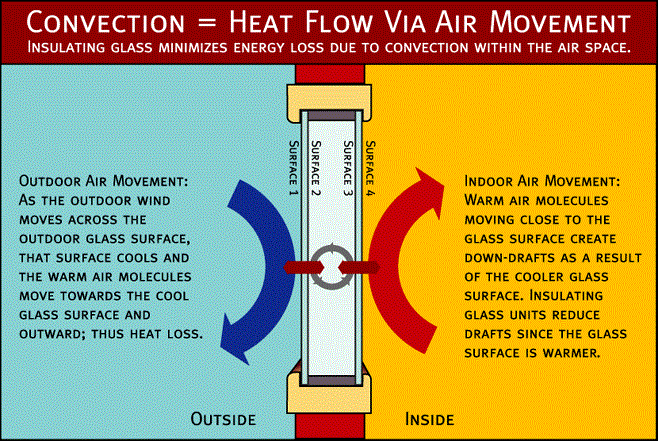
Heat can move through a window by conduction, convection, and radiation.
Argon helps reduce conductive and convective heat transfer within the space between the glass panes.
Conduction
Conduction occurs when heat moves through a material or gas.
Argon has lower thermal conductivity than ordinary air, so it can reduce the rate at which heat moves across the sealed space.
Convection
Convection occurs when warmer gas rises and cooler gas falls, creating movement within the glass cavity.
The density and properties of argon can reduce this internal circulation when the space between panes is designed correctly.
Radiation
Radiant heat transfer is primarily addressed by low-emissivity, or low-e, coatings rather than by argon gas.
For that reason, argon and low-e glass are often used together. Argon helps address conductive and convective transfer, while low-e coatings help manage radiant heat.
What Are the Benefits of Argon-Filled Windows?
Improved Insulating Performance
Argon can improve the insulating performance of an insulated-glass unit compared with a similar unit filled only with air.
The amount of improvement depends on:
- Number of glass panes
- Width of the space between panes
- Initial gas-fill percentage
- Low-e coating
- Spacer design
- Glass configuration
- Window frame
- Window style
- Complete product construction
Argon is not a substitute for a well-designed window. It is one component within the glass system.
Warmer Interior Glass During Cold Weather
A better-insulated glass package can help keep the room-side surface of the glass warmer during cold weather.
That may reduce the chilly feeling homeowners sometimes notice when sitting near an older or inefficient window.
It may also improve resistance to interior condensation under some conditions, although no window can eliminate condensation caused by excessive indoor humidity.
Reduced Summer Heat Transfer
Argon can also help slow heat transfer during warm weather.
However, managing solar heat from direct sunlight depends heavily on the low-e coating and the window’s solar heat gain coefficient.
Homeowners in warm or mixed climates should not choose a window based only on whether it contains argon. The complete glass package should be suited to the home’s climate zone, window direction, shading, and cooling needs.
Little Effect on Visibility
Argon is transparent and does not tint the glass.
Any visible color, reflection, or tint is usually related to the glass itself, low-e coatings, screens, or other components rather than the argon fill.
Does Argon Gas Make a Window Energy Efficient?
Argon can improve window performance, but it does not make a window energy efficient by itself.
Joyce identifies the major performance factors as:
- Glass package
- Frame construction
- Weatherstripping
- Installation quality
- Custom sizing
- Sealing around the opening
Joyce also offers insulated-glass options intended to help reduce unwanted heat transfer, drafts, and temperature swings.
A window with argon gas may still perform poorly if it has:
- Weak frame construction
- Poor weatherstripping
- High air leakage
- An unsuitable glass coating
- Failed insulated-glass seals
- Incorrect sizing
- Poor installation
- Gaps around the opening
Homeowners should evaluate the entire product rather than treating the gas fill as the main measure of quality.
Argon Gas vs. Low-E Glass
Argon and low-e glass perform different jobs.
| Feature | Argon gas | Low-e coating |
|---|---|---|
| Location | Between glass panes | Applied to a glass surface |
| Main function | Reduces conductive and convective heat transfer | Reduces radiant heat transfer |
| Visible appearance | Clear and invisible | May create a slight reflective appearance |
| Effect on U-factor | Can help lower U-factor | Can help lower U-factor |
| Effect on solar heat gain | Limited by itself | Selected coatings can strongly affect SHGC |
| Used alone or together? | Commonly paired with low-e glass | Commonly paired with argon-filled insulated glass |
A well-designed glass package may use both technologies to improve comfort and energy performance.
Argon Gas vs. Air-Filled Windows
An air-filled insulated-glass unit contains dry air between its panes.
An argon-filled unit replaces some or most of that air with argon.
Compared with an otherwise similar air-filled unit, argon may provide:
- Lower heat transfer
- Better center-of-glass insulation
- Improved U-factor
- Warmer interior glass during cold conditions
The actual difference depends on the cavity width, fill level, glass, spacer, and complete window design.
Ask for the certified performance rating rather than assuming every argon-filled window performs better than every air-filled window.
A strong air-filled product could outperform a poorly designed argon-filled product.
Argon vs. Krypton Gas
Krypton is another gas that may be used in insulated-glass windows.
It can provide improved thermal performance in narrower spaces, but it is less abundant and typically more expensive than argon.
| Gas fill | Common use | Main consideration |
|---|---|---|
| Air | Basic insulated-glass units | Lower cost but less insulating than optimized gas fills |
| Argon | Many double-pane and triple-pane windows | Practical balance of performance and cost |
| Krypton | Some premium or narrow-cavity glass systems | Higher performance potential at a higher cost |
| Argon-krypton blend | Selected multi-pane systems | Performance depends on the specific design |
The best option is not determined only by the gas. Compare the full certified window rating and the additional project cost.
Is Argon Used in Double-Pane and Triple-Pane Windows?
Yes.
Argon may be used in:
- Double-pane insulated glass
- Triple-pane insulated glass
- Some multi-layer specialty glass systems
A double-pane window has one sealed cavity. A triple-pane window normally has two.
Each cavity may be filled with argon or another approved gas mixture, depending on the glass package.
Triple-pane glass is not automatically the best value for every homeowner. Its performance, added weight, climate benefit, frame compatibility, operating style, and price should all be considered.
How Can You Tell Whether a Window Contains Argon?
You usually cannot determine the gas fill by looking at the glass.
Instead, review:
- Product specifications
- Sales proposal
- Glass-package description
- Manufacturer documentation
- NFRC certified-product information
- Warranty paperwork
The NFRC Certified Products Directory can also be searched using product characteristics, including glazing layers, frame type, low-e options, spacers, and gas fill.
Ask for documentation covering the exact window configuration being quoted. Performance can vary by size, style, and glass package within the same product line.
What Is an NFRC Label?
The National Fenestration Rating Council is an independent nonprofit organization that certifies energy-performance ratings for windows, doors, and skylights. Its label allows homeowners to compare products using standardized measurements.
Important ratings include:
U-Factor
U-factor measures how well the complete window limits heat flow.
Lower U-factor generally indicates better insulating performance.
Argon gas can help improve the U-factor, but the rating applies to the complete product rather than the gas alone.
Solar Heat Gain Coefficient
Solar heat gain coefficient, or SHGC, measures how much solar heat passes through the window.
Lower SHGC means less solar heat enters.
The best rating depends on climate, orientation, shading, and homeowner goals.
Visible Transmittance
Visible transmittance measures how much visible light passes through the product.
Higher numbers generally mean more daylight.
Air Leakage
Air-leakage ratings measure the amount of air that passes through the product under test conditions.
Argon gas inside the glass unit does not correct air leakage around a poorly sealed sash, frame, or installation.
Condensation Resistance
Where reported, condensation resistance indicates how well the product resists condensation under standardized conditions.
Higher values generally indicate better resistance.
Does Argon Gas Leak Out Over Time?
A small amount of gas may gradually escape through the sealed-edge system during the life of an insulated-glass unit.
A properly manufactured unit is designed to retain enough gas to provide its intended performance over time.
Rapid gas loss usually indicates a problem with the insulated-glass seal.
Gas loss may not be visible by itself. Common signs of a failed insulated-glass unit may include:
- Fogging between panes
- Moisture between panes
- Mineral deposits inside the glass cavity
- A cloudy appearance that cannot be cleaned
- Distortion in the glass in some circumstances
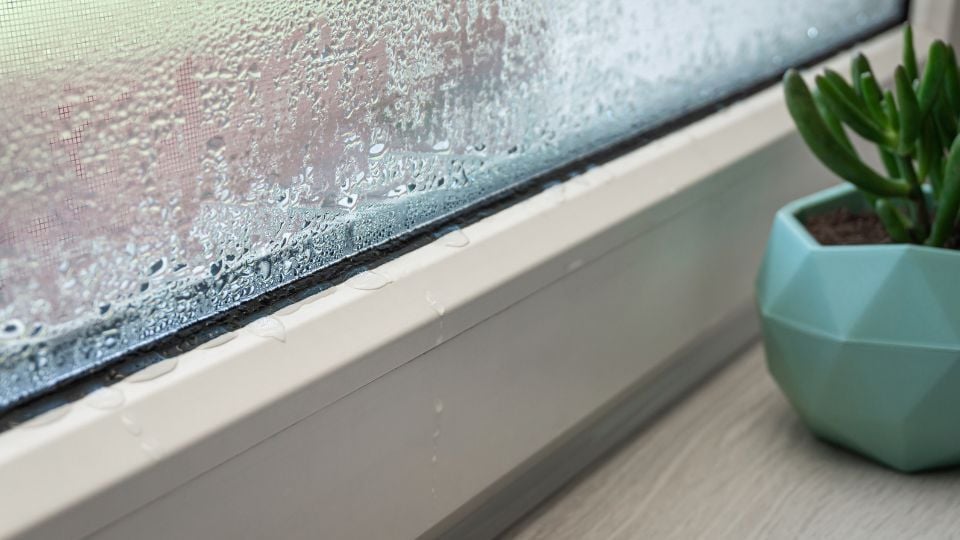
Fogging on the room-side or exterior surface does not necessarily mean the glass seal has failed. Surface condensation is often related to humidity, outdoor temperature, glass temperature, airflow, and weather conditions.
Can Argon Gas Be Refilled?
Refilling an installed residential insulated-glass unit is generally not a routine homeowner repair.
When the edge seal has failed, simply adding more gas would not correct the failed sealing system.
The typical solution is to replace:
- The insulated-glass unit
- The sash containing the glass
- The complete window, when necessary
The appropriate solution depends on the product, age, damage, warranty, and availability of replacement components.
Ask the manufacturer or installer whether glass-seal failure and replacement labor are covered.
Is Argon Gas Safe?
Argon is colorless, odorless, nonflammable, and generally considered nontoxic.
The quantity used in a residential insulated-glass unit is small.
If a seal fails, the gas disperses into the surrounding air. It does not create a noticeable smell or leave a residue.
The more relevant homeowner concern is the loss of insulating performance and the condition of the glass seal—not exposure to the gas.
Does Argon Prevent Window Condensation?
No.
Argon may help improve the insulating performance of the glass and may help keep the interior glass surface warmer during cold weather. That can improve condensation resistance under some conditions.
However, condensation can still form when:
- Indoor humidity is high
- Outdoor temperatures are very low
- Air circulation is limited
- Curtains or blinds trap moist air near the glass
- The home produces significant moisture
- The glass remains cold enough for water vapor to condense
Exterior condensation can also occur on efficient windows under certain weather conditions because the outside surface remains colder.
Condensation by itself does not prove that the gas has escaped or that the window is defective.
Does Argon Gas Reduce Noise?
Argon-filled insulated glass may contribute modestly to the overall sound performance of a window, but argon is not primarily a sound-control feature.
Noise reduction is influenced more by:
- Glass thickness
- Different glass thicknesses within one unit
- Laminated glass
- Airspace width
- Number of panes
- Frame construction
- Sash seals
- Installation
- Air leakage around the opening
Homeowners concerned about traffic, aircraft, or neighborhood noise should ask about tested sound-performance options rather than relying on argon alone.
Is Argon Gas Worth the Cost?
Argon is commonly included in energy-efficient insulated-glass packages because it can provide improved thermal performance without changing the view through the window.
It may be worth considering when:
- Existing windows are single-pane or poorly insulated
- Rooms feel uncomfortable near the glass
- Winter heat loss is a concern
- Summer heat transfer is a concern
- The homeowner wants a stronger U-factor
- Argon is included within a suitable low-e glass package
- The upgrade cost is reasonable compared with its performance benefit
The decision should be based on the change in certified window ratings and the total project price.
Do not choose an argon upgrade solely because a salesperson says that it will pay for itself or guarantee lower utility bills.
Actual savings depend on:
- Existing windows
- Home construction
- Climate
- Heating and cooling equipment
- Energy prices
- Household habits
- New window ratings
- Installation quality
- Air sealing around the opening
ENERGY STAR advises homeowners to select products certified for their climate zone and review the corresponding NFRC label.
Is Argon Important in Warm Climates?
Argon can contribute to lower heat transfer in both heating and cooling climates.
It should not be presented as useful only in northern areas.
In colder climates, homeowners may focus on:
- Lower U-factor
- Warmer interior glass
- Reduced winter heat transfer
In warmer climates, homeowners may focus on:
- Lower solar heat gain
- Cooling-season comfort
- Glass coatings selected for direct sunlight
- Lower unwanted outdoor heat transfer
For homes in Charlotte, Columbia, Greenville, and Asheville, Joyce notes that solar heat control, UV protection, and comfort during long cooling seasons may be important priorities. For Cleveland and Pittsburgh homes, cold winters and older window openings may make insulation and draft reduction especially important.
The glass package should be matched to the climate and room—not chosen from the gas fill alone.
What Should You Ask When Comparing Argon-Filled Windows?
Ask each contractor:
- Is argon included in the quoted glass package?
- Is the window double-pane or triple-pane?
- What is the certified U-factor?
- What is the certified SHGC?
- What is the visible transmittance?
- Is an air-leakage rating available?
- Which low-e coating is included?
- What type of spacer is used?
- Is the exact configuration ENERGY STAR certified for my climate zone?
- Can I see the NFRC label or certified-product listing?
- What warranty covers insulated-glass seal failure?
- Does the warranty include replacement labor?
- What happens if fogging appears between panes?
- How will the window opening be insulated and sealed?
- Who performs the installation?
Compare written ratings and project scopes rather than marketing labels such as “high performance,” “premium glass,” or “maximum efficiency.”
How Much Do Argon-Filled Replacement Windows Cost?
Argon is usually one part of a larger glass package rather than a separately priced home-improvement project.
The total window price may depend on:
- Window style
- Size
- Number of windows
- Double-pane or triple-pane glass
- Low-e coating
- Gas fill
- Frame color
- Decorative grids
- Hardware
- Window collection
- Installation access
- Condition of the opening
- Interior and exterior finishing
Joyce offers a Window Pricing Calculator that provides a ballpark range based on the project’s window styles, quantity, glass, colors, design options, and installation needs. Exact pricing requires measurements and an evaluation of the openings.
See What Your Window Project Could Cost
Why Choose Joyce for Energy-Efficient Replacement Windows?
Joyce Windows, Sunrooms & Baths manufactures custom replacement windows in its own factory and provides professional installation.
Homeowners can explore:
- Eloquence windows
- Heritage windows
- Specialty windows
- Double-hung windows
- Sliding windows
- Picture windows
- Casement windows
- Awning windows
- Bay and bow windows
- Garden windows
- Shaped windows
- Insulated-glass options
- Energy-efficient glass packages
- Custom sizing
- Frame colors and grids
- Professional installation
- Financing for qualified homeowners
- An online Window Pricing Calculator
Joyce designs its replacement windows to help improve comfort, reduce drafts, and limit unwanted heat transfer. Actual product ratings and available glass packages depend on the selected collection, style, size, and configuration.
Related Article: Energy-Efficient Windows
Compare the Complete Window System
Argon gas can improve the thermal performance of insulated glass, but it is not the only feature that matters.
A replacement window should be evaluated as a complete system:
- Frame
- Sash
- Glass
- Low-e coating
- Gas fill
- Spacer
- Weatherstripping
- Locks and hardware
- Custom sizing
- Installation
- Warranty
- Future service
The most useful comparison is the certified performance of the exact window configuration being installed in your home.

Frequently Asked Questions About Argon Gas in Windows
What does argon gas do in replacement windows?
Argon reduces conductive and convective heat transfer within the sealed space between glass panes. It can help improve the insulating performance and U-factor of an insulated-glass window.
Can you see or smell argon gas?
No. Argon is colorless and odorless. It does not create a visible tint in the window.
Are argon-filled windows safe?
Yes. Argon is nonflammable and generally considered nontoxic. The small amount used in insulated glass disperses harmlessly if a seal fails.
Is argon gas better than air in a window?
Argon generally provides better thermal performance than ordinary air in an otherwise similar insulated-glass unit. The complete window design and certified ratings remain more important than the gas alone.
Do argon-filled windows need low-e glass?
They do not technically require it, but argon and low-e coatings address different types of heat transfer and are commonly combined in energy-efficient glass packages.
Does argon gas leak out?
A small amount may gradually escape over time. A rapid loss may indicate insulated-glass seal failure.
How do I know whether argon has leaked out?
Gas loss itself is difficult to see. Fogging, moisture, or deposits between the panes may indicate a failed insulated-glass seal, but surface condensation does not necessarily mean the seal has failed.
Can argon gas be replaced?
Refilling residential insulated glass is not normally a routine repair. If the edge seal has failed, the insulated-glass unit, sash, or complete window may need replacement.
Does argon prevent condensation?
No. It may improve the glass temperature and condensation resistance, but indoor humidity, outdoor temperature, air circulation, and window performance all affect condensation.
Are argon windows useful in warm climates?
Yes. Argon can reduce heat transfer in both warm and cold climates. In hotter areas, the low-e coating and SHGC may be especially important for managing solar heat.
Does argon reduce outside noise?
It is not primarily a sound-control feature. Glass thickness, laminated glass, airspace, sash seals, frame construction, and installation generally have a larger effect.
How can I compare argon-filled windows?
Review the NFRC-certified U-factor, SHGC, visible transmittance, air-leakage rating when available, ENERGY STAR climate-zone certification, glass package, installation scope, and warranty.