Executive Summary
Energy-efficient replacement windows can help reduce unwanted heat transfer, drafts, and air leakage, which may lower the amount of energy your heating and cooling system needs to maintain a comfortable home.
But no window company can responsibly guarantee a specific utility-bill reduction without evaluating the home.
Potential savings depend on:
- The condition of your existing windows
- Your climate
- Heating and cooling equipment
- Window size and orientation
- Glass package
- Frame construction
- Air leakage
- Installation quality
- Thermostat settings
- Energy prices
The most useful way to compare replacement windows is to look at the whole-window performance ratings, particularly U-factor and solar heat gain coefficient, along with the product’s construction and installation.
Joyce Windows, Sunrooms & Baths offers custom replacement windows with insulated-glass options, multiple window styles, professional installation, and a Window Cost Calculator for homeowners who want a ballpark project estimate.
Considering new windows? Use the Joyce Window Cost Calculator to see what your project could cost, or book a design consultation to compare window and glass options for your home.
Can Energy-Efficient Windows Really Lower Your Energy Bills?
They can help, especially when the existing windows are old, drafty, damaged, poorly insulated, or no longer sealing correctly.
Windows affect both heating and cooling.
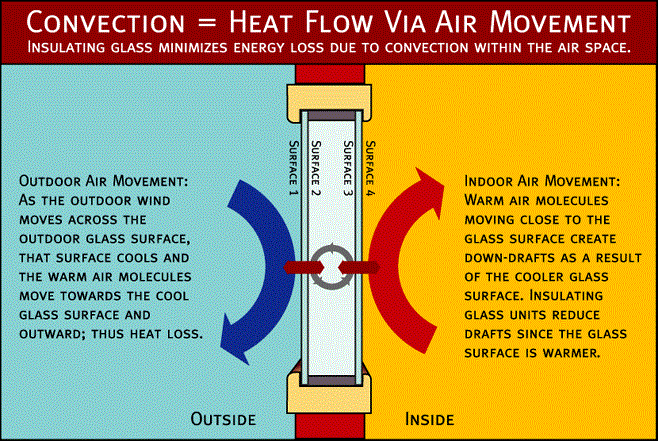
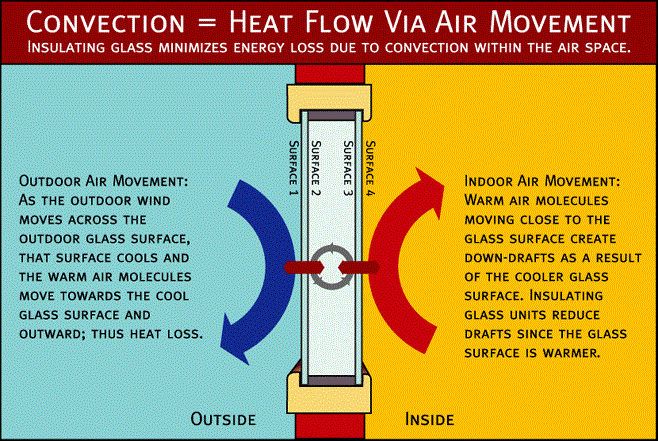
In winter, heat can move from the warmer interior of the home toward colder outdoor conditions.
In summer, unwanted outdoor heat and solar energy can enter through the windows, increasing the amount of cooling your home needs.
The U.S. Department of Energy estimates that heat gain and heat loss through windows account for approximately 25% to 30% of residential heating and cooling energy use.
That does not mean replacing your windows will cut your total heating and cooling bill by 25% to 30%.
It means windows are one important part of the home's overall energy performance.
Your actual results depend on how inefficient the existing windows are and what replaces them.
How Energy-Efficient Windows Work
A high-performing replacement window is a system.
Its efficiency does not come from one feature.
Important parts include:
- Glass
- Low-E coatings
- Insulating gas
- Frame and sash construction
- Weatherstripping
- Spacers and seals
- Window style
- Custom fit
- Installation
The right combination helps slow unwanted heat transfer and limit air leakage while preserving natural light and outdoor views.
Related Article: Summer Energy Saving Tips
1. Insulated Glass Slows Heat Transfer
Modern energy-efficient windows commonly use two or more panes of glass separated by a sealed space.
That sealed space improves insulation compared with a single pane of glass.
Depending on the window package, the space between the panes may contain an insulating gas such as argon.
The Department of Energy explains that insulated glazing and gas fills can lower the rate of heat transfer through a window.
The benefit is useful in both directions:
- In colder weather, less indoor heat escapes through the glass.
- In warmer weather, less outdoor heat transfers into the conditioned space.
The exact performance depends on the entire glass unit, not simply whether it contains argon.
2. Low-E Glass Helps Control Heat Transfer
Low-emissivity glass, usually called Low-E glass, contains a microscopically thin coating designed to reduce radiant heat transfer.
Low-E coatings can help manage:
- Winter heat loss
- Summer solar heat
- Indoor comfort
- UV exposure
- Fading of some interior materials
Not every Low-E coating performs the same way.
The best glass package can depend on:
- Climate
- Direction the window faces
- Shade
- Window size
- Room use
- Heating and cooling priorities
A west-facing window receiving strong afternoon sun may call for a different solar-heat strategy than a shaded north-facing window.
That is why “Low-E” should be treated as the beginning of the conversation rather than the complete specification.
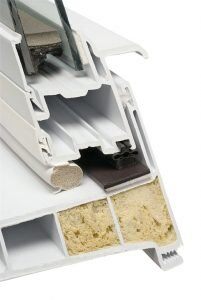
3. The Frame Also Affects Energy Performance
Glass receives a lot of attention, but the frame matters too.
Frame construction affects how readily heat moves around the perimeter of the window.
The Department of Energy notes that improving a frame's thermal resistance can improve the overall U-factor of the window.
Homeowners should ask about:
- Frame material
- Internal chambers
- Reinforcement
- Sash construction
- Weatherstripping
- Seals
- Exterior finish
- Window size limitations
Joyce offers custom replacement windows designed around energy performance, fit, durability, and homeowner preferences.
4. Tight Seals Help Reduce Drafts and Air Leakage
A window can have good glass and still feel uncomfortable if air leaks around the sash or opening.
Modern replacement windows use weatherstripping and engineered seals to help control unwanted air movement.
Signs that older windows may be allowing air leakage include:
- Noticeable drafts
- Curtains moving when the window is closed
- Cold areas around the frame
- Hot areas near windows in summer
- Difficulty getting the sash to close completely
- Damaged or missing weatherstripping
Drafts should not automatically be blamed on the glass.
They may also come from:
- Worn seals
- Poor installation
- Gaps around the frame
- Damaged exterior caulk
- House movement
- An improperly seated sash
Related Article: Magna-Seal in Windows For Energy Efficiency
5. Professional Installation Matters
A window's published performance assumes it is correctly installed.
Installation problems can undermine a good product.
Potential issues include:
- An opening that is not properly measured
- A frame installed out of square
- Uneven fastening
- Gaps around the replacement window
- Incomplete insulation
- Poor exterior sealing
- Water-management problems
Joyce replacement windows are custom fit for the project and professionally installed as part of the company's factory-direct process.
During installation, the crew should verify that the window:
- Sits correctly in the opening
- Opens and closes properly
- Locks correctly
- Is insulated around the frame
- Is sealed appropriately
- Has consistent weatherstripping contact
What Do U-Factor and SHGC Mean?
You do not need to become a window engineer to compare products.
Two numbers are especially useful.
U-Factor
U-factor measures how readily heat passes through the complete window.
A lower U-factor generally means better resistance to heat loss.
This rating is especially important in colder climates, where keeping indoor heat inside the home is a major concern.
Solar Heat Gain Coefficient
Solar heat gain coefficient, or SHGC, measures how much solar heat enters through the window.
A lower SHGC means less solar heat enters.
That can be particularly useful in warmer climates or rooms receiving strong sun.
A higher SHGC may sometimes be useful where passive winter solar gain is desirable.
The right number depends on climate and window orientation.
Why Whole-Window Ratings Matter
Do not compare only the center of the glass.
NFRC ratings evaluate the performance of the complete window assembly, including the glass and frame.
That gives homeowners a more useful comparison between products.
Ask the company:
“Can you show me the NFRC label for the exact window and glass package in my quote?”
What Is the NFRC Label?
The National Fenestration Rating Council is an independent nonprofit organization that provides standardized performance ratings for windows, doors, and skylights.
An NFRC label may include:
- U-factor
- Solar heat gain coefficient
- Visible transmittance
- Air leakage
- Other supported ratings
The label allows two windows to be compared using the same measurement system.
That is more useful than relying only on marketing terms such as:
- Premium
- High performance
- Ultra efficient
- Maximum insulation
- Best glass
Ask for numbers.
What Does ENERGY STAR Mean for Windows?
ENERGY STAR-certified windows must meet energy-performance requirements established by the U.S. Environmental Protection Agency and use NFRC-certified ratings.
Certification can vary by climate zone and product configuration.
That means homeowners should confirm whether the exact window being proposed is ENERGY STAR certified rather than assuming every configuration sold under a brand name has identical performance.
ENERGY STAR also recommends considering:
- Climate
- Window orientation
- Proper installation
- NFRC ratings
- Product configuration
These factors work together.

How Energy-Efficient Windows Help in Winter
During cold weather, a high-performing window can help slow indoor heat loss.
That may result in:
- Fewer cold drafts
- Warmer interior glass surfaces
- More consistent room temperatures
- Less demand on the heating system
- Greater comfort near exterior walls
This can be particularly important in Ohio and Pennsylvania, where Joyce homeowners experience long periods of cold weather.
A low U-factor is often a key performance priority in colder climates.
Related Article: Benefits of Energy Efficient Windows
How Energy-Efficient Windows Help in Summer
In hot weather, windows also affect cooling demand.
Sunlight passing through glass can heat:
- Floors
- Furniture
- Walls
- Rugs
- Other interior surfaces
Those surfaces then release heat into the room.
The right Low-E coating and solar heat gain coefficient can help reduce unwanted solar heat entering through the window.
This can be particularly useful in North Carolina and South Carolina, where long cooling seasons, humidity, and intense sun are common considerations for homeowners.
Does Window Orientation Matter?
Yes.
The same glass package may not be ideal for every side of a house.
West-facing windows
These often receive intense afternoon sun.
Solar heat control may be particularly important.
South-facing windows
These may receive significant sun during much of the day, depending on roof overhangs, trees, and latitude.
East-facing windows
These receive more morning sun.
North-facing windows
These generally receive less direct solar heat.
A design consultant should consider more than the ZIP code.
Shade trees, overhangs, neighboring buildings, room use, and window size can all change the best choice.
How Much Money Can New Windows Save?
There is no responsible universal answer.
ENERGY STAR publishes modeled savings estimates for replacing different types of existing windows, but those estimates are based on typical homes, climate assumptions, energy-cost assumptions, and specific replacement scenarios.
Your home may perform differently.
Actual savings may be affected by:
- Existing single-pane versus insulated windows
- Existing storm windows
- Number of windows replaced
- Home size
- Window area
- Climate
- HVAC efficiency
- Thermostat settings
- Air leakage elsewhere in the home
- Insulation levels
- Energy prices
- Window orientation
- Shade
- Installation quality
If your current windows are already modern, properly installed, and relatively efficient, the utility-bill change from replacement may be smaller.
If your windows are old, drafty, damaged, or single-pane, the difference may be more noticeable.
Energy savings should be treated as one benefit—not as a guaranteed payback calculation.
Will New Windows Pay for Themselves?
Do not assume replacement windows will fully pay for themselves through utility savings alone.
A window project may provide value through several benefits at the same time:
- Better comfort
- Lower energy waste
- Reduced drafts
- Easier operation
- Easier cleaning
- Updated appearance
- Reduced maintenance
- Better noise control with some configurations
- More reliable locks and hardware
- Replacement of damaged or failing windows
The financial decision should compare the total project investment with the benefits that matter to your household.
If someone promises that a window will “pay for itself” within a specific number of years, ask to see the assumptions behind that calculation.

Can New Windows Reduce HVAC Wear?
Potentially.
When a home loses or gains less unwanted heat through its windows, its heating or cooling system may need to provide less conditioning to maintain the thermostat setting.
However, HVAC run time depends on much more than windows.
Other factors include:
- Attic insulation
- Wall insulation
- Air leakage
- Ductwork
- HVAC efficiency
- Thermostat settings
- Home size
- Weather
- Occupancy
Replacement windows should be viewed as part of the home's building envelope rather than a complete solution to every efficiency problem.
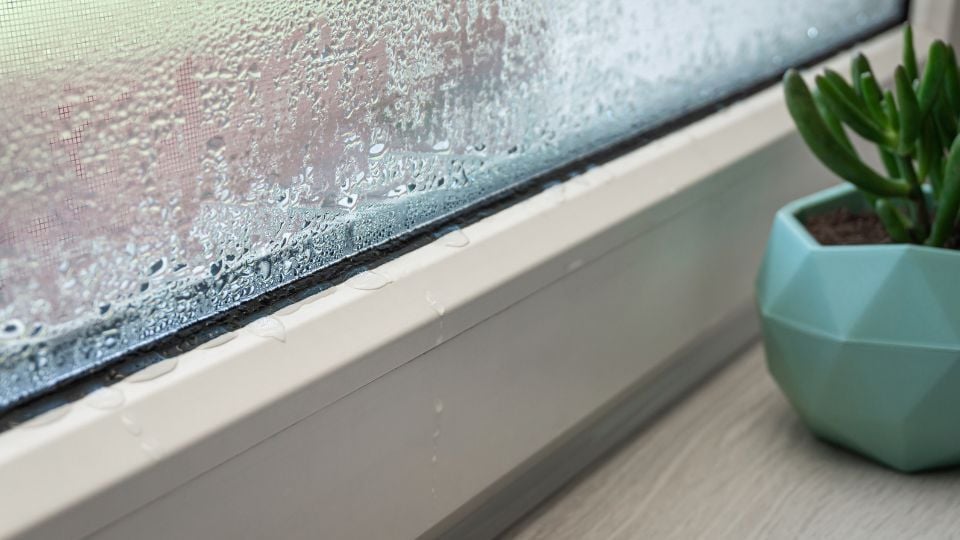
Will Energy-Efficient Windows Stop Condensation?
Not necessarily.
Condensation can have several causes.
Condensation between the glass panes
Fog or moisture between panes of insulated glass may indicate that the sealed glass unit has failed.
That should be evaluated by the manufacturer or installer.
Condensation on the interior glass
Moisture on the room-side surface may be related to:
- Indoor humidity
- Cold outdoor temperatures
- Window surface temperature
- Window coverings
- Air circulation
Interior condensation does not automatically mean the window itself has failed.
Condensation on the exterior glass
Exterior condensation can occur when the outside surface becomes cooler than humid outdoor air.
It can occur on high-performing glass under certain weather conditions and is not necessarily evidence of a defect.
The location of the moisture matters.
Related Article: Why Is There Condensation on my New Windows?

What Are the Signs That Your Current Windows May Be Inefficient?
Consider having your windows evaluated when you notice several of these symptoms:
- Persistent drafts
- Rooms that are difficult to heat or cool
- Single-pane glass
- Damaged frames
- Broken seals
- Fogging between panes
- Windows that do not close completely
- Worn weatherstripping
- Water intrusion
- Noticeable gaps around frames
- Excessive exterior noise
- Significant deterioration
- Repeated temporary fixes such as plastic film every winter
High energy bills alone do not prove that windows are the problem.
Heating and cooling costs can also rise because of:
- Weather
- Energy-rate changes
- HVAC issues
- Poor insulation
- Duct leakage
- Thermostat changes
A window assessment should look for physical evidence rather than relying only on the utility bill.
Should You Replace All Your Windows at Once?
Not always.
Some homeowners replace every window as one project. Others work in phases.
Replacing all of the windows may make sense when:
- Most are the same age.
- Most show similar deterioration.
- You want consistent appearance.
- You want to address multiple uncomfortable rooms.
- The project budget allows it.
Phased replacement may make more sense when:
- Only part of the home has failing windows.
- Certain elevations receive more severe weather.
- A few rooms have major comfort issues.
- You want to spread out the investment.
Joyce's Window Cost Calculator can help homeowners compare project scope and understand a ballpark range before scheduling an in-home estimate.
Should You Replace Windows Just to Save Energy?
Not necessarily.
If your existing windows work well, seal properly, and are in good condition, replacement may not be the first energy upgrade to consider.
Before making a large investment solely for energy savings, also consider whether the home has:
- Inadequate attic insulation
- Major air leaks
- Leaky ductwork
- An aging HVAC system
- Poor exterior-door seals
Replacement windows make the strongest case when they solve multiple problems at once, such as:
- Drafts
- Failed glass
- Difficult operation
- Water problems
- Deterioration
- Poor comfort
- High maintenance
- Outdated appearance
How Do Joyce Energy-Efficient Windows Work?
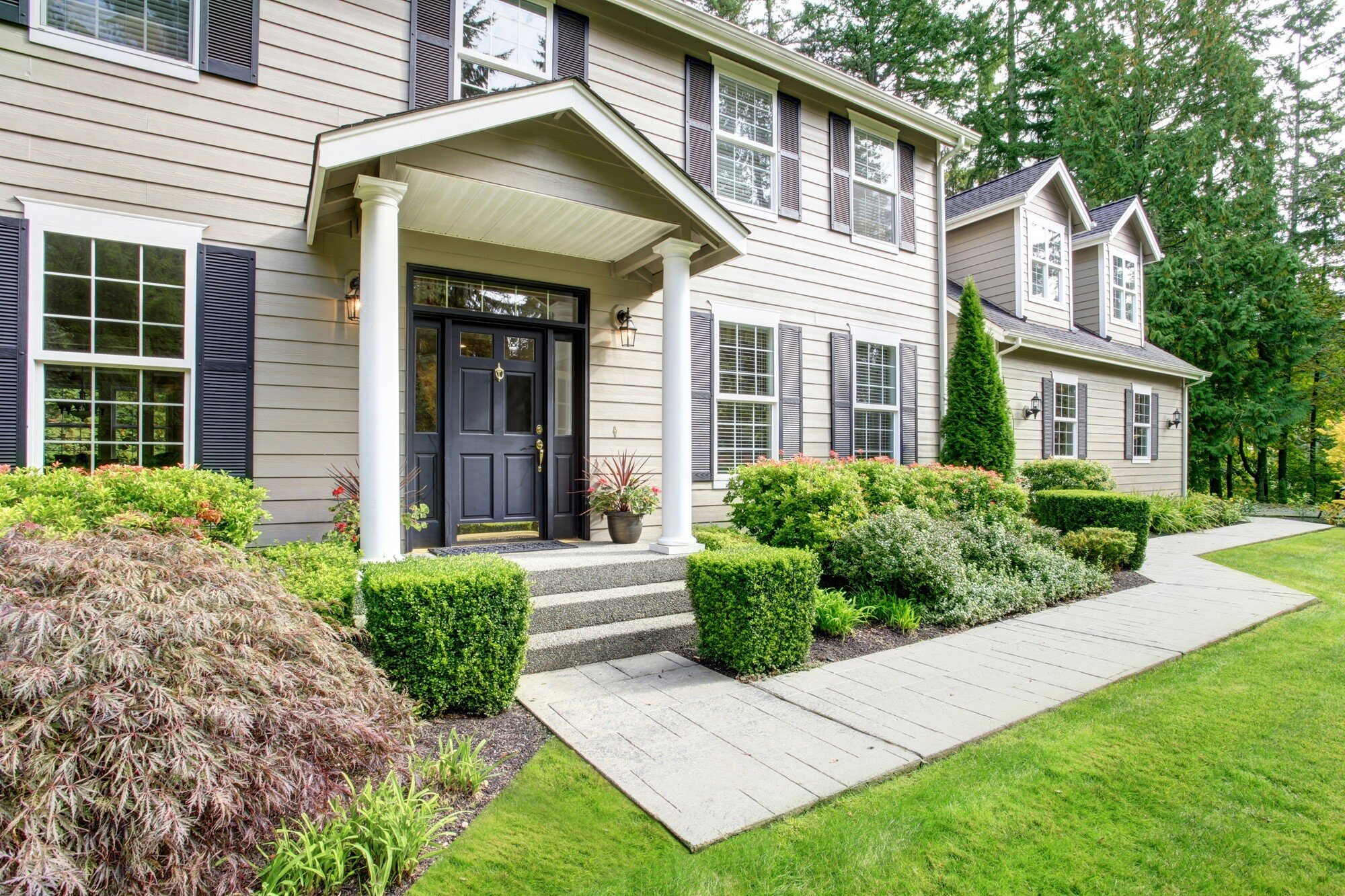
Joyce Windows, Sunrooms & Baths manufactures custom replacement windows and offers Heritage, Eloquence, and specialty window options.
Current Joyce window features vary by collection and project, but available options may include:
- Insulated-glass packages
- Low-E glass
- Insulating gas
- Custom sizing
- Durable vinyl frame systems
- Multiple operating styles
- Interior and exterior colors
- Decorative grids
- Professional installation
Joyce's current energy-efficiency guidance emphasizes five major factors:
- Glass package
- Frame construction
- Weatherstripping
- Installation quality
- Proper sizing and sealing
That is a better way to evaluate a window than focusing on one feature alone.
Heritage vs. Eloquence: Which Is More Energy Efficient?
Joyce currently offers both Heritage and Eloquence replacement-window collections.
The collections are designed for different homeowner priorities.
Heritage is positioned around classic appearance, durable performance, energy efficiency, and value.
Eloquence is positioned as a more premium collection with modern styling, advanced features, and strong energy performance.
The exact energy ratings depend on:
- Window style
- Size
- Glass package
- Grid configuration
- Other selected options
Do not assume that every Eloquence or Heritage window has one universal U-factor or SHGC.
Compare the exact NFRC-rated configuration in your proposal.
Related Article: Heritage vs Eloquence Windows
Which Window Style Is Most Energy Efficient?
There is no single answer that applies to every product.
Fixed picture windows have fewer operating joints because they do not open.
Casement and awning windows may create tight compression seals when closed.
Double-hung and slider windows provide different ventilation and operating benefits.
Overall performance still depends on:
- Frame design
- Glass package
- Weatherstripping
- Size
- Product construction
- Installation
Choose the style based on both performance and how the room needs to function.
How Much Do Energy-Efficient Replacement Windows Cost?
Energy-efficient upgrades can affect the project price.
Joyce states that replacement-window pricing varies based on:
- Number of windows
- Window size
- Window style
- Glass package
- Energy-efficiency upgrades
- Interior and exterior colors
- Grids
- Specialty shapes
- Installation complexity
The Joyce Window Cost Calculator provides a ballpark project range based on the homeowner's selections.
It is not a final quote.
Exact pricing requires measurements, product selection, and review of the installation conditions.
Use the Joyce Window Cost Calculator to compare styles, quantity, glass options, and project scope before scheduling an appointment.
Questions to Ask Before Buying Energy-Efficient Windows
Ask every window company:
About Performance
- What is the exact window model?
- What glass package is included?
- What is the whole-window U-factor?
- What is the solar heat gain coefficient?
- What is the air-leakage rating?
- Is the exact configuration NFRC certified?
- Is it ENERGY STAR certified for my climate?
- Which Low-E coating is included?
About the Window
- How many panes of glass are included?
- Is insulating gas used?
- How is the frame constructed?
- Is the window custom sized?
- Does this configuration require reinforcement?
- Which weatherstripping system is used?
About Installation
- Who performs the installation?
- How will the opening be measured?
- How will gaps around the frame be insulated?
- How will the exterior be sealed?
- What happens if hidden damage is found?
About Cost and Warranty
- What does the written price include?
- Which efficiency upgrades increase the price?
- What product warranty applies?
- What labor coverage applies?
- Who handles future service?
The best comparison puts exact specifications next to exact specifications.
Why Choose Joyce for Replacement Windows?
Joyce Windows, Sunrooms & Baths has served homeowners since 1955 and remains a third-generation, family-owned company headquartered in Berea, Ohio.
Joyce manufactures its replacement windows and provides professional installation through its factory-direct process.
That allows the company to stay involved in:
- Product selection
- Custom sizing
- Manufacturing
- Installation
- Warranty support
- Future service
Joyce currently serves supported communities in Ohio, Pennsylvania, North Carolina, and South Carolina.
During a design consultation, homeowners can compare:
- Heritage and Eloquence windows
- Window styles
- Glass packages
- NFRC performance
- Colors
- Grids
- Custom sizing
- Installation
- Project pricing
See What Your Windows Could Cost
Use the Joyce Window Cost Calculator for a ballpark range in about two minutes.
Meet with a Joyce window specialist to evaluate your current windows, discuss comfort concerns, compare glass packages, and receive exact project pricing.

Frequently Asked Questions
Do energy-efficient windows really lower utility bills?
They may. Energy-efficient windows can reduce unwanted heat transfer and air leakage, which may lower heating and cooling demand. Actual savings depend on the home, existing windows, climate, HVAC system, installation, and product selected.
How much energy is lost through windows?
The U.S. Department of Energy estimates that heat gain and heat loss through windows account for approximately 25% to 30% of residential heating and cooling energy use. That does not mean replacement windows automatically reduce bills by that percentage.
What makes a window energy efficient?
Important factors include insulated glass, Low-E coatings, frame construction, weatherstripping, air leakage, custom fit, and installation quality.
What is a good U-factor for a window?
Lower U-factors indicate greater resistance to heat loss, but the appropriate rating depends on climate and the product requirements for the project. Compare ENERGY STAR and NFRC information for your location.
What is SHGC?
Solar heat gain coefficient measures how much solar heat enters through a window. Lower numbers admit less solar heat.
Is Low-E glass worth it?
Low-E coatings can help manage heat transfer and solar heat gain. The best coating depends on climate, orientation, shade, and comfort priorities.
Is double-pane or triple-pane glass better?
Triple-pane glass can provide lower heat transfer in some configurations, but it also adds cost and weight. The best choice depends on climate, window design, performance goals, and budget. Compare the actual whole-window ratings.
Do argon-filled windows lose the gas over time?
Insulating gas is held inside a sealed glass unit. Long-term performance depends on the quality of the glass system and seals. If the sealed unit fails, it may need service or replacement.
Will new windows eliminate drafts?
Properly selected and installed replacement windows can significantly reduce drafts associated with old or failing windows. Drafts originating elsewhere in the home will not be corrected by window replacement.
Can new windows stop condensation?
They may change interior glass temperature and reduce some condensation conditions, but indoor humidity also matters. Fogging between panes generally points to a sealed-glass problem.
Are ENERGY STAR windows always the best choice?
ENERGY STAR certification is a useful efficiency benchmark, but homeowners should still compare NFRC ratings, window design, installation, warranty, style, and cost.
Will replacement windows pay for themselves?
Utility savings are only one part of the value of replacement windows. It is not responsible to guarantee that every window project will fully pay for itself through energy savings.
Does Joyce make its own windows?
Yes. Joyce manufactures replacement windows and provides custom window solutions through its factory-direct process.
How can I estimate the cost of Joyce replacement windows?
The Joyce Window Cost Calculator provides a ballpark project range based on window quantity, style, glass package, colors, and other selections. Exact pricing requires an in-home estimate.
Final Takeaway
Energy-efficient windows can help your home use heating and cooling energy more effectively, but the benefit comes from the whole window and the quality of the installation.
When comparing products, look beyond sales terms.
Ask for:
- Whole-window U-factor
- Solar heat gain coefficient
- NFRC certification
- ENERGY STAR eligibility
- Glass package
- Frame construction
- Air-leakage information
- Custom sizing
- Installation details
- Warranty coverage
And keep your expectations realistic.
Replacement windows may reduce energy waste and utility costs, but your actual savings depend on the condition of your current windows, your climate, your home, your HVAC system, your energy use, and the replacement product.
The best window project should improve more than a bill.
It should help your home feel more comfortable, easier to maintain, easier to operate, and better suited to the way you live.
Ready to explore your options? Use the Joyce Window Cost Calculator for a ballpark estimate or book a design consultation to compare energy-efficient replacement windows for your home.

Topics: