
Executive Summary
The best vinyl replacement window is not determined by one feature, such as the number of chambers in the frame or the number of panes of glass.
A quality window should combine:
- A durable frame and sash
- Appropriate reinforcement
- Strong corner construction
- Glass selected for your climate and room
- Reliable weatherstripping and seals
- An operating style that fits the opening
- Custom sizing
- Professional installation
- Clear product and labor warranties
- A company that can provide service after installation
When comparing windows, review the complete NFRC performance label, installation scope, warranty, and final project price. ENERGY STAR requirements for windows vary by climate zone, so the lowest rating is not automatically the best option for every home.
Joyce Windows, Sunrooms & Baths manufactures custom replacement windows in its own factory and offers double-hung, sliding, picture, casement, awning, bay, bow, garden, and shaped window options.
Ready to compare options? Get an Instant Window Cost Estimate or Book a Design Consultation.
Why Do Homeowners Choose Vinyl Replacement Windows?
Vinyl windows are popular because they can provide a practical combination of energy performance, customization, durability, and low routine maintenance.
Unlike painted wood, vinyl frames generally do not need regular scraping and repainting. They are also not vulnerable to corrosion in the same way as an unfinished metal surface.
Homeowners may choose vinyl windows for:
- Custom sizing
- Insulated glass options
- Multiple operating styles
- Interior and exterior color choices
- Decorative grid options
- Simple routine cleaning
- Resistance to common moisture-related maintenance problems
- Compatibility with many home styles
Product quality still varies. The fact that two windows are made from vinyl does not mean they will have the same frame strength, glass performance, weatherstripping, hardware, installation, or warranty.
Vinyl Window Buying Checklist
| Feature | What to compare | Why it matters |
|---|---|---|
| Frame construction | Profile, wall design, reinforcement, corners | Supports strength, operation, and durability |
| Glass package | U-factor, SHGC, visible transmittance, coatings | Affects insulation, solar heat, and natural light |
| Weatherstripping | Type, location, replaceability | Helps limit unwanted air movement |
| Operating style | Double-hung, slider, casement, awning, picture | Affects airflow, views, cleaning, and clearance |
| Custom sizing | Measurements and opening preparation | Supports fit, sealing, and finished appearance |
| Hardware | Locks, balances, rollers, hinges, cranks | Affects security and daily operation |
| Screens | Frame, mesh, placement, removal | Affects airflow, visibility, and maintenance |
| Installation | Preparation, fastening, insulation, sealing, trim | Product performance depends partly on installation |
| Warranty | Product, glass, hardware, labor, exclusions | Defines future protection |
| Company support | Manufacturing, installation, service process | Clarifies who is responsible after the sale |
1. Evaluate the Complete Vinyl Frame
The original article suggests that a frame with more chambers is automatically better. Internal chambers can contribute to frame structure and thermal performance, but chamber count alone does not prove that one window is stronger or more efficient.
A window with more chambers may still use thin walls, weak corner construction, limited reinforcement, or an unsuitable glass package.
Ask to see a frame cross-section and compare:
- Overall frame depth
- Wall design and thickness
- Internal chamber layout
- Reinforcement
- Sash construction
- Corner joints
- Drainage paths
- Weatherstripping locations
- Glass support
- Exterior and interior finish
The complete design matters more than a single number.
2. Ask How the Frame and Sash Corners Are Joined
Many vinyl replacement-window frames and sashes use heat-welded corners.
Welded construction can create a continuous joint without exposed screws or brackets at the frame corners. However, welding by itself does not guarantee a high-quality window.
Inspect or ask about:
- Whether the frame and sash corners are welded
- How excess weld material is finished
- Whether the corners are square and consistent
- How large frames or sashes are reinforced
- How the meeting rails align
- Whether the sash operates smoothly
- How the corners are covered by the warranty
A well-constructed window should look clean, operate smoothly, and remain aligned when properly installed.
3. Look for Reinforcement Where It Is Needed
Vinyl window components may require reinforcement depending on their size, operating style, color, and design.
Reinforcement may be used in:
- Meeting rails
- Locking areas
- Large sashes
- Mullions between window units
- Patio-door frames
- Wide or tall openings
Do not assume every window needs the same reinforcement or that one reinforcement material is always superior.
Ask:
- Which parts of this window are reinforced?
- Why is reinforcement used there?
- Does the reinforcement vary by window size?
- How does it affect the window’s performance?
- Is it covered by the product warranty?
- Does the quoted window match the display sample?
4. Compare the NFRC Label
The National Fenestration Rating Council provides independent performance ratings that help homeowners compare windows using consistent measurements. Its labels may include U-factor, solar heat gain coefficient, visible transmittance, and air leakage.
U-Factor
U-factor measures how readily heat moves through the complete window.
Lower U-factor generally means better resistance to heat flow.
The original article incorrectly refers to U-factor as another name for R-value. They are related concepts but are not the same measurement.
Solar Heat Gain Coefficient
Solar heat gain coefficient, or SHGC, measures how much solar heat passes through the window.
A lower SHGC allows less solar heat through.
The appropriate SHGC depends on the home’s climate, window orientation, shading, and comfort goals. A west-facing room with intense afternoon sun may have different needs from a shaded north-facing room.
Visible Transmittance
Visible transmittance indicates how much visible light passes through the window.
A higher rating generally means more daylight, although glass coatings, grids, screens, and tint can also affect how bright the window appears.
Air Leakage
Air-leakage ratings measure how much air passes through joints in the window under test conditions.
Lower values indicate less air leakage through the tested product. Installation and the condition of the surrounding wall still matter.
5. Choose Glass for Your Climate and Room
ENERGY STAR window requirements vary by climate zone and use both U-factor and, where applicable, SHGC criteria. A product should be selected for the home’s location rather than from a national “one rating fits all” recommendation.
Consider:
- Winter temperatures
- Length of the cooling season
- Window direction
- Tree cover and exterior shade
- Large glass areas
- Rooms that feel too hot or cold
- Furniture and flooring exposed to sunlight
- Desired natural light
- Condensation concerns
Joyce offers insulated and energy-efficient glass options designed to help manage heat transfer, drafts, solar exposure, and year-round comfort. Exact options depend on the selected collection and configuration.
Do More Glass Panes Always Mean a Better Window?
No.
Double-pane and triple-pane windows can have different ratings depending on:
- Glass thickness
- Coatings
- Gas fills
- Spacers
- Frame construction
- Sash design
- Window style
- Overall assembly
Compare certified ratings for the complete window rather than choosing by pane count alone.
6. Review Weatherstripping and Seals
Weatherstripping helps reduce unwanted air movement around operable parts of the window.
Ask the consultant to show you:
- Where the weatherstripping is located
- Whether it is compressed when the window locks
- Whether it can be replaced
- How corners and meeting rails are sealed
- How the window drains water
- Which maintenance steps are required
More weatherstripping is not automatically better. It must be correctly placed and work with the frame, sash, locks, and operating hardware.
Insulated glass also contains sealed components that are different from the weatherstripping around an operable sash. Ask what warranty applies if the insulated-glass seal fails and fogging appears between the panes.
7. Select the Right Operating Style
The best window style depends on the opening and the room.
Double-Hung Windows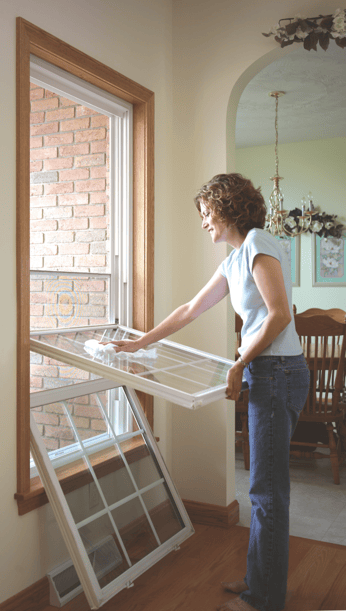
Double-hung windows have upper and lower sashes that move vertically.
They may be a good fit when you want:
- Traditional styling
- Ventilation from the top or bottom
- No outward projection
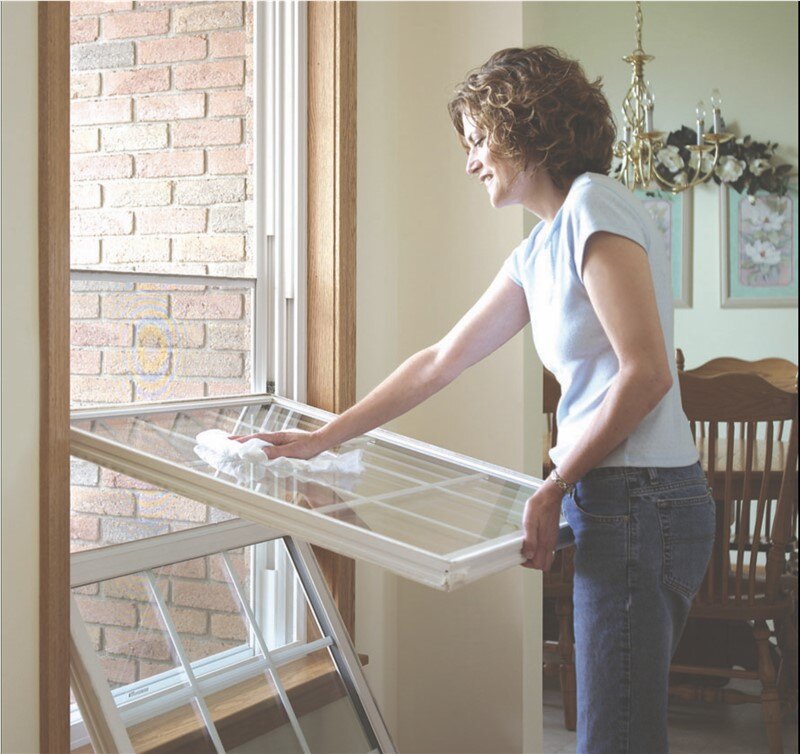
- Tilt-in cleaning on qualifying models
Sliding Windows
Sliding windows move horizontally along a track.
They may work well for:
- Wide openings
- Ranch-style homes
- Areas beside patios or walkways
- Homeowners who prefer side-to-side operation
Casement Windows
Casement windows are hinged on the side and open outward with a crank.
They can provide:
- A broad glass area
- Strong ventilation
- Convenient operation above some counters
- A compression-style seal when locked
They require exterior clearance.
 Awning Windows
Awning windows are hinged at the top and open outward.
They can work in:
- Bathrooms
- Basements
- High wall openings
- Combinations with fixed windows
Picture Windows
Picture windows do not open.
They are best used where the homeowner prioritizes:
- Natural light
- A clear view
- A large fixed glass area
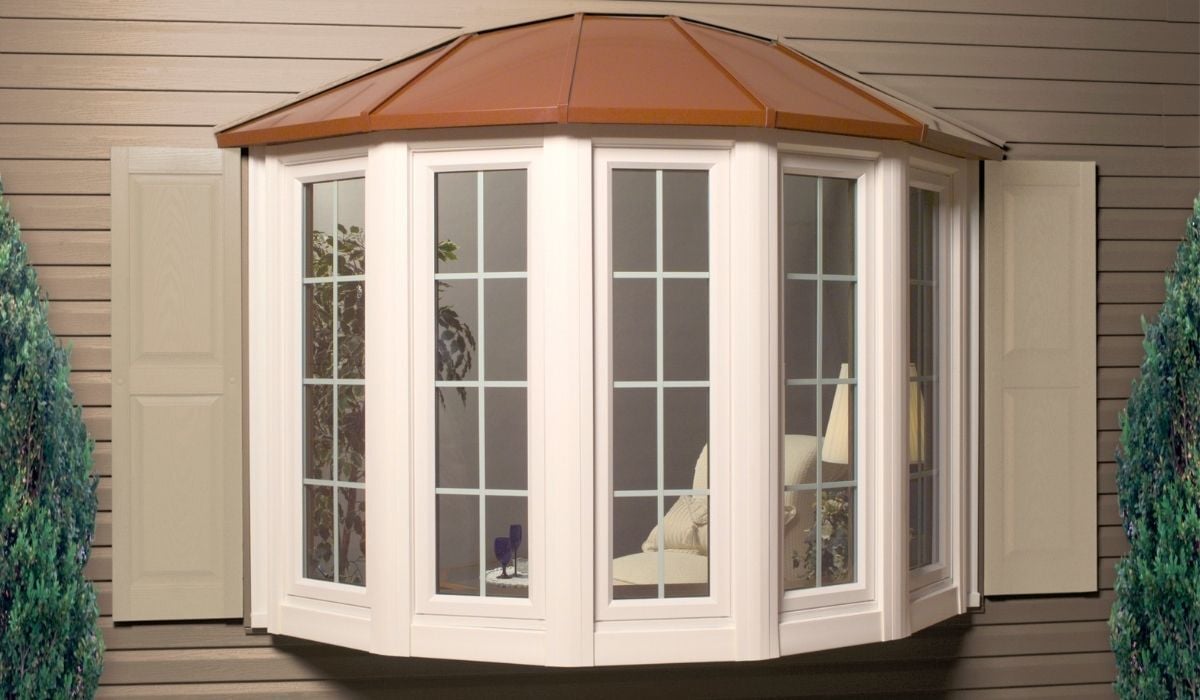
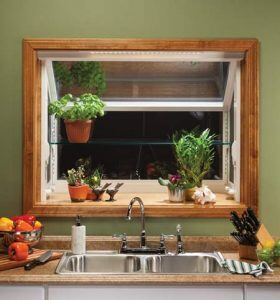
Joyce currently offers these styles across its replacement-window collections, along with bay, bow, garden, shaped, and other specialty configurations.
Related Article: Replacement Window Types
8. Make Sure the Window Is Custom-Sized
A custom window is manufactured after the opening is measured.
That does not mean every opening is left exactly as it is. The installer must still determine:
- Whether the existing frame can remain
- Whether a full-frame or insert-style approach is appropriate
- Whether there is deterioration or water damage
- How the opening will be prepared
- How much insulation space is needed
- How interior and exterior trim will be handled
- How the exterior will be sealed and drained
Joyce states that its replacement windows are custom-made for the home’s specific openings, style preferences, performance needs, and project goals.

What Is the Difference Between Replacement and New-Construction Frames?
Some windows use a mounting fin or flange designed to integrate with the wall’s weather-resistant layers during construction. Other replacement configurations are designed to fit within an existing prepared opening.
Terms such as “block frame,” “flush fin,” or “nail fin” may be used differently by manufacturers and in different regions.
Rather than choosing a frame label yourself, ask the installer:
- Which installation method is being proposed?
- Why is it appropriate for this home?
- Which existing materials will remain?
- How will water be managed?
- How will the opening be insulated and sealed?
- What trim work is included?
- Will siding, brick, stucco, or interior casing be affected?
9. Understand What Professional Installation Includes
A high-quality window can underperform when the opening is not prepared or the product is installed incorrectly.
A complete installation proposal should explain:
- Measurement
- Product verification
- Removal of the existing window
- Disposal
- Inspection of the exposed opening
- Minor preparation
- Leveling and squaring
- Fastening
- Insulation
- Exterior sealing
- Interior and exterior trim
- Cleanup
- Operation testing
- Final walkthrough
Ask what happens if the crew discovers:
- Wood rot
- Water damage
- Insect damage
- An uneven opening
- Structural deterioration
- Previous installation errors
Unexpected work should be explained and approved before it is completed.
10. Compare Warranties and Service
A warranty should be reviewed before the contract is signed.
Ask for written information covering:
- Vinyl frame and sash
- Insulated glass
- Glass-seal failure
- Hardware
- Screens
- Interior and exterior finishes
- Accidental glass damage, when offered
- Installation labor
- Transferability
- Exclusions
- Required maintenance
- Service-call procedures
Also ask who is responsible for service.
The seller, manufacturer, installer, and warranty provider may be separate companies. Joyce’s factory-direct model connects manufacturing, customization, installation, and service through one company for its replacement windows.
Related Article: Energy Efficient Windows
What Vinyl Window Claims Should You Question?
“More Chambers Always Means Better”
Chambers are only one part of the frame design. Compare the complete window and certified performance ratings.
“Triple-Pane Is Always Best”
Triple-pane glass may be useful in some projects, but its value depends on climate, ratings, window size, frame, budget, and comfort goals.
“This Window Will Pay for Itself”
No company can responsibly guarantee a specific energy-saving payback without knowing the home, existing windows, energy use, weather, and future utility rates.
“Vinyl Never Changes Color”
Modern vinyl products are designed for exterior exposure, but no finish should be described as immune to all fading, staining, heat, impact, or aging.
“The Window Is ENERGY STAR, So It Works Everywhere”
ENERGY STAR criteria differ by climate zone. Confirm that the exact product and glass configuration are certified for the home’s location.
“Installation Is Basically the Same for Every Home”
Opening conditions, wall systems, exterior materials, trim, access, and hidden damage can all change the installation process.
How Much Do Vinyl Replacement Windows Cost?
The final project price may depend on:
- Window quantity
- Operating style
- Size
- Glass package
- Window collection
- Frame colors
- Decorative grids
- Hardware
- Specialty shapes
- Opening condition
- Installation access
- Interior and exterior trim
- Whether the project is completed in phases
Joyce’s Window Pricing Calculator provides a ballpark project range based on the homeowner’s selections. The final price requires measurements, product choices, and an inspection of the installation conditions.

Questions to Ask Before Buying Vinyl Windows
Bring this checklist to each estimate:
- Who manufactures the window?
- What collection and model are being quoted?
- Is the exact window NFRC certified?
- Can I see the NFRC label?
- Is the product ENERGY STAR certified for my climate zone?
- What glass package is included?
- Where is reinforcement used?
- How are the frame and sash corners constructed?
- What type of weatherstripping is used?
- How does the window drain water?
- Is the window custom-sized?
- What installation method will be used?
- What trim and finishing work is included?
- How will hidden damage be handled?
- Who performs the installation?
- What product and labor warranties apply?
- Who handles future service?
- What could change the final price?
- Are financing options available?
- Can I see completed projects using this window?
Compare written proposals rather than relying on verbal descriptions.
Why Choose Joyce for Vinyl Replacement Windows?
Joyce Windows, Sunrooms & Baths manufactures custom replacement windows in its own factory.
Homeowners can explore:
- Eloquence windows
- Heritage windows
- Specialty windows
- Double-hung windows
- Sliding windows
- Picture windows
- Casement windows
- Awning windows
- Bay and bow windows
- Garden windows
- Custom shapes
- Energy-efficient glass options
- Frame colors and grid patterns
- Professional installation
- Financing for qualified homeowners
- An online Window Pricing Calculator
Joyce’s factory-direct approach gives one company responsibility for manufacturing, customization, installation, and future service.
Joyce serves homeowners in areas of Ohio, Pennsylvania, North Carolina, and South Carolina. Product and installation availability depends on the project address.
Buy the Complete Window, Not One Feature
A good vinyl replacement window is a complete system.
The frame, sash, reinforcement, glass, weatherstripping, hardware, sizing, installation, and warranty must work together.
Do not select a window only because it has:
- More chambers
- More panes
- A familiar brand name
- A low introductory price
- A long warranty headline
- A salesperson’s preferred rating
Compare the complete product, installation scope, service process, and final price.

Frequently Asked Questions About Buying Vinyl Windows
Are vinyl replacement windows a good choice?
Vinyl replacement windows can provide custom sizing, insulated-glass options, low routine maintenance, and a range of styles. Quality varies, so homeowners should compare construction, ratings, installation, and warranties.
How can I tell whether a vinyl window is high quality?
Review the frame and sash construction, reinforcement, corner joints, weatherstripping, hardware, NFRC ratings, glass package, warranty, and installation process. No single feature proves quality.
Is a window with more chambers better?
Not automatically. Internal chambers can contribute to structure and thermal performance, but the frame design, wall construction, reinforcement, glass, and complete certified ratings also matter.
What U-factor should I choose?
The appropriate U-factor depends on the climate zone and project. Lower U-factor generally indicates better resistance to heat flow, but homeowners should compare the complete ENERGY STAR and NFRC ratings.
What does SHGC mean?
Solar heat gain coefficient measures how much solar heat enters through the window. Lower SHGC means less solar heat passes through. The appropriate rating depends on climate, orientation, shading, and comfort goals.
Is triple-pane glass always worth the cost?
Not always. Compare its certified performance, additional cost, climate benefits, weight, frame compatibility, and expected comfort improvement.
Are welded vinyl frames better?
Welded corners can create clean, continuous joints, but welding alone does not guarantee overall quality. Reinforcement, frame design, alignment, glass, and installation also matter.
Are vinyl windows maintenance-free?
They generally require less routine finish maintenance than painted wood, but they still need cleaning, track care, hardware checks, drainage inspection, and proper operation.
Does custom sizing eliminate drafts?
No. Custom sizing supports proper fit, but drafts also depend on frame construction, weatherstripping, glass, insulation, sealing, installation, and the surrounding wall.
How can I estimate the cost of Joyce vinyl windows?
Use the Joyce Window Pricing Calculator for a ballpark range. Exact pricing requires measurements, final selections, and an evaluation of the installation area.

Topics:





_flipped.jpg?width=3246&height=2550&name=joyce_%23034-outside(c)_flipped.jpg)