_flipped.jpg?width=3246&height=2550&name=joyce_034-outside(c)_flipped.jpg)
Executive Summary
A sunroom can give your household a bright, protected space for relaxing, dining, working, entertaining, hobbies, or enjoying outdoor views.
The top reasons homeowners add sunrooms include:
- Gaining more usable living space
- Enjoying outdoor views with more protection
- Creating a flexible room for everyday life
- Bringing more natural light into the home
- Making an existing patio or deck more useful
- Adding a comfortable place to entertain
- Designing a room around the home and household
- Improving the home’s appeal and functionality
The right project depends on how often you want to use the room, your local climate, the condition of the existing patio or deck, your comfort expectations, and your budget.
Joyce Windows, Sunrooms & Baths designs, manufactures, and installs custom three-season and four-season sunrooms, patio and deck enclosures, screen rooms, and patio covers.
Ready to explore your options? Book a Design Consultation or Download the Sunroom Brochure.
What Is a Sunroom Addition?
A sunroom is an attached room designed to provide more natural light and stronger views of the outdoors than a conventional room.
Depending on the design, it may include:_flipped.jpg?width=416&height=327&name=joyce_034-outside(c)_flipped.jpg)
- Large window areas
- Operable windows
- Screens
- Insulated wall systems
- A studio or gable roof
- Exterior doors
- Electrical outlets
- Lighting
- Ceiling fans
- Heating and cooling options
- Custom flooring and finishes
A sunroom is not the same as every other outdoor-living project.
Joyce offers several related options:
| Project type | Main purpose | Typical protection |
|---|---|---|
| Patio cover | Adds shade and overhead shelter | Sun and precipitation from above |
| Screen room | Provides airflow with insect protection | Insects, some debris, and light weather |
| Patio or deck enclosure | Encloses an existing covered area | Depends on the wall, glass, and screen system |
| Three-season sunroom | Creates a protected room for much of the year | Rain, wind, insects, and seasonal temperature changes |
| Four-season sunroom | Adds more insulation and comfort features | Designed for broader use during hot and cold weather |
Choosing the right type of room is more important than simply deciding that you want “a sunroom.”
1. Add More Usable Living Space
One of the clearest benefits of a sunroom is the additional space it can provide.
A sunroom may become a:
- Sitting room
- Dining area
- Home office
- Reading room
- Hobby space
- Exercise area
- Playroom
- Plant room
- Game room
- Family gathering space
Unlike a room designed for only one purpose, a sunroom can often adapt as household needs change.
A playroom may later become a study area. A home office may become a quiet reading room. A casual dining space may become the preferred location for family gatherings.
Before choosing the size and layout, decide what the room must accommodate.
Consider:
- Number of people
- Furniture dimensions
- Door locations
- Walking paths
- Storage
- Electrical needs
- Heating and cooling equipment
- Window treatments
- Outdoor access
A room that looks large when empty can feel crowded once furniture and traffic patterns are added.
2. Enjoy Outdoor Views With More Protection
A sunroom can create a stronger connection to the yard without requiring you to sit fully outdoors.
Depending on the room type, it may provide protection from: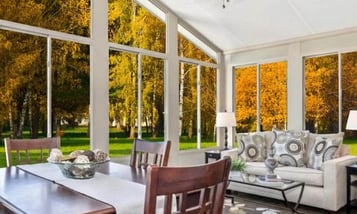
- Mosquitoes and other insects
- Rain
- Wind
- Falling leaves
- Pollen and debris
- Strong direct sunlight
- Uncomfortable seasonal temperatures
A screen room keeps the space open to fresh air but does not provide climate control. A glass-enclosed sunroom offers more protection, while a four-season design includes more insulation and comfort-focused features.
Joyce describes three-season rooms as a practical choice for spring, summer, and fall, while four-season rooms are designed for broader year-round use.
No room eliminates every effect of weather. Comfort depends on the room’s orientation, roof, glass, insulation, ventilation, shading, heating, cooling, and local conditions.
3. Create a Flexible Room for Everyday Life
A sunroom can solve several household needs without requiring the space to remain dedicated to one activity.
Home Office
A sunroom may provide:
- Natural light
- Separation from busier rooms
- Outdoor views
- Space for a desk and storage
- A more pleasant setting for remote work
Plan for glare, outlets, internet access, temperature control, and a suitable video-call background.
Dining Space
A dining sunroom can work well when it has convenient access to the kitchen and enough room around the table.
Consider:
- Chair clearance
- Lighting over the table
- Durable flooring
- Exterior-door traffic
- Serving storage
- Temperature control
Reading or Relaxation Room
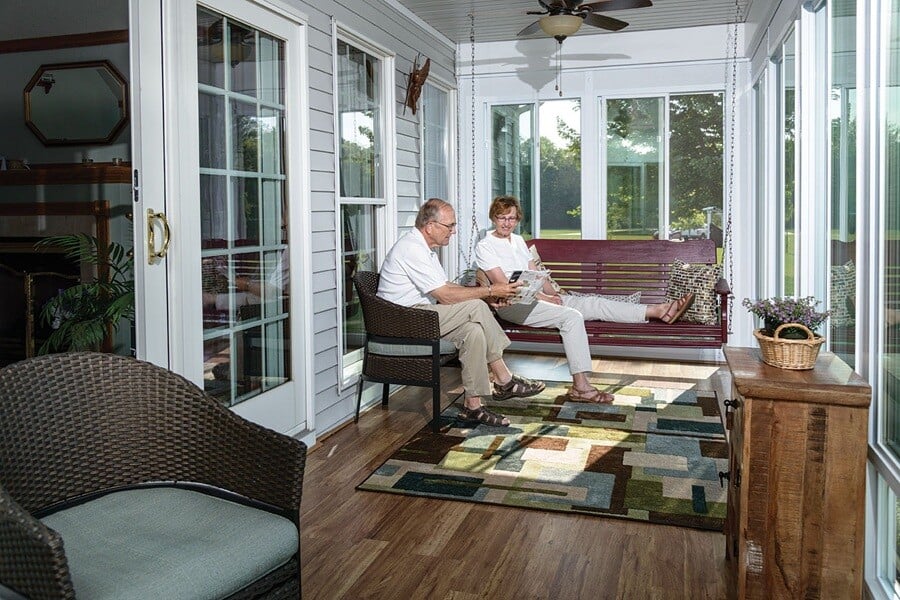
A quiet sunroom can provide a comfortable place for reading, conversation, music, or morning coffee.
Helpful features may include:
- Low-profile seating
- Adjustable shades
- Layered lighting
- Side tables
- A ceiling fan
- A clear view of the yard
Playroom
A sunroom can provide a defined place for toys, games, crafts, and family activities.
Use:
- Washable surfaces
- Closed storage
- Durable flooring
- Cordless window treatments
- Clear walking paths
- Furniture suited to the room’s temperature conditions
Plant Room
Plants can benefit from sunlight, but plant needs vary.
Plan for:
- Direct versus indirect light
- Seasonal temperature changes
- Water protection
- Humidity
- Shelving
- Shade
- Space between plants and the glass
4. Bring More Natural Light Into the Home
Sunrooms are designed around windows and outdoor views, so they can provide abundant daylight.
Natural light may make the room feel:
- More open
- More inviting
- Visually connected to the landscape
- Comfortable for reading or hobbies
- Different from the rest of the home
The original article claims that a sunroom can reduce electricity use because less artificial lighting may be needed. That is possible during daylight hours, but it should not be treated as a guaranteed energy-saving benefit.
A sunroom also introduces additional glass area. Its effect on heating and cooling depends on:
- Window direction
- Glass package
- Roof design
- Insulation
- Air leakage
- Shading
- Heating and cooling equipment
- How the room connects to the house
- Local climate
The goal should be to balance daylight with comfort rather than maximize glass without considering heat, glare, and privacy.
Related Article: Fall Lighting Ideas
5. Make Better Use of an Existing Patio or Deck
Some homeowners already have a patio or deck that receives limited use because of rain, insects, strong sun, or seasonal weather.
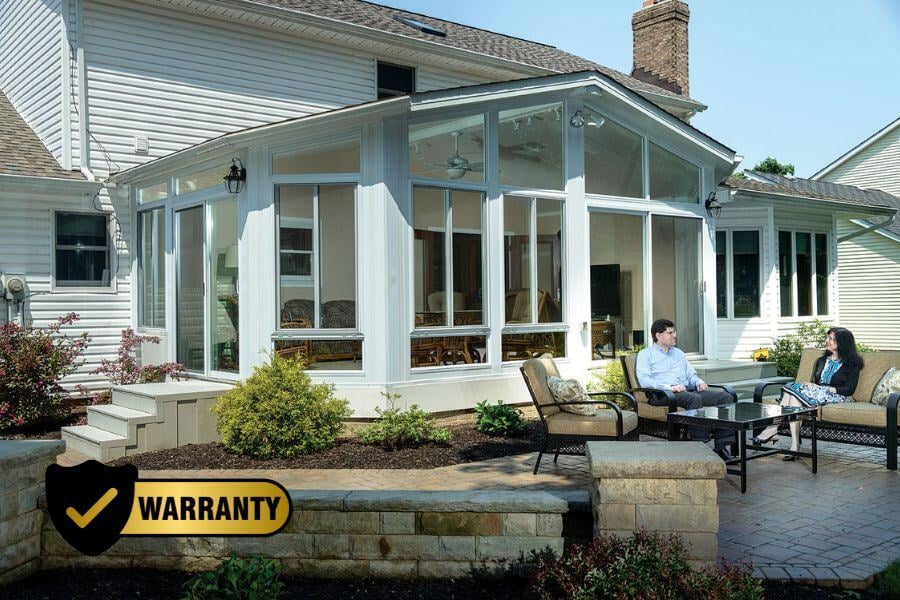
A patio or deck enclosure may make that area more functional.
Joyce can evaluate whether an existing structure is suitable for an enclosure or sunroom. The review may include:
- Structural condition
- Foundation or supports
- Levelness
- Size
- Connection to the home
- Roof condition
- Drainage
- Site access
- Local code requirements
- Expected snow, wind, or environmental loads
An existing patio or deck does not automatically reduce the project cost. Some structures require reinforcement, repair, or replacement before they can support a new enclosure.
Joyce sunrooms are designed to attach to the home or garage. Joyce does not currently advertise detached, stand-alone sunrooms.
Related Article: Enclosing Your Patio
6. Gain More Space for Entertaining
A sunroom can provide an additional gathering area when outdoor plans are interrupted by weather.
It may be used for:
- Family meals
- Birthday celebrations
- Game nights
- Holiday gatherings
- Casual conversation
- Watching sports
- Serving food and drinks
- Indoor-outdoor parties
Good entertaining spaces need more than attractive windows.
Plan for:
- Seating capacity
- Traffic flow
- Access to the kitchen
- Exterior doors
- Lighting
- Outlets
- Flooring
- Heating and cooling
- Storage
- Privacy
- Acoustics
A room with too many doors or poorly placed furniture can feel smaller than expected. Furniture planning should begin before the window and door layout is finalized.
7. Customize the Room Around Your Home
A sunroom should look and function like it belongs with the home.
Custom design decisions may include:
- Room dimensions
- Three-season or four-season construction
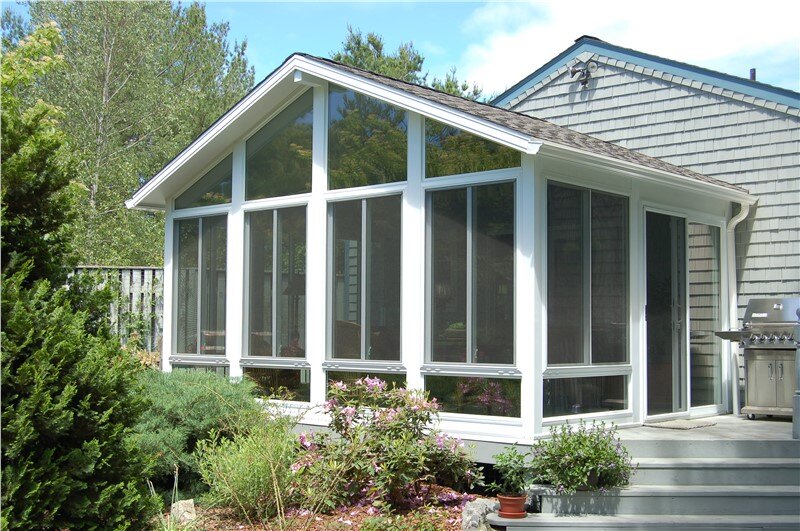
- Studio or gable roof
- Roof connection
- Window size and placement
- Operable and fixed glass
- Doors
- Frame colors
- Glass packages
- Insulation
- Electrical outlets
- Lighting
- Ceiling fans
- Heating and cooling options
- Flooring
- Interior and exterior trim
Joyce manufactures its own sunroom systems and customizes the room to the home, intended use, architecture, property, and project conditions.
A custom room can help address practical questions such as:
- Which direction has the best view?
- Where will afternoon sun be strongest?
- How will people reach the yard?
- Where can furniture be placed?
- How will the roof connect to the home?
- Will the room be used seasonally or daily?
- What comfort level is expected?
The best design is not necessarily the room with the most glass or largest footprint. It is the design that fits the home and how the household plans to use it.
Related Article: Sunroom Design Ideas
8. Improve the Home’s Appeal and Functionality
A well-designed sunroom can improve how a home looks and functions.
It may add:
- Architectural interest
- A stronger backyard connection
- A more attractive gathering space
- A brighter interior
- A useful transition between indoors and outdoors
- More flexible living space
A sunroom may also appeal to future buyers, but no contractor should guarantee a specific increase in property value or resale price.
The financial result depends on:
- Project cost
- Design quality
- Installation
- Local housing market
- Condition of the home
- Room type
- Buyer preferences
- How well the addition matches the house
- Whether the room is permitted and documented correctly
The strongest reason to build a sunroom is usually that the homeowner expects to use and enjoy it.
Is a Three-Season or Four-Season Sunroom Better?
The right choice depends on how and when you want to use the room.
Related Article: Three Season vs Four Season Sunroom
Choose a Three-Season Sunroom When:
- Spring, summer, and fall use is the priority
- You want a stronger connection to outdoor temperatures
- You want protection from insects and rain
- A lower project cost is important
- You do not expect the room to feel like the main house in extreme weather
Choose a Four-Season Sunroom When:
- You want broader year-round use
- Temperature consistency matters
- The room will serve as an office or everyday living area
- More insulation is desired
- Heating and cooling will be part of the plan
- You want higher-performance glass and roof options

Joyce’s four-season rooms may use SmartShield Glass, ClimateMaster roofing, insulation packages, and on-demand heating and cooling options. Exact features depend on the selected design.
A four-season Joyce sunroom is not automatically the same as a conventional framed home addition fully integrated into the main HVAC system. Confirm how the room will connect to the home and how temperature control will be handled.
Sunroom vs. Screen Room vs. Patio Cover
A full sunroom is not necessary for every homeowner.
Choose a Screen Room When:
- Fresh air is a priority
- Insects are the main problem
- Seasonal use is acceptable
- You do not need heating or cooling
- You want a lower-cost option than a glass-enclosed sunroom
Joyce screen rooms are designed to provide airflow, outdoor views, and insect protection. They are not climate-controlled spaces.
Related Article: Screen Room On Deck?
Choose a Patio Cover When:
- You mainly need shade
- You want overhead protection
- You prefer an open-air space
- Full enclosure is unnecessary
- You want to improve an existing patio or porch
A patio cover does not provide protection on all sides and is not designed to perform like a sunroom during extreme weather.
Choose a Patio or Deck Enclosure When:
- You already have a suitable covered structure
- You want to add walls, windows, or screens
- You want more protection without building an entirely new room
- The existing area can support the enclosure
Joyce evaluates the existing structure, connection, drainage, and local requirements before determining whether it can be enclosed.
How Much Does a Sunroom Cost?
Sunroom cost depends on the room type, size, foundation, roof, glass, insulation, electrical work, flooring, doors, finishes, permits, and site conditions.
Joyce currently publishes these general installed planning ranges:
| Project type | Joyce planning range |
|---|---|
| Sunroom | $40,000–$90,000 |
| Screen room | $25,000–$40,000 |
| Patio cover | $10,000–$30,000 |
These ranges include professional design, engineering, and installation as described in Joyce’s current cost guide. They are not guaranteed quotes.
The final price may be affected by:
- Three-season or four-season construction
- Room dimensions
- New foundation or existing structure
- Studio or gable roof
- Roof tie-in
- Glass package
- Insulation
- Windows and doors
- Electrical work
- Heating and cooling options
- Flooring
- Interior and exterior finishes
- Engineering
- Permits
- Site access
- Drainage
- Installation complexity
Two rooms that look similar in photographs can have very different costs once the home and site are evaluated.
Related Article: Why Is a Sunroom So Expensive?
How Long Does a Sunroom Project Take?
A sunroom project includes more than the days spent assembling the room.
The complete timeline may involve:
- Design
- Measurements
- Engineering
- Product manufacturing
- Permit approval
- Site preparation
- Foundation or deck work
- Installation
- Electrical work
- Inspections
- Finish work
Joyce notes that project timing depends on the room type, customization, site conditions, weather, permits, and scheduling.
Ask for separate estimates for:
- Design and approval
- Manufacturing
- Site preparation
- On-site installation
- Electrical or trade work
- Final inspection
Avoid treating a short on-site assembly period as the entire project schedule.
Is a Sunroom Right for Every Home?
No.
A sunroom may not be the best fit when:
- The property has limited space
- The existing deck or patio is unsuitable
- The homeowner needs a conventional bedroom or bathroom addition
- Full integration with the main home and HVAC is required
- The outdoor view is limited
- The room would receive little use
- Local setback or permit requirements prevent the project
- The homeowner plans to move before enjoying the space
- The project budget does not support the desired room type
A patio cover or screen room may better meet the homeowner’s needs at a lower cost.
A conventional addition may be more appropriate when the homeowner needs plumbing, bedrooms, extensive storage, or fully integrated living space.
Questions to Ask Before Adding a Sunroom
Ask the contractor:
- Which room type fits how I plan to use the space?
- Is this a three-season or four-season design?
- How will it connect to the house?
- Can my existing patio or deck support it?
- What foundation or preparation is required?
- Which roof style is included?
- What glass package is proposed?
- How will the room be heated and cooled?
- What electrical work is included?
- Who handles engineering and permits?
- What flooring and finishes are included?
- What is excluded from the proposal?
- What could change the final price?
- What is the complete project timeline?
- What product and labor warranties apply?
- Who performs installation?
- Who handles future service?
- Can I see a completed project similar to mine?
The written proposal should identify the room type, dimensions, roof, glass, windows, doors, foundation, electrical work, finishes, installation, schedule, price, exclusions, and warranty.
Why Choose Joyce for a Custom Sunroom?
Joyce Windows, Sunrooms & Baths designs, manufactures, and installs custom sunrooms.
Homeowners can explore:
- Three-season sunrooms
- Four-season sunrooms
- Patio and deck enclosures
- Screen rooms
- Patio and porch covers
- Studio roofs
- Gable roofs
- Custom sizing
- Energy-efficient glass options
- Vinyl sunroom structures
- Windows and doors
- Electrical planning
- Heating and cooling options
- Professional installation
- Financing for qualified homeowners
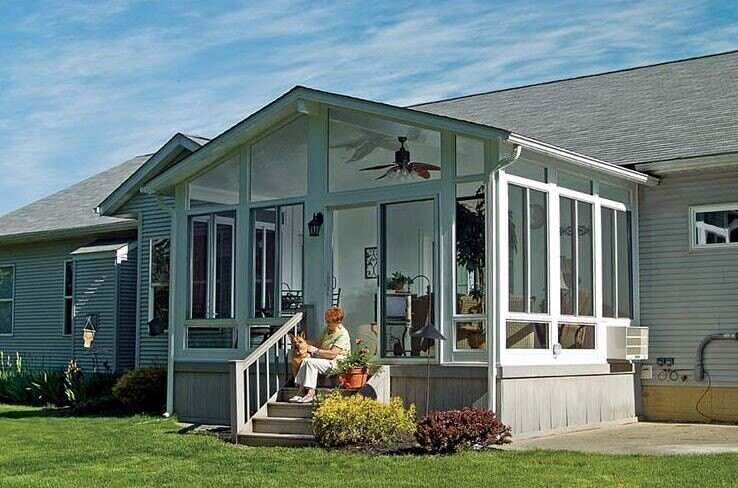
Joyce’s factory-direct model connects design, manufacturing, installation, and service through one company. Joyce was founded in 1955, is family-owned, and serves homeowners in Ohio, Pennsylvania, North Carolina, and South Carolina.
Add a Room You Will Actually Use
A sunroom can provide more living space, natural light, outdoor views, and flexibility.
The best project begins by answering three questions:
- How will we use the room?
- During which seasons do we expect to use it?
- Which design fits our home and budget?
Those answers will guide the room type, size, roof, glass, doors, electrical plan, comfort features, and finishes.
Joyce can evaluate the home, explain the available room types, and prepare a project-specific estimate.

Frequently Asked Questions
What are the main benefits of adding a sunroom?
A sunroom can add usable living space, natural light, outdoor views, entertainment space, and a flexible room for dining, work, hobbies, plants, or relaxation.
Can a sunroom be used all year?
A four-season sunroom is designed for broader year-round use. Comfort still depends on insulation, glass, roof design, heating, cooling, climate, and how the room connects to the home.
Is a three-season sunroom worth it?
It may be worthwhile when the homeowner wants a protected space for spring, summer, and fall and does not need the room to perform like the main house during extreme temperatures.
Can Joyce build a sunroom on an existing deck?
Possibly. Joyce must evaluate the deck’s structure, support, levelness, connection to the house, drainage, and local code requirements.
Does a sunroom add value to a home?
A well-designed sunroom may improve functionality and buyer appeal, but no project can guarantee a specific increase in resale value.
Is a sunroom cheaper than a conventional addition?
It may be, depending on the room type, size, foundation, insulation, roof, finishes, and intended use. A fully insulated four-season room may have a substantially different cost from a simple seasonal enclosure.
How much does a Joyce sunroom cost?
Joyce currently publishes a general installed planning range of $40,000–$90,000 for sunrooms. Exact pricing requires an in-home evaluation and custom design.
What is the difference between a sunroom and a screen room?
A sunroom uses windows or glass walls to provide more weather protection. A screen room prioritizes fresh air and insect protection but does not provide climate control.
Does a sunroom need heating and cooling?
That depends on the room type, climate, and intended use. A four-season room is more likely to include heating and cooling planning than a three-season room.
How do I begin planning a sunroom?
Start by deciding how you want to use the room and during which seasons. Then schedule a design consultation to evaluate the home, site, structure, options, and price.

Topics: